How to Walk with a Rollator
To walk with a rollator, stand upright inside its frame, hold both handles, and move it only as far as you can step comfortably. Use the brakes to slow or stop, and lock them before sitting or standing.
On this page (9 sections)
- How do you start walking with a rollator?
- How far ahead should you move the rollator?
- How should you use the hand brakes?
- How do you turn with a rollator?
- How do you use a rollator on slopes and uneven ground?
- How can you keep your body inside the frame?
- What should you check before each walk?
- Is a rollator the right walking aid for you?
- What is the safest way to practice walking with a rollator?
To walk with a rollator, stand upright inside its frame, hold both handles, and move it only as far as you can step comfortably. Use the brakes to slow or stop, and lock them before sitting or standing.
A rollator has wheels, so it can move as you walk. Keep it close enough to control, and ask a physical therapist or another clinician to check your technique if you feel unsure.
How do you start walking with a rollator?
Stand inside the frame with both hands on the handles before you begin. Keep your feet between the rear wheels and your body upright, with enough space to take a comfortable step.
Before walking, check that the rollator is assembled as directed and that both brakes work. If your model has parking locks, make sure you know how they engage and release.
Release the parking locks only when you're ready to move. Walk at a steady pace, pushing the rollator a short distance ahead, then stepping forward so you stay inside its frame.
Don't push it so far that you must lean or reach for the handles. If your steps feel rushed, slow down and bring the rollator closer.
If you're unsure whether a wheeled walker suits your balance or walking needs, ask a clinician for guidance. Our guide to who should not use a rollator covers situations where another aid may be a better fit.
How far ahead should you move the rollator?
Move the rollator only a short distance ahead, within a comfortable reach. Step toward it while keeping your feet inside the frame, then move it again when you're steady.
A common mistake is letting the rollator roll too far ahead. That can pull you forward and make it harder to stay upright.
Keep your steps natural and don't rush to keep up with the wheels. If the rollator moves away from you, stop, use the brakes, and reset your position before continuing.
For a basic frame without wheels, the sequence differs. Follow instructions for how to use a walker correctly if you're comparing walking aids.
How should you use the hand brakes?
Use the hand brakes to control movement, and lock them before you sit or stand. Learn how your model's brake handles work while standing on a level surface.
Many rollators use hand brakes that you squeeze to slow down. Some also let you push the handles down to lock the wheels for parking; check the manual for your model's controls.
Practice squeezing and releasing the brakes before walking in a busy area or on a slope. If a brake feels loose, uneven, or hard to use, stop and follow the manual's adjustment or service instructions.
Don't assume the rollator will stay put because you stopped holding the handles. Engage both parking locks and check that the frame stays still before sitting.
How do you sit on a rollator safely?
Lock both brakes and check that the rollator is stationary before sitting. Turn around carefully, back up until you can feel the seat behind your legs, then lower yourself slowly while holding the handles as directed by the manual.
Don't use the seat while the rollator is moving, and don't push down on unprotected handles to help yourself stand. Ask a clinician to show you a safe way to sit and rise if you need more support.
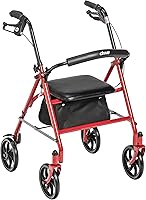
The Drive Medical Rollator Walker with Seat has a padded seat, locking hand brake, and fold-down backrest. Those features may suit someone who wants a place to rest during a walk.
Check the manual for how to lock the brakes and position yourself before using the seat. A rollator seat isn't a substitute for a stable chair when you need a longer rest.
How do you turn with a rollator?
Slow down, keep both hands on the handles, and take small steps through the turn. Guide your body and the rollator together instead of twisting your torso or pulling the frame sharply sideways.
Make wider turns when you have room. Tight turns can bring the wheels close to your feet or furniture, so pause and reposition if the frame feels awkward.
Practice in an open, level area before trying narrow hallways. Keep your feet clear of the wheels and avoid turning quickly while the rollator is moving.
How do you use a rollator on slopes and uneven ground?
Slow down on slopes and uneven ground, and keep both hands on the handles. Use your brakes to manage speed and follow your rollator's manual for surfaces and slopes.
Some models have brakes designed to help manage downhill movement, but their operation varies. Practice the brake controls in a safe area and ask a clinician for advice if slopes are difficult.
Avoid crossing deep gaps, loose gravel, or steep slopes if the rollator feels hard to control. Choose a smoother route or get help rather than taking a risk.
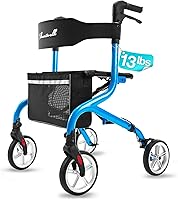
PLANET WALK describes its rollator as having a two-way parking brake, 8 in rubber wheels, and a 13 lb frame. Its lighter frame may appeal if you need to lift the rollator into a car, but weight alone doesn't determine whether it suits your walking needs.
Use the brakes as directed and check them before first use. The rollator's manual should guide setup, adjustments, and use on slopes.
How can you keep your body inside the frame?
Keep your feet between the rear wheels and your hips close to the handles. This position helps you stay within the rollator's support area as you walk.
Don't walk behind the frame with your arms stretched forward. Reaching can pull your weight ahead of your feet and make the rollator harder to control.
Keep your hands on both handles while moving. If you need to reach for a door, bag, or object, stop and lock the brakes first.
The Medline Steel Rollator Walker with Seat has adjustable handles, hand brakes, and a foldable frame. Handle adjustment may help you set a comfortable position, as long as you follow its manual and can stand upright while holding the grips.
Ask a clinician to help check your position if you tend to lean over the handles or feel unsteady. The right height and technique depend on your body and needs.
What should you check before each walk?
Check the brakes, wheels, frame, and walking path before you set off. Stop and address loose parts, damage, or a brake problem before using the rollator.
Make sure the wheels turn as expected and that parking locks hold the frame still. Keep bags or other items from interfering with the wheels or your feet.
A recall can affect whether a rollator is safe to use. If your Medline rollator may be affected, see how to check for a Medline rollator recall.
Is a rollator the right walking aid for you?
A rollator is for people who can walk but need support or rest breaks, while other aids may suit different needs. Your clinician can help you choose an aid and practice using it safely.
A rollator's wheels may make it easier to keep moving, but they also mean you need to manage the brakes and frame position. Compare it with a walking frame or a wheelchair if you're deciding between types of mobility aid.
A cane may suit someone who needs a different level of support. Learn about walking canes for adults and the best wood for a walking cane if you're exploring that option.
Some walkers designed for one-sided use have different movement needs. Our guide to range of motion for a hemi walker explains what to consider.
What is the safest way to practice walking with a rollator?
Practice on a level, open surface with someone nearby if you need help. Work on starting, stopping, turning, and locking the brakes before using the rollator outside or in crowded spaces.
Move at a pace you can control. If you feel dizzy, weak, or less steady than usual, stop and get help rather than continuing alone.
Choose the Drive Medical model if a padded seat and fold-down backrest matter to you. If you need a higher weight rating, compare rollators with 500 lb capacity.
Consider PLANET WALK if a 13 lb frame is useful for transport, or Medline if adjustable handles and a foldable steel frame fit your needs.
Frequently asked questions
How do you walk with a rollator correctly?
Stand upright inside the frame with both hands on the handles. Release the parking locks, move the rollator a short distance, and step toward it without letting it get too far ahead.
Keep your feet inside the frame and use the brakes to slow or stop.
Should you push a rollator ahead of you?
Move a rollator only a short distance ahead, within a comfortable reach, then step forward into its frame. If it rolls far ahead, you may lean or stretch to catch up.
Keep your posture upright and follow the instructions from your clinician or the rollator manual.
How do you turn with a rollator?
Slow down before turning and use small steps to guide your body and the rollator through the turn together. Keep both hands on the handles and avoid twisting sharply or pulling the frame sideways.
Practice wide turns in an open area before using the rollator in tight spaces.
When should rollator brakes be locked?
Lock both brakes before sitting on the rollator seat, standing up from it, or leaving the rollator parked. Check that it stays still before putting your weight on the seat.
Open the brakes only when you're ready to walk and can hold both handles.