Rollator vs Walking Frame: A Quick Guide
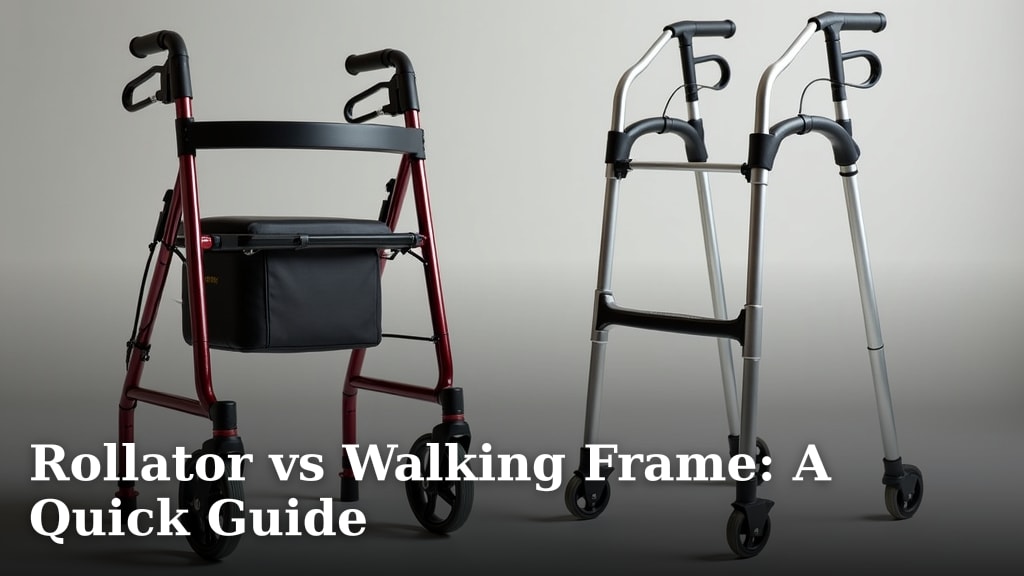
Choosing between a rollator and a walking frame depends on your specific needs for mobility support. A rollator offers more stability with its wheels and brakes, making it ideal for longer distances and general independence. A walking frame provides basic support but requires more effort to move.
While both aids help you move around more safely, they serve different purposes. A rollator, often called a walker with wheels, gives you more freedom to keep moving without lifting. A standard walking frame is simpler, offering a consistent point of contact for steadying yourself. Understanding these differences helps you pick the right support.
- Rollators have wheels and brakes for easier movement and stopping.
- Walking frames are static and require lifting to move forward.
- Rollators are better for walking longer distances.
- Walking frames are good for basic stability and support.
- Your choice depends on your mobility level and daily activities.
Let’s walk through the key differences to help you decide which mobility aid is the best fit for your lifestyle.
Deciding Between a Rollator and a Walking Frame
Choosing the right mobility aid can make a big difference in your daily life. You might be wondering about the key differences between a rollator and a walking frame. We’ve looked into this to help you make an informed decision. A rollator offers more features for those who want to keep moving with stability. A walking frame is a simpler tool for basic support.
What Exactly is a Walking Frame?
A walking frame, often called a standard walker, is a simple four-legged device. You use it to help you stand and walk. It doesn’t have wheels, meaning you need to lift it slightly with each step. This constant contact gives you a very steady base of support. Many experts suggest these are good for people who need just a little extra help staying balanced (CDC).
Think of it like this: when you’re walking, you plant your feet, then move forward. A walking frame works similarly. You place the frame, then move yourself forward, maintaining contact with the ground. This makes it a reliable choice for getting around your home.
The Simplicity of a Standard Frame
The main advantage of a walking frame is its simplicity and stability. Because it has no wheels, it won’t roll away from you. This can provide a great sense of security. You know it’s not going anywhere until you decide to move it.
These frames are typically made of lightweight metal. They are easy to manage for most people. The focus is on providing a consistent point of contact. This helps reduce the strain on your legs and back.
What is a Rollator and How Does it Differ?
A rollator is also a mobility aid, but it has wheels. Usually, they have three or four wheels. They also come with handles that have built-in brakes. This is a major difference from a standard walking frame.
The wheels allow you to roll the device forward without lifting. This takes less effort than a standard walker. The brakes are crucial for safety. You can squeeze the levers to slow down or stop completely. This is especially helpful when you are going downhill or need to pause.
The Benefits of Wheels and Brakes
The biggest benefit of a rollator is its mobility and ease of movement. You can walk at your own pace without the constant effort of lifting. This makes them great for covering longer distances. You might find them useful for trips to the grocery store or for walks outdoors.
Many rollators also include a seat. This allows you to rest when you need to. It’s like having a portable bench with you. This feature can be a lifesaver if you fatigue easily. The seat also offers a place to put your belongings.
Added Features to Consider
Beyond the wheels and brakes, rollators often have other handy features. Many come with a basket or pouch. This is perfect for carrying personal items, shopping bags, or even a book. It keeps your hands free to steer.
Some models are designed to be more compact. Others are built for heavier individuals. You can also find specialized rollators, like those designed for all-terrain use.
Key Differences at a Glance
To help you see the main distinctions clearly, let’s lay them out side-by-side. Think about your own needs and what would make your day easier.
| Feature | Walking Frame | Rollator |
|---|---|---|
| Movement | Requires lifting with each step | Rolls on wheels, no lifting needed |
| Stability | Very stable, constant ground contact | Stable with brakes, needs user to manage rolling |
| Brakes | None | Integrated hand brakes |
| Speed | Slower, step-by-step | Can move faster, continuous rolling |
| Portability | Lightweight, sometimes foldable | Can be heavier, often foldable |
| Added Features | Basic frame | Seat, basket/pouch often included |
Who Benefits Most from Each Type?
Your choice really depends on your personal situation. Let’s break down who typically benefits from each.
Ideal Candidates for a Walking Frame
A walking frame is best for someone who needs basic support and stability. If you only need help with balance around your house, this might be perfect. It’s good for those who don’t need to travel long distances. The simplicity means less can go wrong.
It’s also a good choice if you have trouble with fine motor skills. Operating hand brakes might be challenging for some. A walking frame requires only straightforward gripping and lifting. Many therapists recommend them for post-surgery recovery when limited movement is advised.
Ideal Candidates for a Rollator
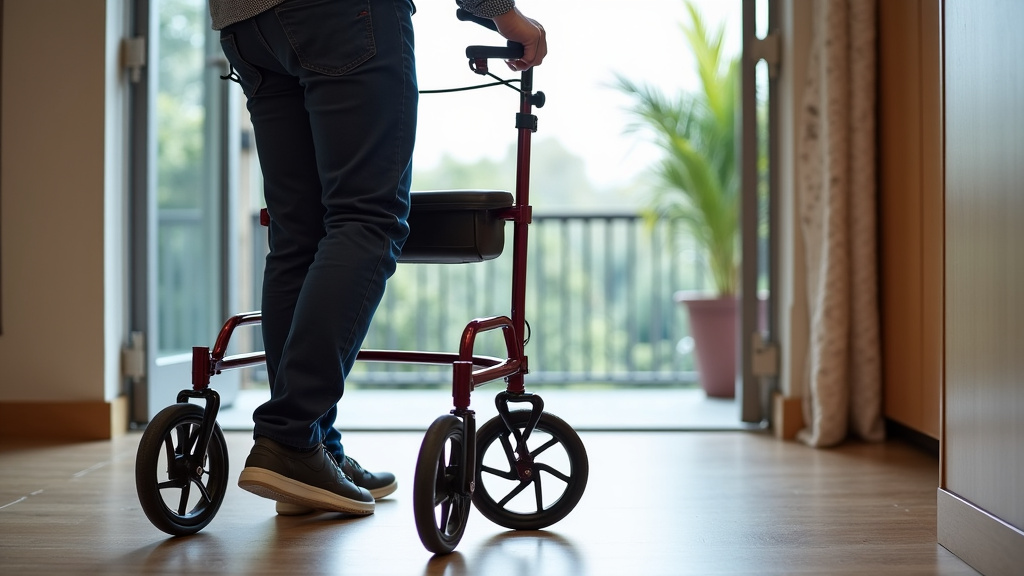
A rollator is excellent for individuals who want to maintain independence and mobility. If you enjoy going out for walks or need to navigate larger spaces, a rollator is a great option. The wheels make it much easier to cover ground.
People who experience fatigue easily will find the seat on a rollator very useful. It offers a place to rest without needing to find a bench. The ability to easily stop and start with brakes also appeals to many users.
Making Your Final Choice: A Checklist
To help you decide, ask yourself these questions. Think honestly about your daily routine and physical capabilities.
- How much walking do you typically do each day?
- Do you often feel fatigued and need to rest?
- Do you need help with balance, or do you need help with steady movement?
- Do you navigate uneven terrain or just smooth indoor surfaces?
- Are you comfortable operating hand brakes?
- Do you plan to use the aid mostly at home or also outdoors?
Answering these will guide you toward the right mobility aid. We found that considering your environment and your energy levels is key (NIH).
Conclusion
Deciding between a rollator and a walking frame boils down to your personal mobility needs. A walking frame offers simple, consistent support, ideal for basic balance help around your home. A rollator, with its wheels and brakes, provides greater freedom for longer distances and easier movement without lifting. We found that assessing your daily activities and energy levels is key. Consider how much you move and if you need a place to rest. Take a moment to think about these factors. This will help you choose the mobility aid that best supports your independence and comfort every day.
Frequently Asked Questions
Are rollators hard to learn how to use?
Rollators are generally easy to learn. Most people get comfortable with the handles and brakes quickly. The key is to practice steering and using the brakes on a flat surface. We recommend taking a few short practice walks before relying on it for longer trips.
Can a walking frame be used on stairs?
No, standard walking frames are not designed for use on stairs. They require lifting with each step, which is unsafe on a staircase. Always use appropriate mobility aids for stairs, or ensure you have someone to assist you.
Do rollators come in different sizes?
Yes, rollators come in various sizes to fit different users. You can find standard models, as well as wider or taller options. It’s important to choose one that allows you to stand comfortably and reach the handles at a good height.
Is a walking frame lighter than a rollator?
Typically, a standard walking frame is lighter than a rollator. This is because frames are simpler structures without wheels or braking mechanisms. However, many rollators are designed to be lightweight and foldable for easier transport.
Can I use my rollator as a seat if I get tired?
Many rollators are equipped with a built-in seat specifically for resting. Always ensure your rollator is on a stable, flat surface and that the brakes are locked before you sit down. This is a great feature for maintaining independence on longer outings.