How to Choose a Mobility Aid Rated for 700 Pounds
A 700 lb weight requirement calls for a mobility aid with a confirmed 700 lb capacity. Don’t assume a standard or bariatric rollator meets it; verify the exact model’s rating and fit with the manufacturer or a qualified mobility equipment provider.
On this page (7 sections)
- What does a 700 lb capacity mean for a rollator?
- Do the 600 lb and 500 lb options meet a 700 lb need?
- Why don’t these three rollators qualify for 700 lbs?
- What fit and room checks matter?
- How do you decide whether a rollator is appropriate?
- What should you ask before choosing a high-capacity mobility aid?
- How to choose a rollator when capacity is confirmed
A mobility aid for a 700 lb weight requirement needs a confirmed rating of at least 700 lbs for the exact model. Don’t treat the word “bariatric” as proof of capacity; verify the rating with the manufacturer or a qualified mobility equipment provider before use.
The three rollators below have stated limits of 300 or 350 lbs. They’re included to make the gap clear, not as options for someone who needs a 700 lb capacity.
Start by confirming whether a rollator is suitable for the person’s mobility needs. Our guide to what a bariatric rollator is explains the term and why the exact capacity still matters.
What does a 700 lb capacity mean for a rollator?
A 700 lb capacity means the manufacturer has assigned that limit to a specific model under its stated conditions. It does not mean every bariatric rollator can support 700 lbs, or that two models with the same label have the same rating.
Ask whether the published limit applies to the user alone or includes items carried in a pouch or basket. Also ask whether the rating changes with the seat in use, the user’s position, or the way the rollator is moved.
Get the answer for the exact model number. Keep the manufacturer’s instructions and the capacity information so a caregiver or provider can refer to them later.
How to verify a bariatric rollator walker rated for 700 lbs
A bariatric rollator walker rated for 700 lbs must have a clear, model-specific capacity. Confirm that figure directly with the manufacturer or the provider selling and fitting the equipment.
Use these checks:
- Find the model number and the stated user weight limit.
- Ask whether that limit includes items carried on the rollator.
- Confirm the limit applies to the intended use, including sitting on the seat if that is planned.
- Request the instructions for setup, brakes, seat use, maintenance and inspection.
- Confirm the frame, seat and other parts are approved for that model and capacity.
- Ask who to contact if the model number, rating or instructions are unclear.
A general product label or category name cannot answer these questions. If the manufacturer cannot confirm the capacity for the exact model, don’t rely on it for a 700 lb requirement.
Do the 600 lb and 500 lb options meet a 700 lb need?
No. A 600 lb or 500 lb rating is below a 700 lb requirement, even when the model is described as bariatric or heavy duty.
A smaller gap is still a gap; don’t use a rollator above its stated limit.
For a lower weight requirement, compare the specific limits and fit details in our guides to a bariatric rollator rated for 600 lbs and bariatric rollators with 500 lb capacity. Those guides don’t establish suitability for 700 lbs.
Don’t combine ratings from separate parts or add a margin based on guesswork. The manufacturer’s instructions for the complete rollator are the relevant source.
Why don’t these three rollators qualify for 700 lbs?
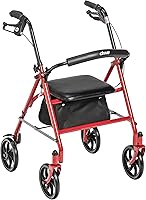
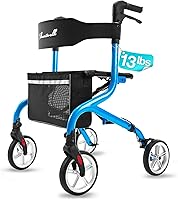
None of these examples reaches the required capacity. Drive Medical and Medline state 350 lb limits, while PLANET WALK states 300 lbs.
The Drive Medical model has 7.5 in wheels, a height adjustment lever, ergonomic handles and a fold-down backrest. Its 350 lb limit means it is not suitable for a 700 lb requirement.
PLANET WALK describes this model as weighing 13 lb and folding for storage. Those portability features do not change its 300 lb limit.
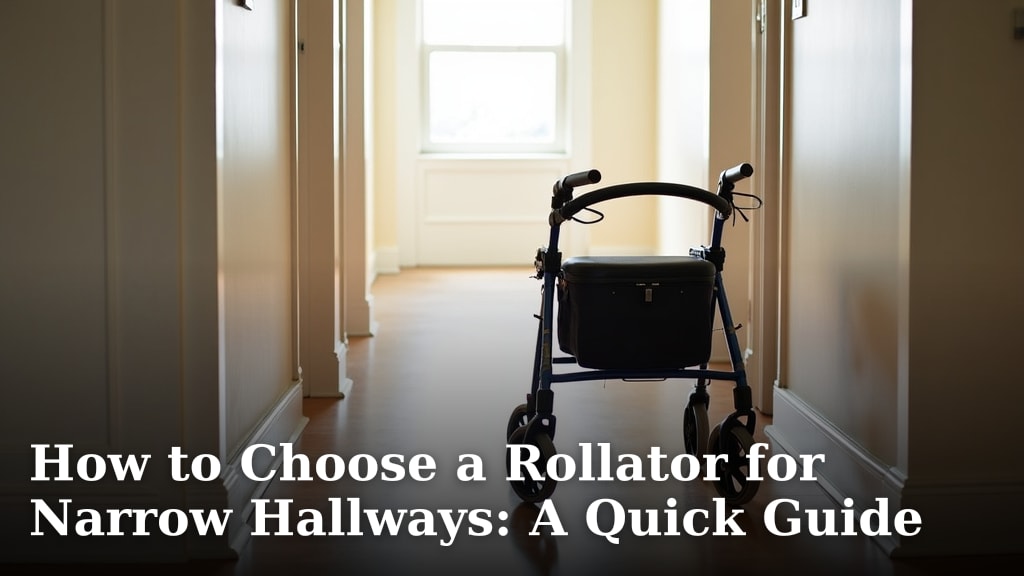
Medline describes this rollator with 6 in wheels and a frame that folds for transport. Its stated weight limit is 350 lbs.
These examples show why capacity must come before convenience features. A seat, wider tires or steel frame cannot make a model suitable above its stated limit.
What fit and room checks matter?
Once a model’s capacity is confirmed, compare its dimensions and adjustments with the user and the places where it will be used. A suitable capacity alone does not confirm that the rollator fits through doorways or supports a comfortable position.
Measure the user’s height and the handle height they need. Check the seat dimensions and height, then ask the provider how to confirm a safe seated position and whether the brakes hold as intended.
Measure the narrowest doorway, hallway and turning area. Include space to maneuver the rollator and reach storage or seating.
Our guide to choosing a rollator for narrow hallways can help with route measurements.
For broader sizing guidance, use how to choose the right size rollator. Compare the measurements for the exact model, not just its category or brand.
How do you decide whether a rollator is appropriate?
A rollator is intended for someone who can walk while using it for support and needs a place to rest. The right aid depends on the person’s abilities, environment and support needs, so ask a qualified clinician or mobility equipment provider when you’re unsure.
A rollator may not suit someone who cannot control its movement, manage its brakes or use its seat safely. Ask the provider to consider transfers, turning, stopping, uneven surfaces and caregiver assistance.
If a provider recommends a rollator, ask them to show how to adjust and use that model. Follow the model’s instructions for walking, sitting, locking the brakes and checking the frame.
What should you ask before choosing a high-capacity mobility aid?
Ask the manufacturer or qualified provider to confirm the exact model’s capacity, intended use and fit. Get clear answers before ordering or using the equipment.
Use this checklist:
- What is the maximum user weight for this exact model?
- Does that limit include anything carried on the frame?
- Is the seat rated for the same limit, and can the user safely sit on it?
- What measurements should you use to confirm seat and handle fit?
- What are the model’s full width and turning space needs?
- Which surfaces and settings are covered by the instructions?
- How should you check brakes and frame condition?
- Which replacement parts are approved for this model?
- Who can help with fitting, training and maintenance?
Keep the model number with the instructions and your measurements. If a salesperson gives a capacity that conflicts with the manufacturer’s information, ask the manufacturer to resolve the difference before making a decision.
How to choose a rollator when capacity is confirmed
Choose a rollator only after the exact model’s rating meets the user’s weight requirement and a qualified source confirms fit and intended use. For a 700 lb need, verify 700 lbs or more on the exact model, then check seating, dimensions, brakes and instructions.
If the model’s stated limit is 600 lbs or less, it does not meet that requirement. If no suitable rollator can be confirmed, ask a qualified clinician or mobility equipment provider to recommend another type of mobility aid.
For general selection steps, see how to choose a rollator.
Frequently asked questions
Can a standard rollator support 700 lbs?
Don’t assume a standard rollator can support 700 lbs. Check the capacity for the exact model and confirm it meets the user’s weight requirement with the manufacturer or a qualified mobility equipment provider.
The examples in this guide have stated capacities of 300 or 350 lbs, so they don’t meet a 700 lb requirement.
Does the word bariatric mean a rollator is rated for 700 lbs?
No. The word bariatric alone does not confirm a 700 lb capacity.
Check the exact model’s stated weight limit, then confirm whether it includes anything carried on the frame.
Ask the manufacturer or provider to explain the rating before relying on the rollator for support.
What should I measure before choosing a high-capacity rollator?
Measure the user’s hand height, seat needs, doorway openings, turning space and storage route. Compare those measurements with the exact model’s dimensions and adjustment range.
Ask the manufacturer or provider to confirm the fit, rated capacity and safe use instructions for the person and setting.
Can I use a 350 lb rollator if I weigh more than 350 lbs?
No. A rollator rated for 350 lbs does not meet a higher weight requirement.
Do not use it above its stated limit; ask a qualified mobility equipment provider or the manufacturer to help identify a model with a confirmed capacity that fits the user.
Is a rollator the right mobility aid for every person who needs a 700 lb rating?
Not necessarily. A rollator is intended for someone who can walk while using its support, but the right mobility aid depends on the person’s needs, setting and ability to use it safely.
Ask a qualified clinician or mobility equipment provider to help select and fit an appropriate option.