How to Use a Walker Correctly
Use a walker that fits, keep it close, and move it only as far as you can step safely. Follow your clinician's instructions, especially if you have a one-sided weakness or are learning after an injury.
On this page (7 sections)
Use a walker that fits, keep it close, and move it only as far as you can step safely. Follow your clinician's instructions, especially if you have a one-sided weakness or are learning after an injury.
A walker can help with balance and support, but it needs to stay under your control. These steps cover a standard walker and a wheeled rollator, which move differently.
Compare walker types for seniors to understand other options.
How should a walker fit before you start?
Set the handles near wrist level when you stand upright with your arms relaxed. Your elbows should bend slightly when you hold them, and you should be able to stand tall without leaning.
Ask a clinician, physical therapist, or qualified equipment provider to adjust the walker and show you how to use it. Don't use a walker with loose handles, damaged tips, or brakes that do not hold.
Wear closed, non-slip shoes and check the route for rugs, cords, clutter, and wet spots. Keep both hands free to grip the handles.
A walker with a seat needs its brakes checked before each use. If you're considering a wheeled model, first compare a rollator and a standard walker to understand how their movement and brakes differ.
How do you walk with a standard walker?
Move the walker a short distance ahead, set all four points firmly on the floor, then step forward into the frame. Keep your body upright and avoid reaching far beyond the handles.
If one leg is weaker, a clinician may teach you to move the walker first, then the weaker leg, followed by the stronger leg. The correct sequence depends on your condition and any instructions about how much weight you can put on each leg.
Take small steps and keep your feet inside the walker's frame. Don't push the walker so far ahead that you need to lean or lunge to reach it.
Some people use a hemi walker when one hand needs to stay free or one side is weaker. Ask a clinician whether it fits your needs, and review the range of motion needed for a hemi walker before considering one.
How do you turn and move through doorways?
Take several small steps to turn, keeping the walker close and all its feet on the floor. Avoid twisting your body while your feet stay planted.
For a doorway, approach slowly and check that the walker fits through before you move. Don't tip or lift the frame unless a clinician has shown you a safe method for your walker.
Step carefully over thresholds and keep the walker level. If a threshold or narrow space makes you reach, twist, or lose balance, stop and get help.
How do you sit down and stand up with a walker?
Back up until you feel the chair behind your legs, reach for the seat or armrests, and lower yourself slowly. Keep the walker in front of you for balance, but don't use it as a handhold to lower yourself into the chair.
To stand, push from the chair's armrests or seat. Once you're upright and steady, take hold of the walker.
With a rollator, lock both brakes before sitting or standing, and use only a seat designed for that walker. Don't sit on a standard walker, or on a rollator whose brakes won't lock securely.
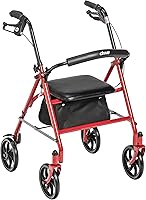
The Drive Medical Rollator Walker with Seat includes a steel frame, height-adjustable handles, a padded seat, and a hand brake that locks for stationary seating. Check the brake operation and fit before using any rollator as a seat.
How do you use a rollator correctly?
Keep a rollator close, walk at a controlled pace, and use its brakes whenever you stop. Unlike a standard walker, it rolls continuously, so the brakes and your ability to control its movement matter.
Stand upright between the handles rather than letting the rollator get ahead of you. Use the hand brakes to slow or stop, and lock them before sitting or standing.
Don't lean heavily on the handles or use the rollator to pull yourself up. If you can't control its motion or reach its brakes reliably, ask a clinician about a different aid; this guide to who should not use a rollator explains common reasons to seek advice.
The PLANET WALK Super Lightweight Rollator Walker has an aluminum frame, adjustable handles, and a two-way parking brake. Its 13 lb weight may also matter if you need to lift a rollator for storage or transport.
The Medline Steel Rollator Walker with Seat has adjustable handles, a padded seat, and brakes that lock the wheels. Check its exact rating in the Medline rollator weight capacity guide before use.
Before using it, make sure you can squeeze the brakes and push them into the locked position as directed.
What should you check before each walk?
Check the handles, frame, wheels or tips, and brakes before you start. A damaged part or brake that slips can make the walker harder to control.
For a rollator, check that the wheels turn and both brakes lock the walker in place. For a standard walker, check that all tips or wheels are secure and that its legs sit evenly on the floor.
Keep the path clear and well lit. If your walker folds, confirm that it is fully open and locked before putting weight on it.
If you own a Medline rollator, use these steps to check for a Medline rollator recall when checking whether your specific model has a safety notice.
When should you ask a clinician for help?
Ask a clinician or physical therapist if you feel unsteady, have pain, or aren't sure which walker to use. Get help promptly if the walker tips, slips, or no longer fits your height.
A clinician can teach you how to move with one-sided weakness, follow weight-bearing limits, manage a step or threshold, and transfer between sitting and standing. Have them observe you using the walker where you plan to walk.
Choose a standard walker if you need a frame that stays put while you step, unless your clinician advises otherwise. Consider a rollator only if you can control its movement and operate its brakes; for more on that choice, see whether a rollator is better than a walker.
For everyday walking, keep the frame close and take short, steady steps. If you use a rollator, follow these steps for walking with a rollator and lock its brakes before sitting or standing.
Frequently asked questions
How far should you move a walker when walking?
Move the walker only a short distance, then step into it without reaching far forward. Keep your feet inside its frame and follow your clinician's instructions for your specific walker and condition.
If you can't keep the frame close or steady, stop and ask for help.
Should you step into or behind a walker?
Step into the walker so your body stays inside its frame. Keep it close enough that you don't lean forward or reach for the handles.
Your clinician can show you the right sequence if one leg is weaker or you have specific weight-bearing limits.
How do you stand up using a walker?
Push up from the chair's armrests or seat, then take hold of the walker once you're standing and balanced. Don't pull on a standard walker to rise, because it can tip.
For a rollator, lock both brakes before sitting or standing.
Can you use a walker on stairs?
Don't try to carry a standard walker up or down stairs while using it for support. Ask a physical therapist or clinician to teach a safe method for your home, or discuss another mobility aid.
Keep the walker on a flat surface while you use it.