Rollator vs Standard Walker: For Seniors
On this page (3 sections)
When choosing between a rollator and a standard walker for seniors, a rollator generally offers more stability and convenience. A rollator has wheels and a seat, allowing you to walk with support and take breaks easily. Standard walkers provide a stable base but require you to lift them with each step.
Both mobility aids are designed to help seniors maintain independence. However, they differ in features like maneuverability and the ability to rest. Understanding these differences is key to selecting the best mobility aid for your specific needs. We’ve researched the primary distinctions to help you decide.
- Rollators offer wheels and a seat for resting.
- Standard walkers require lifting with each step.
- Rollators are good for longer distances and breaks.
- Walkers are simpler and may offer more stability for some.
- The right choice depends on your mobility level and needs.
Let’s walk through the key differences between a rollator and a standard walker to help you make the best choice for enhanced mobility.
Choosing the Right Mobility Aid: Rollator vs. Standard Walker for Seniors
Selecting between a rollator and a standard walker is a big decision for maintaining your independence. Both help you move safely. But they offer different levels of support and convenience. We’ve looked into what makes each one unique to help you decide. Your mobility needs are personal. What works for one person might not be the best fit for another.
Understanding the Basics: What’s the Difference?
At its core, the difference lies in how they move and support you. A standard walker requires you to lift it with each step. It’s like having a steady, immobile frame. A rollator, on the other hand, has wheels. This means you can glide smoothly. It’s designed for easier movement without lifting. This simple distinction opens up a world of possibilities for how you navigate your environment.
Standard Walkers: Simple Support for Steady Steps
Think of a standard walker as your reliable, no-frills partner. It has a sturdy frame with four legs. You pick it up and place it down as you walk. This action provides a very stable base. Many seniors find this reassuring. It’s especially helpful if you have balance issues or need consistent support. The walker stays put until you move it. This predictability can be a huge comfort.
When a Standard Walker Shines
Standard walkers are fantastic for people who need maximum stability. They don’t roll away unexpectedly. This is a key safety feature for many. They are also generally lighter than rollators. This can make them easier to manage if you have some upper body strength. If your main goal is a solid, dependable support for shorter distances or controlled movements, a standard walker is a great choice.
Limitations of Standard Walkers
The biggest challenge with standard walkers is the physical effort required. You must lift and place the walker with every step. This can be tiring, especially for longer distances. It can slow you down considerably. Also, there’s no built-in place to rest. If you get tired, you need to find a chair or wall. This might limit how far you feel comfortable going.
Rollators: Wheels, Brakes, and a Seat for Convenience
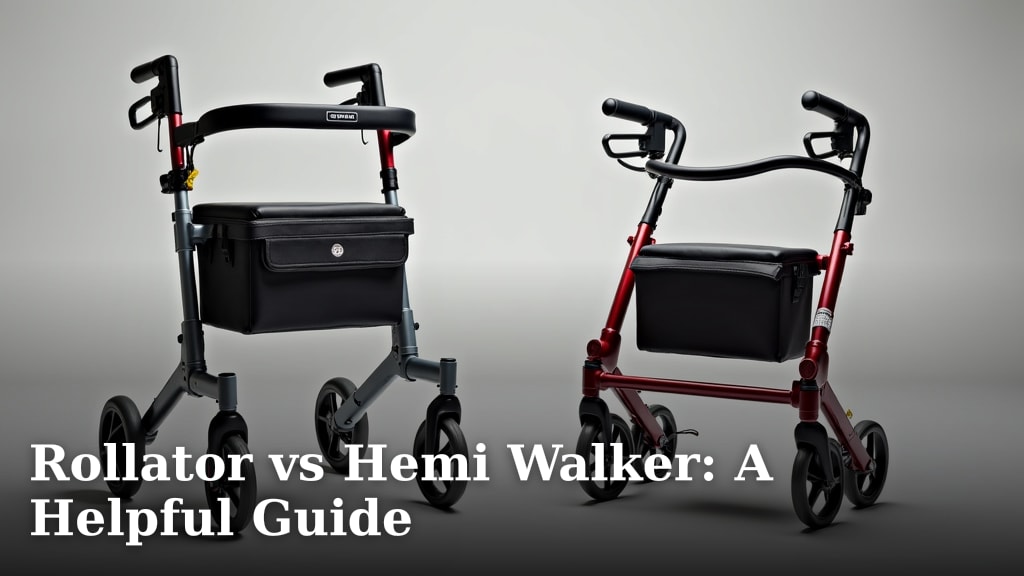
Now, let’s talk about rollators. These are often called wheeled walkers. They come with at least two, and usually four, wheels. This makes moving much more fluid. You push the rollator, and it moves with you. It’s a much more effortless way to travel. Many rollators also include a built-in seat. This is a game-changer for anyone who needs frequent breaks.
The Benefits of Rollator Wheels and Brakes
The wheels are the star feature. They allow you to walk with a more natural gait. You don’t have to stop your momentum to reposition your aid. Plus, most rollators have hand brakes. These are essential for safety. You can slow down on inclines or stop completely. You can even lock the brakes when you want to sit on the seat. This combination of movement and control is highly appealing.
The Built-In Seat: A Rest Stop Anywhere
Imagine going for a walk and feeling a bit tired. With a rollator, you can simply flip down the seat and take a break. This convenience is invaluable. It means you can venture out for longer periods. You’re not constantly worried about finding a place to sit. Many seniors report feeling more confident and less anxious about their mobility when they have this feature.
Rollator Maneuverability and Features
Rollators can navigate different surfaces better than standard walkers. The wheels help them roll over small bumps or uneven pavement. Some models have larger wheels for outdoor use. They also often come with accessories like a basket or pouch. This lets you carry personal items, like a purse or water bottle. This adds to their practicality for daily life.
Key Differences at a Glance: A Quick Comparison
Let’s summarize the main points. This table highlights the core distinctions to help you visualize the differences. It’s like comparing a bicycle to a tricycle – both get you around, but the experience is quite different.
| Feature | Standard Walker | Rollator |
|---|---|---|
| Movement | Lift and place each step | Rolls with you, minimal lifting |
| Speed | Slower, more deliberate | Faster, more fluid |
| Resting | No built-in seat | Usually includes a seat |
| Stability | Very high, fixed base | High, but wheels can move |
| Effort | Requires more physical effort | Requires less physical effort |
| Portability | Often lighter, may fold | Can be heavier, usually folds |
Who Benefits Most from Each Type?
The best choice really depends on your personal circumstances and abilities. We found that individuals with significant balance challenges who need a fixed point of support often prefer standard walkers. They offer that unwavering stability that can prevent falls. If you have good upper body strength and can manage lifting, it’s a solid option.
On the other hand, rollators are ideal for people who can walk but need help with endurance and stability over distance. If you want to maintain an active lifestyle and enjoy longer outings, a rollator can be a true enabler. The ability to sit down when needed is a huge advantage for many. It helps prevent fatigue from becoming a barrier.
Making Your Decision: A Checklist for Seniors
To help you decide, ask yourself these questions. Think honestly about your daily activities and physical condition. This will guide you toward the most suitable mobility aid.
- Do you need to lift the aid with each step?
- How much upper body strength do you have?
- Do you often need to rest while walking?
- How far do you typically walk in a day?
- What kind of terrain do you usually navigate?
- Does the idea of a seat for breaks appeal to you?
Research from organizations like the CDC often highlights the importance of mobility aids in preventing falls. They aim to help seniors stay active and independent safely. Whether you choose a rollator or a standard walker, the goal is the same: to support your journey with confidence and ease. Consider your comfort, your environment, and your personal goals. With the right aid, you can continue to enjoy your life to the fullest.

Conclusion
Choosing between a rollator and a standard walker is a personal decision. We’ve seen that standard walkers offer maximum stability for those who need a fixed support. Rollators, with their wheels and seats, provide more freedom for longer distances and frequent breaks. Your lifestyle, physical strength, and environment are key factors. Consider how much effort you can manage and if you need a place to rest. The right mobility aid can greatly improve your daily life and independence. We encourage you to think about these points and discuss your options with a healthcare professional for the best fit.
Frequently Asked Questions
Can a standard walker be used on uneven outdoor surfaces?
Standard walkers are best suited for smooth, indoor surfaces. Their fixed legs can get caught on uneven ground, making them less stable outdoors. You’ll need to lift them carefully over small obstacles.
Are rollators heavy to lift into a car?
Rollators can be heavier than standard walkers due to their frames and wheels. Many are designed to fold for easier transport, but you should check the weight and folding mechanism if portability is a major concern.
Which type of mobility aid is better for balance issues?
For significant balance issues, a standard walker often provides more consistent, unwavering support. Its fixed base doesn’t move unexpectedly, which can be crucial for preventing falls.
Can I use a rollator’s seat if the brakes aren’t locked?
It is not recommended to sit on a rollator without locking the brakes. Unlocked brakes could allow the rollator to roll away while you are seated, creating a fall hazard.
How do I know if I have enough upper body strength for a standard walker?
You should have enough upper body strength to comfortably lift the walker about two inches off the ground and place it a step ahead. If this causes strain or fatigue, a rollator might be a better option.