How to Choose a Bariatric Rollator Rated for 600 Pounds
A bariatric rollator rated for 600 lbs must have a clearly stated capacity of at least 600 lbs. Check the specific model’s weight limit, seat and frame details, and confirm that the device is a rollator if you need wheels, hand brakes and a seat.
On this page (6 sections)
- How do you verify a bariatric rollator’s 600 lb capacity?
- Is a rollator the right kind of walker?
- What else should you check besides weight capacity?
- Which example rollators fall short of 600 lbs?
- What should you ask before buying a 600 lb rollator?
- How do you choose a bariatric rollator rated for 600 pounds?
A bariatric rollator rated for 600 lbs must have a stated capacity of at least 600 lbs for the exact model you are considering. The word “bariatric” alone does not confirm a weight limit, and a wide seat or strong-looking frame is not a substitute for checking the maker’s stated capacity.
A rollator is a wheeled walking aid, usually with hand brakes and often a seat. Some product names use “walker” for a rollator, so look at the design and stated features as well as the name.
How do you verify a bariatric rollator’s 600 lb capacity?
Verify capacity by finding a clear maximum user weight for the exact model and confirming it is at least 600 lbs. Check the model number too, since products in one brand’s range can have different limits.
Look for the capacity in the maker’s specifications or instructions. If it is missing, unclear or different across sources, contact the manufacturer or a mobility equipment supplier before buying.
Do not infer a 600 lb rating from words such as “heavy duty,” “bariatric” or “reinforced.” Those terms do not tell you the actual limit.
A seat that looks broad and a steel frame also do not guarantee capacity.
The user’s weight is only one part of the fit decision. Confirm the rollator’s seat width and depth, handle adjustment range, overall dimensions and instructions for sitting, braking and turning.
If you are comparing a lower capacity, our guide to bariatric rollators with a 500 lb capacity explains what to check in that range. For a higher stated limit, see how to choose a bariatric rollator walker rated for 700 lbs.
Is a rollator the right kind of walker?
A rollator is the right category to consider when you need a walking aid that rolls and has hand brakes. Many rollators also have a seat for resting, but you should confirm the seat’s intended use in the model’s instructions.
A standard walker may have no wheels or seat and may need to be lifted as you move. The word “walker” can describe either type in product names, so check the wheel and brake setup rather than relying on that word.
Match the device to how the person walks and rests. If they need to sit often, a rollator seat may matter; if they need a frame that stays in place while they step, another walker design may be more suitable.
A physical therapist, clinician or mobility equipment supplier can help assess the right type.
Before choosing, consider the path where the device will be used. Doorways and turns can limit which rollator fits, so compare width and maneuvering room with our guide to choosing a rollator for narrow hallways.
What else should you check besides weight capacity?
Check fit, seat use, brakes and dimensions alongside the weight limit. These details affect whether the device suits the person and the places they plan to use it.
- Seat size: Compare the seat width and depth with the user’s needs. A seat can be too narrow or shallow even when the capacity is high enough.
- Handle fit: Check the handle height range against the user’s posture and reach. Follow the maker’s adjustment instructions.
- Overall width: Measure doors, hallways and storage spots. Compare them with the device’s total width, not just the seat.
- Brakes: Read how to engage and lock them. Check brake function before use, and follow the instructions for parking and sitting.
- Frame and wheels: Confirm the intended surfaces and care instructions. A rollator suitable for smooth indoor floors may not suit every outdoor route.
- Seat instructions: Check whether and how the maker permits sitting. Lock the brakes as directed before using the seat.
- Transport and storage: Consider the folded size and device weight if someone needs to lift or stow it.
For a broader fit checklist, read how to choose the right size rollator. A suitable weight rating is essential, but it does not guarantee that the seat, handles or width will fit.
Which example rollators fall short of 600 lbs?
The three examples below have stated capacities below 600 lbs, so they are not options for someone who needs a rollator rated for 600 lbs. They can still illustrate why you should check a model’s actual specifications instead of relying on broad labels.
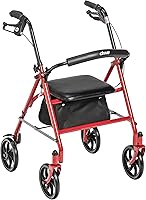
The Drive Medical Rollator Walker with Seat has a steel frame, padded seat, height adjustment, locking hand brake and under-seat pouch. Its stated capacity is 350 lbs.
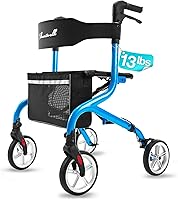
The PLANET WALK Super Lightweight Rollator Walker has an aluminum frame, seat, two-way parking brake and folding design. Its stated maximum capacity is 300 lbs.
The Medline Steel Rollator Walker with Seat has a steel frame, padded seat and backrest, adjustable handles and folding frame. Its stated capacity is 350 lbs.
None of these three examples is rated for 600 lbs. Use them to see how product details can vary, not as substitutes for a rollator whose exact model capacity meets your requirement.
To compare general selection factors, see how to choose a rollator. If you also need bathroom equipment, our commode chair guide covers a separate type of mobility aid.
What should you ask before buying a 600 lb rollator?
Ask the manufacturer or seller to confirm the exact model’s maximum user weight in writing if the information is unclear. Also ask for the model number and instructions so you can check that the capacity applies to the configuration you intend to use.
You can use this short checklist:
- What is the exact model number?
- What maximum user weight does the maker specify for that model?
- What are the seat’s width and depth?
- What is the handle adjustment range?
- What are the overall and folded dimensions?
- How should the brakes be checked and locked?
- What does the maker say about using the seat and rolling over the surfaces in your home?
If a seller cannot confirm a capacity of at least 600 lbs, keep comparing. Do not assume a product qualifies because similar models have higher limits.
How do you choose a bariatric rollator rated for 600 pounds?
Choose a model only after confirming a stated capacity of at least 600 lbs for its exact model number. Then check the seat dimensions, handle fit, brakes, overall width and instructions for use.
If you cannot confirm the capacity or are unsure that a rollator is the right aid, ask the manufacturer or a mobility equipment professional before buying. A clear rating plus a suitable fit gives you a practical starting point for comparing options.
Frequently asked questions
What does a 600 lb capacity mean on a rollator?
A 600 lb capacity is the maximum user weight the manufacturer assigns to that specific model. Confirm that the number applies to the exact model and configuration you plan to buy, then follow its instructions.
Don't treat a frame description, seat width or general label such as bariatric as proof of a 600 lb limit.
Can a 350 lb rollator work for someone who weighs 600 lbs?
A rollator rated for 350 lbs is not suitable for a 600 lb user based on its stated capacity. Choose a model with a manufacturer-stated limit that meets or exceeds the user’s weight, and ask a health professional or mobility equipment supplier for help if you are unsure which device type fits.
How is a rollator different from a standard walker?
A rollator has wheels and hand brakes, and many models include a seat. A standard walker is often lifted or moved without rolling and may have no seat or hand brakes.
Check the actual design and instructions, since the word walker is also used for rollators.
Does a wider seat prove that a rollator is bariatric?
No. Seat width helps you judge fit, but it does not guarantee the rollator’s maximum user weight.
Check both the seat dimensions and the maker’s stated weight capacity for the exact model.
Also confirm that the seat and brakes are meant to be used as directed.
What should I check before using a high-capacity rollator?
Check that the model’s stated capacity meets the user’s weight, then read its setup and use instructions. Confirm fit, brake operation, seat use and the device’s condition before moving.
A mobility equipment professional can help assess whether a rollator, another walker or a different aid is appropriate.