Transport Chair vs Rollator: Which Should You Choose? (November 2026)
Choose a rollator if you can walk while steering it; choose a transport chair if someone else will push you. A combo can serve both roles, but its chair mode still needs a companion.
On this page (7 sections)
Choose a rollator if you can walk while steering it; choose a transport chair if a companion will push you. A transport chair vs rollator decision depends on who moves the device and whether you need walking support, seated travel or both.
A rollator lets you walk behind it and use its brakes and seat as intended. A standard transport chair is pushed by another person, so it doesn't replace a walking aid.
Combo models add both modes in one frame. They can help when your needs vary, but converting the device and arranging a companion for chair mode are part of the tradeoff.
 Best for companion-led trips
Drive Medical Folding Transport Wheelchair
 Best for switching between modes
Drive Medical Duet Folding Transport Wheelchair
Transport chair vs rollator: who moves the device?
You move a rollator as you walk; a companion moves a transport chair. This difference should guide the choice before you compare wheels, seats or folding features.
A rollator supports walking at a pace you control. You steer it from behind, apply its brakes when needed and may sit for a rest if the model's instructions allow it.
With a transport chair, your companion pushes from behind while you sit. The chair's small wheels are built for that pushed role, so don't count on propelling it yourself.
For a broader comparison of walking support and seated mobility, read Rollator vs Wheelchair: A Senior’s Guide. It can help clarify which kind of device fits your current ability and routine.
When is a rollator the better choice?
Choose a rollator when you can walk while guiding it and want a seat for rest breaks. Its purpose is to support walking, not to carry you while someone pushes.
A rollator may suit errands where you expect to walk most of the way, pause, then continue. You remain responsible for steering, controlling the brakes and turning in the spaces around you.
A seat can provide a place to rest, but it doesn't make every rollator a transport chair. If you need someone to push you for part of a trip, check whether the specific model is designed for that mode.
What should you check before choosing a rollator?
Check fit, brake use and turning space before choosing a rollator. The handle height should let you stand comfortably, and the frame should fit the routes you expect to use.
Think through doorways, crowded aisles, uneven ground and storage at home. A device that's hard to steer or park can be difficult to use even if its seat seems convenient.
The simple guide to choosing a rollator covers features and daily-use questions. For handle and seat fit, use how to choose the right size rollator.
When is a transport chair the better choice?
Choose a transport chair when a companion will push you and you need to travel seated. It suits trips where walking the full route isn't the plan.
A transport chair has a seat, armrests and footrests for seated travel. The user can't walk behind it as a rollator user does, and a companion must be available to move it.
Seat width and depth matter for fit and comfort. Compare the chair's dimensions with your needs, and check footrest placement and transfer space before deciding.
The Carex transport chair with a 19-inch seat guide explains what to consider when seat width is a key part of your choice.
Can one device work as both?
A rollator transport chair combo can support walking in one mode and companion-pushed travel in another. It adds flexibility, but you need to understand how the device changes modes.
The Drive Medical Duet can be used as a rollator or transport chair. Its backrest moves, and the armrests and footrest are used in chair mode, so allow time to set it up as directed.
The FlyingJoy combo also switches between rollator and transport chair modes. It has adjustable handles and seat height, plus detachable footrests for chair mode.
Combos have limits. Chair mode still requires someone to push, and a mode change may involve parts that need to be attached, removed or repositioned.
What do the transport chairs offer?
The Drive Medical and Medline options are transport chairs for companion-pushed trips. Compare their seat dimensions, frame materials and wheel features against your route and fit needs.
The Drive Medical Folding Transport Wheelchair has a 17 in padded nylon seat, padded armrests, swing-away footrests and a fold-flat backrest. Its folding steel frame and 8 in wheels are features to compare if storage and vehicle travel matter.
The Medline chair has a 19 x 16 in seat and an aluminum frame. It includes handbrakes, rear-wheel manual locks and 12 in rear wheels, with swing-away, detachable footrests.
Neither is a rollator, so neither provides the independent walking mode described above. Ask a companion to check the chair's controls and footrests before a trip, and follow the chair's instructions for transfers and use.
Which mobility aid fits your trip?
Pick the device by the way you'll move for most of the trip. If you'll walk with support, consider a rollator; if you'll sit while someone pushes, consider a transport chair.
For walking to nearby shops or moving around familiar indoor spaces, a rollator can keep the walking role in your hands. For an outing where a companion will push you throughout, a transport chair is the more direct match.
A combo may make sense when one trip includes both walking and pushed sections. Compare how it changes modes and whether you can manage its size and parts before relying on it.
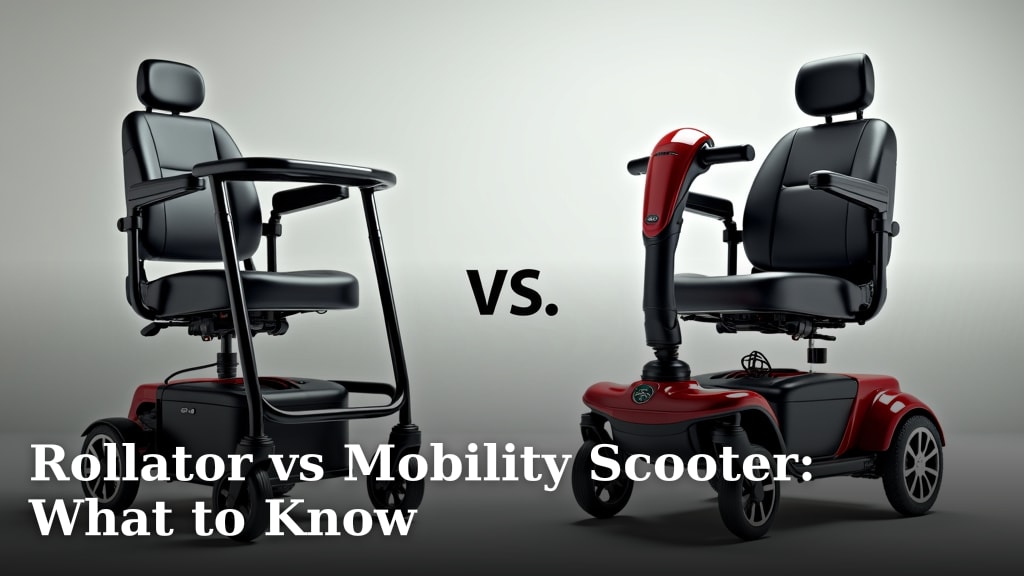
If powered travel is part of the decision, see Rollator vs Mobility Scooter: What to Know.
If you're asking whether a rollator can cover seated travel, Can a Rollator Replace a Wheelchair? The Basics explains the difference.
How should you decide between a transport chair and rollator?
Choose a rollator for walking support, a transport chair for companion-led seated travel, and a combo only when you need both modes. Check fit, transfers and the route you'll take before settling on a device.
A standard rollator doesn't become a chair for someone to push just because it has a seat. A standard transport chair doesn't provide rollator walking support.
Start with who will move the device, then compare seat size, brakes, folding and mode changes.
That decision rule keeps the transport chair vs rollator choice focused on how you'll actually travel.
Frequently asked questions
Can you use a rollator as a transport chair?
Only a rollator designed to convert into a transport chair can be used that way. A standard rollator is for walking support and resting, not for a companion to push as a wheelchair.
Check that the combo includes the needed footrests and follows its instructions before using chair mode.
Can you walk independently with a transport chair?
A standard transport chair is pushed by a companion and isn't designed for you to propel yourself by walking behind it. A rollator supports walking while you steer it.
Some combo devices switch between these roles, but chair mode still calls for a companion.
Which is better for shopping, a transport chair or rollator?
Choose a rollator if you can walk through the store and want a seat for rest breaks. Choose a transport chair if a companion will push you for most of the trip.
A combo may suit changing needs, but check its folded size, seat fit and mode changes.
Is a transport chair the same as a wheelchair?
A transport chair is a type of wheelchair with small wheels that a companion pushes. Many standard wheelchairs have larger rear wheels that let the user propel the chair, though designs vary.
A rollator is a walking aid and isn't a wheelchair unless built to convert.
How do you choose the right rollator size?
Start with handle height, seat dimensions and your ability to use the brakes safely. Measure against the maker's adjustment range and consider where you'll turn and store it.
The guide to choosing the right size rollator covers those checks.