How to Choose a Transport Chair with a 19-Inch Seat
A 19-inch transport chair seat can give adults more sitting room, but seat width alone does not confirm a good fit. Measure the user, doorways, storage space and transfer area before choosing.
On this page (8 sections)
- Is a 19-inch transport chair seat the right size?
- What measurements should you check before buying?
- Which transport chairs suit a 19-inch seat search?
- How do you choose between a 19-inch and narrower seat?
- What should you check for transfers?
- How do weight and folding affect daily use?
- How should you care for a transport chair?
- What is the final rule for choosing a 19-inch transport chair?
A Carex transport wheelchair with a 19-inch seat should be chosen by comparing the user's seated width with seat depth, total width, weight and folding size. The chair must also fit through the narrowest doorway and leave room for safe transfers.
Compare transport chairs and transfer chairs if you are unsure which type you need. A transport chair is pushed by another person, while other chair types may allow different movement or transfer methods.
A wider seat can feel less restrictive, but it does not solve every fit problem. A chair too wide for a hallway or too heavy for the caregiver can be hard to use even when the seat feels comfortable.
Seat width shows room across the hips, yet says little about thigh support, leg position or getting in and out. A deep seat may support more of the legs, while a shallow seat may suit a shorter user or make transfers simpler.
Measure the seated user in normal clothing, with feet supported and posture as natural as possible. Allow small clearance so the user is not pressed against the armrests.
Check overall width next, because doorway space is wider than the seat alone. Brakes, footrests, armrests and the caregiver's hands can add to the space needed in a narrow passage.
Weight matters daily, even at home. A caregiver who lifts the chair into a car or moves it into storage needs a weight that can be handled safely and repeatedly.
Check folding size before purchase, not after delivery. Measure the trunk opening, closet door or storage corner, and confirm the folded shape can pass through and rest there.
Think about where transfers will happen, beside a bed, chair, toilet or vehicle seat. There should be room for the user, the caregiver and any parts that must move during the transfer.
Consider a full day of use, not one short trip. Appointments, family visits and outings call for comfortable seating, reliable brakes and parts that are easy to clean.
Do not choose on seat width alone when other measurements point the other way. A good match supports the user, fits the home and vehicle, and stays manageable for the person who pushes, folds and stores it.
Is a 19-inch transport chair seat the right size?
A 19-inch seat is a useful starting point for adults who need more room than a narrow transport chair provides. Measure the user's hips while seated, then compare that measurement with the seat width and depth.
Measure across the widest part of the hips while the user wears normal clothing. The chair should provide room without forcing the user to lean to one side or slide forward.
Seat width is only one measurement. A deep seat may support more of the thighs, while a shallow seat may make it easier for some users to sit upright and transfer.
Also measure the user's preferred sitting position. Armrests, clothing layers and the need to reposition can change how much usable room is needed.
For a broader overview of chair types and fit, read our guide to best wheelchairs for adults. It can help you compare transport chairs with full-size wheelchair options.
What measurements should you check before buying?
Check seat width, seat depth, overall chair width and folded size before choosing a transport chair. Also compare seat height with the user's transfer needs using this hemi-height wheelchair guide.
These measurements answer different questions about comfort, access and storage.
| Measurement | Why it matters |
|---|---|
| Seat width | Gives the user room across the hips |
| Seat depth | Supports the thighs without forcing the knees into an awkward position |
| Overall width | Determines whether the chair fits through doors and hallways |
| Folded size | Shows whether it can fit in a trunk, closet or storage area |
| Chair weight | Affects how easily a caregiver can lift and carry it |
| Weight capacity | Confirms whether the chair suits the intended user |
| Footrest position | Affects leg support and transfers |
| Armrest style | Changes side clearance and how the user gets in and out |
Measure the narrowest doorway, hallway turn and bathroom entrance. A chair may fit through a front door but fail at an interior doorway or tight corner.
Measure the vehicle opening too. The folded chair needs to pass through the trunk or rear door, not just fit after it is inside.
Start with the front door, then check each interior door the chair will pass through in normal use. A frame that clears the opening may still catch at the edge when brakes, footrests or the caregiver's hands are in place.
Turns deserve the same attention as doorways. A chair can pass straight through a door yet struggle to turn into a bathroom, bedroom or elevator, especially where space is limited.
Measure width at the tightest point and note the turning space beyond it. This helps you see whether the chair will move smoothly or need repeated adjustments that could be tiring for the user and caregiver.
For vehicle storage, measure the trunk or rear opening in both width and height. The folded chair must pass through that opening without awkward lifting or twisting, and it should leave room for other items needed on the trip.
Check the height of the trunk edge as well as the opening itself. A chair that fits inside may still be hard to lift over a high lip, particularly if it must be carried safely by one caregiver.
Brakes, footrests and armrests affect how much space the chair takes during movement and transfers. Measure with those parts in their normal positions so the result reflects real use at home and away from home.
A seat belt, brakes or footrests can affect daily use, but only choose features that match the user's transfer and travel needs. Ask a qualified health professional for guidance if the user has special positioning or transfer concerns.
Write down every measurement before comparing chairs. A clear set of numbers makes it easier to rule out a chair that looks suitable on seat width alone but will not work in the places where it must be used.
Which transport chairs suit a 19-inch seat search?
The Medline Ultra Lightweight Transport Wheelchair for Adults is the closest match here because its title specifies a 19-inch seat width. The Drive Medical options offer different seat widths and are useful comparisons when you are deciding how much room is necessary.
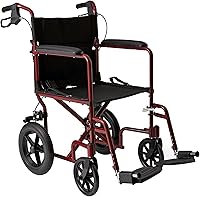
Medline Ultra Lightweight Transport Wheelchair: best match for a 19-inch seat
The Medline Ultra Lightweight Transport Wheelchair for Adults has a 19 in wide x 16 in deep seat, a 15 lb weight and a 300 lb weight capacity. Its aluminum frame folds, and its red frame has black upholstery.
The chair has desk-length cushioned armrests and easy-clean nylon fabric. Its swing-away footrests help create more open space during transfers, while 8 in rear wheels, swivel front wheels and rear-wheel locking brakes support caregiver movement.
Medline also includes a cup holder, seat belt and comfortable hand grips. No assembly is required.
Choose this model when the 19-inch seat is the main requirement and a 15 lb chair matters for transport. Still compare the 23.25 in product width with your doorways and storage area.
For another look at this model family, see our guide to the best medline transport chair.
Drive Medical Folding Transport Wheelchair: narrower seat with a fold-flat design
The Drive Medical Folding Transport Wheelchair has a 17 in padded nylon seat, a strong steel frame and a 26 lb product weight. Its title also specifies swing-away footrests and a silver finish.
The chair has padded armrests, 8 in wheels, a fold-flat backrest and swing-away footrests. Its product dimensions are 33 x 21.5 x 39 in.
The 17-inch seat is 2 in narrower than the Medline model. That may help with clearance, but it gives the user less side-to-side seating room.
Choose this option when overall width and a narrower seat matter more than matching a 19-inch target. Compare the seat measurement with the user's seated hip width before deciding.
If lighter transport is your priority, compare more options in our guide to best lightweight transport chairs for seniors.
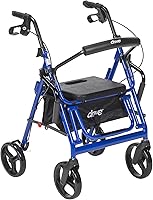
Drive Medical Duet Folding Transport Wheelchair: walking and caregiver transport in one
The Drive Medical Duet Folding Transport Wheelchair and Rollator combines a rollator and transport chair. It has a 13.5 in wide x 13 in deep seat, supports up to 300 lb and weighs 20 lb.
Its 8 in casters are designed for indoor and outdoor terrain, and locking brakes help keep it in place. The backrest moves from front to back to change modes, while the flip-up armrests and flip-down footrest are used in transport chair mode.
The unit folds to a compact size and maintains a standing position. It also has a removable under-seat storage pouch.
Choose the Duet for changing mobility needs, not for a 19-inch seat. Its seat is much narrower than the Medline model, so measure carefully if the user needs extra sitting room.
If the user may benefit from a walking aid instead of a transport chair, compare Rollator vs Wheelchair: A Senior’s Guide.
How do you choose between a 19-inch and narrower seat?
Choose the 19-inch seat when the user needs more hip room and the chair still fits the home and vehicle. Choose a narrower seat when clearance is the deciding factor and the user can sit comfortably without pressure.
Use this decision rule:
- Pick the Medline model when a 19-inch seat, 15 lb weight and 300 lb capacity match the user's needs.
- Pick the Drive Medical folding transport wheelchair when a 17-inch padded seat and 21.5 in product width are a better fit.
- Pick the Drive Medical Duet when the user needs both a rollator and a caregiver-pushed transport chair.
- Do not choose by seat width alone if the chair will be used in narrow rooms or stored in a small vehicle.
A wider chair can create problems at bathroom doors, bedroom entrances and vehicle openings. A narrower chair can create problems if the user's hips or clothing press against the armrests.
The best fit balances sitting room with access. The user should be supported without feeling trapped, and the caregiver should be able to move and store the chair safely.
What should you check for transfers?
Check brakes, armrests and footrests before every transfer. The chair should be stable, and the transfer path should provide enough room for the user and caregiver.
Lock the rear-wheel brakes before the user sits down or stands up. Move swing-away or removable footrests out of the way when appropriate, then return them to a supportive position before movement.
Avoid treating a transport chair as a self-propelled wheelchair unless its design specifically supports that use. Transport chairs are intended for caregiver assistance.
Keep the chair on a suitable surface and avoid rushing over thresholds or uneven areas. The caregiver should follow the chair's instructions and use extra help when the user cannot transfer safely.
For setup guidance, see the Carex transport chair assembly instructions. Confirm that every removable part is positioned correctly before use.
How do weight and folding affect daily use?
A lighter chair is generally easier to lift into a vehicle, while a heavier frame may change how much effort the caregiver needs during storage and transport. Compare chair weight with the caregiver's actual lifting ability.
The Medline model weighs 15 lb, the Drive Medical Duet weighs 20 lb and the Drive Medical folding transport wheelchair weighs 26 lb. Those differences matter when the chair must be lifted repeatedly.
Folding size also matters. Measure the vehicle opening, then compare it with the chair's folded shape.
Do not rely only on the trunk's total volume because the opening may be narrower than the storage area.
Leave room for the user to transfer beside the chair. A folded chair that fits in the vehicle may still be awkward if it blocks other mobility equipment or makes loading unsafe.
For another lightweight comparison, see best Karman transport wheelchairs lightweight. Use the same checks for seat fit, overall width and caregiver handling.
How should you care for a transport chair?
Keep the chair clean, dry and ready for the next trip. Wipe easy-clean upholstery as needed, check wheels for obstruction and confirm the brakes engage before use.
Inspect folding points, footrests and armrests during regular use. Loose or damaged parts can affect transfers and caregiver control.
Wipe the upholstery with a suitable damp cloth and let it dry fully before folding or storing the chair. A regular routine helps keep the seat comfortable and hygienic for frequent use.
Check the seat and backrest for tears, worn areas or trapped debris after each trip. Removing grit and crumbs promptly can prevent irritation and minor damage from becoming worse.
Look at the wheels before use and remove hair or thread wound around them. Smooth movement depends on clean wheels, and a careful glance often spots an obstruction.
Test the brakes each time the chair is used for a transfer. They should hold the chair steady while the user sits down or stands up, then release without sticking.
Inspect footrests for firm seating, correct position and looseness in the supports. Footrests that shift can disturb leg support and make the ride less secure.
Check armrests for stability and wobble at the joints. They are used for support during transfers, so they need to feel solid before the user leans on them.
Examine the folding mechanism where the frame locks into place. It should fold and open without forcing, and the chair should feel rigid once set for use.
Listen for new noises during normal movement, such as rubbing, clicking or uneven rolling. Those sounds can point to a part that needs attention before the next outing.
Store the chair folded only after it is clean and dry, keeping removable parts together. Choose a dry place away from dampness and knocks, so pathways stay clear and parts are less likely to be bent or scratched.
Keep the routine simple enough to follow after every trip. A few minutes cleaning, checking brakes and inspecting moving parts can help the chair stay ready and dependable.
Do not exceed the stated weight capacity. The Medline chair and Drive Medical Duet each specify a 300 lb capacity in the supplied product information, while the Drive Medical folding transport wheelchair data here does not state a capacity.
What is the final rule for choosing a 19-inch transport chair?
Choose the Medline transport wheelchair when the user's fit calls for a 19-inch seat and the 15 lb foldable design suits the caregiver. Choose the 17-inch Drive Medical chair when narrower width is more useful, or the Duet when walking and caregiver transport must share one device.
Measure the user first, then measure the home, vehicle and storage area. If a chair fails any of those checks, its seat width cannot make it the right choice.
Start with seated hip measurement in normal clothing, because that sets the minimum room needed across the seat. Then compare seat depth and armrest position so the user can sit with support and transfer without leaning or twisting.
Check the narrowest doorway and hallway turn next. A comfortable seat will not help if the chair cannot reach the bathroom, bedroom or front door without difficulty.
Consider the caregiver's ability to push, lift, fold and store the chair. A lighter model may suit repeated vehicle use, while a heavier frame can become a burden if carried often.
Look at folded size against the actual vehicle opening and storage space. The chair should pass through the opening, fit inside and leave room for a safe transfer beside the car.
Weigh the trade-offs honestly between sitting room and clearance. More width may help the user sit comfortably, yet it can create problems in smaller rooms, and less width may help access while pressing too closely on the user.
Choose the option that matches the main pattern of use. If the user can walk at times but needs caregiver support at others, a combined design may fit better than a chair that serves one purpose only.
Confirm brakes, footrests and armrests suit the planned transfers before deciding. Those parts affect safety and comfort each time the user gets in or out of the chair.
Do not let a single measurement decide the purchase. The right chair fits the user, the home, the vehicle and the caregiver's daily routine together.
Frequently asked questions
Is a 19-inch transport chair wide enough for most adults?
A 19-inch seat may fit many adults, but the right width depends on the user's hip measurement, clothing and need to shift position. Measure across the widest part of the hips while seated, then allow comfortable clearance without leaving the user sliding from side to side.
How do you measure for a transport wheelchair?
Measure the user's seated hip width, then compare it with the chair's seat width. Also measure doorways, hallways, the vehicle storage area and the space needed for transfers.
Check the chair's overall width, folded size and weight before choosing.
Can a transport chair replace a wheelchair?
A transport chair is pushed by a caregiver, while a standard wheelchair may offer larger wheels for self-propulsion. Choose based on who will move the chair, how far it will travel and whether the user needs independent movement.
A rollator may suit someone who can walk safely.
What should you check besides seat width?
Check the chair's overall width, seat depth, weight, weight capacity, wheels, brakes, armrests, footrests and folded size. These details affect doorway clearance, transfers, caregiver handling, vehicle storage and comfort during appointments or outings.
Is the Medline 19-inch transport wheelchair easy to store?
Medline describes its 19-inch transport wheelchair as foldable, with swing-away footrests and a compact design for vehicle storage. It weighs 15 lb and has a 34 x 23.25 x 34 in product size.
Measure your trunk or storage area before ordering.