Manual vs Power Wheelchair: Which Should You Choose? (November 2026)
Choose a manual wheelchair for lower weight and caregiver flexibility, or a power wheelchair for joystick control and less pushing. Your strength, travel needs, terrain and support needs should guide the choice.
On this page (9 sections)
- Manual wheelchair vs power wheelchair: which is easier to propel?
- Which chair is easier to lift and transport?
- Which wheelchair gives you more independence?
- How do manual and power chairs compare for daily travel?
- Which chair offers better seating and transfer access?
- Which wheelchair handles outdoor surfaces better?
- How should you compare the 4 chairs here?
- What care does each type need?
- Manual wheelchair vs power wheelchair: which should you choose?
Choose a manual wheelchair for lighter transport and caregiver flexibility, or a power wheelchair for joystick control and less pushing. The manual wheelchair vs power wheelchair decision depends on your strength, daily distance, travel plans and access to help.
Manual chairs use push rims or caregiver handles. Power chairs use a motor, battery and control system, so they can reduce the physical effort needed to move.
This comparison looks at propulsion, portability, range, seating, terrain and daily care. We compared the listed specifications and features, but we did not test the products.
 Best for joystick travel
Vive Lightweight Electric Wheelchair for Adults

Manual wheelchair vs power wheelchair: which is easier to propel?
A power wheelchair requires less arm effort during movement, while a manual wheelchair gives you direct control through the push rims. Your ability to push, stop and turn should guide the first decision.
A manual chair can work well when you can propel yourself for the distances you travel. It can also work when a caregiver regularly pushes you using the chair's handles.
A power chair suits users who find repeated pushing tiring or difficult. Joystick control can make indoor movement more independent, but you must learn the controls and keep the battery charged.
The Vive Lightweight Electric Wheelchair for Adults has an adjustable joystick for sensitivity and speed. The VERPAL power chair has a 360° rotating joystick, a 6-button keypad and 5 speeds up to 3.75 MPH.
For more detail on self-propelling designs, see these manual wheelchair types. If you need motor assistance without changing to a full power chair, read about manual wheelchair power assist.
Which chair is easier to lift and transport?
Manual wheelchairs are often simpler to lift because they have no battery, but a folding power chair can still be practical for car travel. Compare the complete chair weight, not only the frame.
The Vive manual wheelchair weighs 36 lb. Its reinforced steel frame folds flat in seconds for car trunks, closets and tight spaces.
The Invacare manual wheelchair weighs 44 lb and folds to 11.8 inches. It arrives fully assembled, with a swing-away footrest and removable arm that can help with storage and transfers.
The Vive power wheelchair has a 39.5 lb frame and weighs 44 lb with the battery. It folds in seconds without disassembly and is designed to fit in most car trunks.
The VERPAL frame weighs 32 lb without its battery and folds in 3 seconds. Its battery is not included in that frame-weight figure, so plan for the added handling weight.
If you travel often, measure your trunk opening and storage area before ordering. A chair that fits inside the vehicle still needs enough room for safe lifting and placement.
Which wheelchair gives you more independence?
A power wheelchair can reduce the need for pushing help, while a manual wheelchair can offer independence when you have enough strength and usable space. Independence depends on the whole route, not just the chair.
Manual self-propulsion requires repeated arm movement and enough room to turn. The Vive manual chair also has caregiver push handles, so one chair can support either method.
The Invacare chair has large rear wheels for user control, comfortable hand grips for caregivers and an integrated steel step tube for leverage over steps, curbs and bumps. Its removable desk-length arms let the user sit closer to desks and tables.
Power control may be useful in crowded rooms or longer outings. The Vive power chair has a compact turning radius, adjustable joystick settings and a listed range of up to 9 miles.
The VERPAL chair has a listed range of up to 12.5 miles, electromagnetic brakes and a battery indicator. Range depends on conditions and use, so treat the stated distance as a guide rather than a promise for every trip.
For a broader look at adult chair choices, use the wheelchairs for adults complete buying guide.
How do manual and power chairs compare for daily travel?
Choose the chair that matches your regular trip length and transport routine. A lightweight manual chair may be best for short outings with help, while a power chair can suit longer independent movement.
A manual chair does not depend on charging before an outing. That can simplify short trips, appointments and vehicle transport when someone can push or you can self-propel.
A power chair adds battery planning. The Vive battery takes 6 to 8 hours to recharge fully, and the VERPAL chair uses a 151Wh 6Ah FAA-compliant battery.
The Vive power chair is designed for users from 5 ft to 6 ft 2 in and supports up to 225 lb. The VERPAL supports up to 220 lb and has a 16.5-inch seat.
The Invacare manual chair supports up to 265 lb with an 18-inch seat. The Vive manual chair supports up to 300 lb and comes in 16, 18 and 20-inch seat widths.
Check the user's weight and fit before focusing on range. A chair that fits the user well is more useful than one with a longer stated range but an unsuitable seat.
Which chair offers better seating and transfer access?
Manual wheelchair features can make transfers easier, while power wheelchair controls can make movement easier after you are seated. Look at armrests, footrests, seat width and the way you enter and leave the chair.
The Vive manual chair has flip-up and detachable armrests for extra arm room and clearer side transfers. Its swing-away, height-adjustable footrests can make standing, sitting and repositioning simpler.
The Invacare chair has a fully removable, padded L-shaped desk arm and a swing-away footrest. Its 18-inch seat and 18-inch seat depth should be checked against the user's body size.
The VERPAL power chair has adjustable armrests, a breathable 2-inch seat and supportive footrests. The Vive power chair has a padded seat and supportive backrest.
Seat width affects comfort and doorway access. The 20-inch-seat version of the Vive manual chair measures 29 inches wide overall, so measure every narrow doorway and hallway first.
Read the guide to best manual wheelchairs for seniors if you are comparing manual designs for fit, transfers and everyday support.
Which wheelchair handles outdoor surfaces better?
A power wheelchair with suitable tires and motor support may reduce effort outdoors, but neither chair removes the need to assess slopes, curbs and uneven ground. Choose based on the surfaces you use most.
The VERPAL chair has 9-inch anti-slip tires, a 360W dual motor and a stated ability to handle inclines up to 12°. Its description names grass, gravel and uneven surfaces as intended uses.
The Vive power chair is described for indoor and outdoor use and includes adjustable speed and joystick sensitivity. Its compact turning radius may help in tight areas, but outdoor routes still need careful assessment.
Manual chairs can work outdoors when a user or caregiver can push safely over the route. The Invacare chair has 8-inch front wheels, 24-inch rear wheels and an integrated steel step tube for extra leverage over steps, curbs and bumps.
Don't use a chair on a slope or surface that exceeds its instructions. Plan how you will stop, turn and recover if the surface becomes difficult.
How should you compare the 4 chairs here?
Pick the Vive power chair for joystick travel, the Invacare for caregiver support, the Vive manual chair for seating flexibility or the VERPAL for its longer listed range. Each choice solves a different mobility problem.
The Vive Lightweight Electric Wheelchair for Adults has a 39.5 lb frame and weighs 44 lb with the battery. It folds in seconds without disassembly, which can simplify errands and car travel.
Its joystick has adjustable sensitivity and speed settings. The chair is designed for users from 5 ft to 6 ft 2 in and supports up to 225 lb.
The 12AH battery provides a listed range of up to 9 miles and takes 6 to 8 hours to recharge fully. That makes charging part of your outing routine.
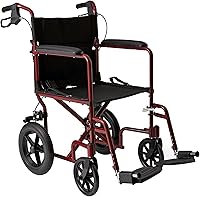
The Invacare Wheelchairs for Adults has an 18-inch seat, supports up to 265 lb and uses 24-inch rear wheels for user control. Caregivers can use the hand grips when pushing is needed.
Its L-shaped desk-length arm is padded and fully removable. The swing-away footrest and 11.8-inch folded width support transfers and storage.
The vinyl upholstery is stain- and water-resistant. The chair arrives fully assembled, with integrated wheel locks and a powder-coated metal frame.
The Vive Lightweight Manual Wheelchair for Adults folds flat in seconds and uses reinforced steel cross-brace construction. Its 24-inch mag wheels with push rims support self-propelling, while push handles allow caregiver steering.
The seat is available in 16, 18 and 20-inch widths. A built-in extender adjusts seat depth from 16 to 18 inches.
The 20-inch-seat version is 29 inches wide overall. Measure doorways before choosing that size, especially in older homes or narrow hallways.
The VERPAL 32lbs Lightweight Electric Wheelchair has a 16.5-inch seat and supports up to 220 lb. Its frame folds in 3 seconds, and the stated 32 lb weight does not include the battery.
The chair uses a 360° joystick, 5 speeds up to 3.75 MPH and a 151Wh 6Ah FAA-compliant battery. It also has electromagnetic brakes, a battery indicator and a 10W USB LED light.
Its 9-inch anti-slip tires and 360W dual motor are designed for grass, gravel, uneven surfaces and inclines up to 12°. Follow the operating instructions for your route and conditions.
What care does each type need?
Manual chairs mainly need checks of wheels, brakes, footrests and folding points, while power chairs also need battery and control care. Use the instructions for the exact chair as the final guide.
Check that manual wheel locks hold the chair before transfers. Keep push rims, hand grips and footrests clean, and inspect folding joints after transport.
For power chairs, charge the battery as directed and check the joystick before leaving. Keep the control area dry and confirm that the chair stops as expected.
Don't carry a power chair by the joystick or force it through a doorway that is too narrow. Remove obstacles from the route and use the brakes before sitting or standing.
Arrange help for lifting whenever the chair is too heavy or awkward to handle safely. The frame weight and complete travel weight can differ, especially when a battery is included.
Manual wheelchair vs power wheelchair: which should you choose?
Choose a manual wheelchair if you can self-propel or have dependable caregiver help and want simpler lifting and charging. Choose a power wheelchair if joystick control and reduced pushing matter more than battery planning.
Pick the Vive manual chair when seat-width choices and a 36 lb frame matter most. Pick the Invacare when caregiver handling, removable desk arms and a 265 lb capacity fit your routine.
Pick the Vive power chair for a foldable chair with a 44 lb battery-equipped weight and up to 9 miles of listed range. Pick the VERPAL when its 32 lb battery-free frame, 16.5-inch seat and listed 12.5-mile range suit your travel plans.
If you are still deciding between walking support and seated mobility, compare Rollator vs Wheelchair: A Senior's Guide. A simple rollator guide may also help when you can walk but need a seat and support for shorter outings.
For children, use a purpose-matched guide to transport chairs for kids. If you carry a manual chair by vehicle, review the guide to best wheelchair carriers for trailer hitch.
Frequently asked questions
Is a manual wheelchair or power wheelchair better?
A manual wheelchair is better for users who can self-propel or have regular caregiver help and need a simpler chair for transport. A power wheelchair is better for users who need joystick control and less physical pushing.
Compare strength, travel, range, terrain and chair weight before choosing.
Which is easier to transport, a manual or power wheelchair?
A manual wheelchair is usually easier to lift because it has no battery, although the exact frame weight varies. Power chairs can fold for travel, but you must account for the battery weight.
The Vive frame weighs 39.5 lb and 44 lb with its battery, while the VERPAL frame weighs 32 lb without its battery.
Can a manual wheelchair be used without a caregiver?
Yes, if the user has enough arm strength, balance and control to propel and steer safely. Some manual chairs also allow caregiver pushing through rear handles.
The Vive manual chair supports both self-propelling with push rims and caregiver steering with push handles and locking brakes.
Do power wheelchairs work outdoors?
Some power wheelchairs are designed for indoor and outdoor use, but terrain, slope, battery range and tire design still matter. The VERPAL has 9-inch anti-slip tires and a 360W motor rated for inclines up to 12°.
Follow the chair's instructions and use care on uneven ground.
What should I measure before buying a wheelchair?
Measure doorways, hallways, vehicle storage space, seat width and transfer areas before buying. The 20-inch-seat Vive manual wheelchair is 29 inches wide overall, so it may not fit every standard doorway.
Also check the user's weight and the chair's seat dimensions.