9 Best Narrow Wheelchairs for Small Doorways (November 2026)
The best narrow wheelchairs for small doorways include the Medline Lightweight Foldable Transport Wheelchair with Handbrakes for tight indoor doorways, the Drive Medical Blue Streak Lightweight Wheelchair for self-propelled daily use, and the Medline Comfortable Folding Wheelchair with Swing-Back Desk-Length for desk and table access.
On this page (7 sections)
- The best narrow wheelchairs for small doorways
- How to measure for narrow wheelchairs for small doorways
- Should you choose a transport chair or self-propelled wheelchair?
- Which narrow wheelchair features help with transfers?
- How do narrow wheelchairs compare with narrow transport chairs?
- How should you care for a wheelchair used indoors?
- Final pick for the best narrow wheelchair for small doorways
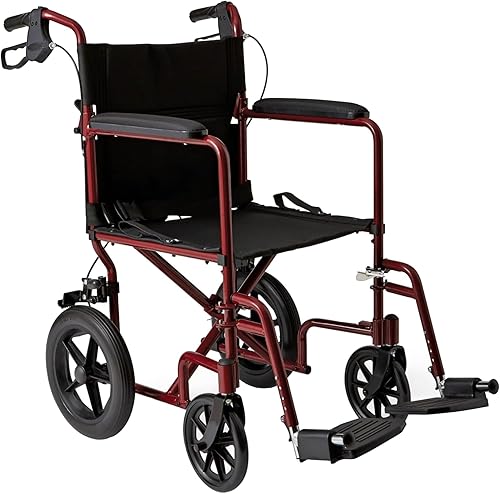
The best narrow wheelchair for small doorways is the Medline Lightweight Foldable Transport Wheelchair with Handbrakes. Its 12 in rear wheels, swivel front wheels, folding frame and swing-away footrests make it the most balanced choice for tight indoor routes.
Doorway fit depends on the chair's total assembled width, not just the seat width. Measure the narrowest opening in your home, including trim and the door hardware that limits how far the door opens.
If you need broader general guidance first, read our guide to best wheelchairs for adults. For smaller users, compare these picks with our guide to the best small lightweight wheelchair.
Our picks at a glance
-
1
 Best for tight indoor doorways
Medline Lightweight Foldable Transport Wheelchair with Handbrakes
9.6/10 our score
See it on Amazon -
2
 Best for self-propelled daily use
Drive Medical Blue Streak Lightweight Wheelchair
9.5/10 our score
See it on Amazon -
3
 Best for desk and table access
Medline Comfortable Folding Wheelchair with Swing-Back Desk-Length
9.5/10 our score
See it on Amazon
- 4
 Check it
Drive Medical Blue Streak Foldable Wheelchair
Best for a 16 in seat - 5
 Check it
Invacare Transport Wheelchair for Adults
Best for compact folding storage - 6
 Check it
Karman 24 pounds LT-980 Ultra Lightweight Wheelchair
Best for easy lifting - 7
 Check it
WHLICKS Wheelchairs for Adults Ergonomic Transport Chair
Best for adjustable transport comfort - 8
 Check it
DR. DUNLEY Dr Dunley Folding Transport Wheelchair
Best for a padded 19 in seat - 9
 Check it
VOCIC Ultra Lightweight Foldable Wheelchairs for Adults
Best for adjustable transfers
The best narrow wheelchairs for small doorways
The best choice depends on whether you need a pushed transport chair, a self-propelled wheelchair, a smaller seat or easier transfers. The products below are ordered by score, with doorway fit, folding design and practical home use weighted heavily.
Our score weighs specs, features and buyer feedback against what you're shopping for. Product facts below come from the names and data supplied for this guide.
| Product | Best for | Seat | Weight capacity | Frame | Our score |
|---|---|---|---|---|---|
| Medline Lightweight Foldable Transport Wheelchair with Handbrakes | tight indoor doorways | 19 in W x 16 in D | 300 lb | Aluminum | 9.6 |
| Drive Medical Blue Streak Lightweight Wheelchair | self-propelled daily use | 18 in W x 16 in D | 300 lb | 9.5 | |
| Medline Comfortable Folding Wheelchair with Swing-Back Desk-Length | desk and table access | 20 in W x 16 in D | 300 lb | 9.5 | |
| Drive Medical Blue Streak Foldable Wheelchair | a 16 in seat | 16 in W x 16 in D | 300 lb | 9.3 | |
| Invacare Transport Wheelchair for Adults | compact folding storage | 19 in W x 16 in D | Steel | 9.2 | |
| Karman 24 pounds LT-980 Ultra Lightweight Wheelchair | easy lifting | 18 in W x 16 in D | 8.9 | ||
| WHLICKS Wheelchairs for Adults Ergonomic Transport Chair | adjustable transport comfort | 16.5 in W | 300 lb | 8.8 | |
| DR. DUNLEY Dr Dunley Folding Transport Wheelchair | a padded 19 in seat | 19 in W | 250 lb | Carbon steel | 8.4 |
| VOCIC Ultra Lightweight Foldable Wheelchairs for Adults | adjustable transfers | 17.7 in W x 17 in D | 300 lb | 7.9 |
Medline Lightweight Foldable Transport Wheelchair with Handbrakes: Best for tight indoor doorways
- 26 lb folding transport chair
- 19 in wide x 16 in deep seat
- 12 in rear wheels
- Swing-away detachable footrests
- Hand brakes and rear-wheel locking brakes
The Medline combines a folding frame with 12 in rear wheels and swivel front wheels for tight corners, doorways and ramps. Its 19 in seat and swing-away footrests make it easier to balance room access with sitting space.
Pros
- 12 in rear wheels
- Hand brakes
- Folds for car storage
- No assembly required
Cons
- 19 in seat may be too wide for some users
- Transport-chair design is pushed by a companion
The Medline Lightweight Foldable Transport Wheelchair with Handbrakes is the strongest all-around option for tight home routes.
Its 12 in rear wheels and swivel front wheels are designed for corners, doorways and ramps.
The 19 in wide by 16 in deep seat gives more sitting room than a 16 in model.
Full-length cushioned armrests add support, while the swing-away detachable footrests help with getting in and out.
That swing-away design can reduce awkward lifting of the legs during a transfer.
It can also help when the chair is pulled close to a bed, sofa or car seat.
At 26 lb, the aluminum-frame chair is easier to lift than the heavier steel-frame picks.
It supports up to 300 lb and folds for car-trunk storage, with no assembly required.
The easy-clean nylon fabric helps with everyday spills and routine wiping.
Hand brakes help a companion control movement, and rear-wheel manual locking brakes help keep the chair still during transfers.
Separate brake types can suit different moments, from guiding a slope to parking for a transfer.
Choose it when indoor access and caregiver control matter most.
It suits homes where a companion pushes and the chair is lifted into a vehicle often.
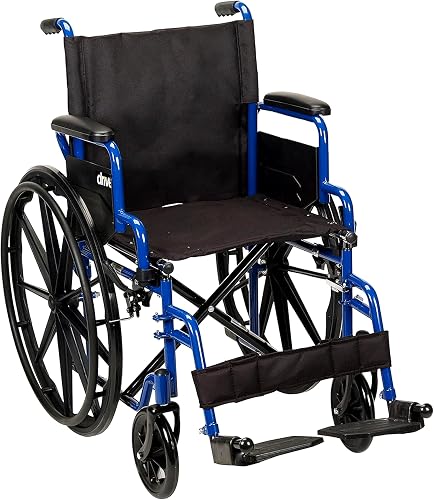
Drive Medical Blue Streak Lightweight Wheelchair: Best for self-propelled daily use
- 18 in seat
- Swing-away footrests
- Flip-back desk-length arms
- Steel frame
- Push-to-lock brakes
The Blue Streak offers an 18 in seat, desk-length arms and swing-away footrests for everyday wheelchair use. Its stated 12.5 in folded width helps with storage, but check its assembled width against your doorway.
Pros
- 18 in seat
- Desk-length arms
- Swing-away footrests
- Folding design
Cons
- 41.3 lb item weight
- Assembled width needs a doorway check
The Drive Medical Blue Streak Lightweight Wheelchair suits daily use when the user needs an 18 in seat and self-propelling features.
Its steel frame, push handles and solid wheels give it a more traditional wheelchair layout.
That layout can suit a user who wants to propel the chair rather than depend on a companion for every move.
The flip-back desk-length arms help the user pull toward a table or counter.
They can also make a side transfer easier because the arm can move out of the way.
Swing-away footrests also create more room during transfers, which can matter in a narrow bathroom or bedroom.
The footrests are removable in the supplied description, which can add flexibility for legroom.
The chair folds to a stated 12.5 in width for storage.
That folded measurement is useful for a closet or vehicle, but measure the assembled chair before planning a doorway route.
The seat depth is 16 in, which keeps the sitting area from extending too far forward.
Its push-to-lock brakes help secure the chair while stopped.
Solid, low-maintenance tires can simplify care because they do not need the same attention as pneumatic tires.
Choose this model when self-propulsion and table access are more important than the lightest carry weight.
It is a better fit for regular daily use than for frequent lifting by a caregiver alone.
Medline Comfortable Folding Wheelchair with Swing-Back Desk-Length: Best for desk and table access
- 20 in wide x 16 in deep seat
- Swing-back desk-length arms
- Swing-away footrests
- Hammertone frame
- Folds for transport
This Medline gives more seat width than the narrower picks and adds swing-back desk-length arms for table access. Its folded width is 11.5 in, while the assembled width is 26.5 in.
Pros
- 11.5 in folded width
- Swing-back arms
- Swing-away footrests
- 300 lb capacity
Cons
- 26.5 in assembled width
- 20 in seat may not suit narrow doorways
The Medline Comfortable Folding Wheelchair with Swing-Back Desk-Length Arms gives the user a wider 20 in seat and easier table access.
It has swing-back arms, swing-away footrests and a 300 lb capacity.
The wider seat can suit a larger adult who feels cramped in a 16 in or 18 in seat.
It can also give more room for clothing, padding or a cushion used for positioning.
This chair folds to 11.5 in wide, which is convenient for storage.
Its assembled width is 26.5 in, so it is better for homes with wider internal openings than for very tight doorways.
That distinction matters because folded width helps storage only.
The hammertone frame and nylon seat are built for regular use, while smooth tires and a dual-axle design support movement across everyday surfaces.
Smooth-rolling, flat-free tires reduce one kind of maintenance concern.
The 16 in seat depth keeps the chair from becoming deeper than necessary.
Swing-back arms can lower the barrier at a desk or table.
They can also help with a lateral transfer when the user moves sideways into the chair.
Choose it when comfort and desk access come before the narrowest assembled footprint.
If your doorways are especially tight, compare its total width with the smaller-seat picks first.
Drive Medical Blue Streak Foldable Wheelchair: Best for a 16 in seat
- 16 in seat
- Padded desk arms
- Swing-away elevating leg rests
- Metal frame
- Push-to-lock brakes
The 16 in seat can suit a smaller adult who needs more room around the chair than a 20 in model allows. Elevating leg rests add positioning options, but the 47 lb item weight makes lifting more demanding.
Pros
- 16 in seat
- Elevating leg rests
- Desk arms
- Folding frame
Cons
- 47 lb item weight
- Doorway width is not stated in the supplied product data
The Drive Medical Blue Streak Foldable Wheelchair is the best fit here for someone who needs a 16 in seat and elevating leg rests.
The smaller seat can leave more room around the user in a tight room, though it does not prove the frame itself is narrow.
A smaller seat can also suit a smaller adult who needs the footrests and armrests to be closer.
That fit should be checked against hip width and sitting posture before ordering.
Padded desk arms support table access, and swing-away elevating leg rests help with transfers and leg positioning.
Elevating leg rests can change leg support during longer sitting periods.
They can also add bulk or length that needs checking in a small room.
Push-to-lock brakes add a basic stopping control when the chair is parked.
The metal-frame wheelchair weighs 47 lb, making it much heavier to lift than the aluminum transport chairs.
Its folding design can still help with storage and vehicle transport.
A caregiver may need help lifting or loading the chair into a trunk.
Choose it for the smaller seat and adjustable leg support.
Confirm the complete assembled width before buying for a narrow doorway.
Invacare Transport Wheelchair for Adults: Best for compact folding storage
- 19 in x 16 in seat
- Foldable backrest
- One-handed folding mechanism
- 9 in folded width
- Swing-away footrests and seatbelt
The Invacare stands out for a stated 9 in folded width and a backrest that folds down to 28.75 in high. Its 19 in seat gives more sitting room, while the steel frame adds a trade-off when lifting.
Pros
- 9 in folded width
- Foldable backrest
- 19 in seat
- Arrives assembled
Cons
- Assembled width needs confirmation
- Steel frame may feel heavier than aluminum designs
The Invacare Transport Wheelchair for Adults is a strong storage choice because its one-handed folding mechanism narrows the chair to a stated 9 in.
Its backrest also folds down from 39.5 in to 28.75 in.
That two-part fold can help in a closet, small trunk or narrow storage space.
It does not reduce the width of the chair while it is open for use.
The 19 in by 16 in seat gives a broad sitting area, and the steel frame supports a stable transport-chair setup.
More seat width can improve comfort for a larger adult.
It can also make the chair less suitable where frame width is the main concern.
Swing-away footrests and a seatbelt are included in the design.
Swing-away footrests can ease entry and exit from the side.
Its 8 in front and rear TPU casters are described as non-marring for indoor floors.
That can matter on wood or tile where marks are more visible.
The chair arrives assembled, so the main setup is unfolding it before use.
A one-handed fold can be useful when the other hand is holding a door or support.
Choose it when closet or trunk storage is the main concern.
For doorway access, confirm the assembled width because the 9 in measurement describes the folded chair.
Karman 24 pounds LT-980 Ultra Lightweight Wheelchair: Best for easy lifting
- 24 lb without footrest
- 18 in x 16 in seat
- Folding backrest and seat
- Removable height-adjustable footrests
- Hand brakes
The Karman LT-980 is the lightest option here by stated chair weight when the footrest is excluded. It folds at the backrest and seat, making it useful for caregivers who need to lift and store a chair often.
Pros
- 24 lb without footrest
- 18 in seat
- Removable footrests
- Folding backrest
Cons
- 250 lb capacity
- Weight excludes the footrest
The Karman 24 pounds LT-980 Ultra Lightweight Wheelchair is the easiest chair here to lift by stated weight, at 24 lb without the footrest.
Its aluminum frame, folding backrest and folding seat suit frequent vehicle loading.
A folding backrest can reduce height during storage.
That can help when trunk space is limited or the chair is kept in a hallway closet.
The 18 in by 16 in seat provides a middle ground between compact seating and a wider 19 or 20 in chair.
It can suit an average adult who needs more room than a 16 in seat allows.
Removable, height-adjustable footrests can make entry and exit easier.
Adjustable footplates can also help different leg lengths sit more evenly.
The chair includes hand brakes, a seatbelt and padded nylon upholstery.
Padded nylon can be wiped clean and may suit regular indoor use.
It supports up to 250 lb, which is lower than several 300 lb picks in this group.
That limit should be checked against the user and any cushion or bag carried in the chair.
Choose it for caregivers who carry a chair often.
Remember that the 24 lb figure excludes the footrest, so the lifted chair will weigh more when fully equipped.
WHLICKS Wheelchairs for Adults Ergonomic Transport Chair: Best for adjustable transport comfort
- 23.1 lb frame
- 16.5 in seat
- 12 in rear wheels
- Removable washable cushions
- Adjustable handles and footrests
The WHLICKS combines a 16.5 in seat with 12 in rear wheels, adjustable handles and washable cushions. Its compact folded size suits travel and storage, while the exact assembled width should be checked before a doorway purchase.
Pros
- 23.1 lb frame
- 16.5 in seat
- 12 in rear wheels
- Washable cushions
Cons
- Exact assembled width is not stated here
- Transport-chair design depends on caregiver pushing
The WHLICKS Wheelchairs for Adults Ergonomic Transport Chair combines a 16.5 in seat with 12 in rear wheels and adjustable footrests.
Its 23.1 lb frame makes it useful for travel, storage and caregiver-pushed trips.
A lighter frame can reduce strain when lifting the chair into a car.
It can also help when the chair is carried up a step or into a doorway.
The S-shaped backrest and removable washable cushions focus on sitting comfort and cleaning.
Removable cushions can make cleaning easier after spills or regular use.
The cushions can also be detached to create a shower seat, according to the supplied product details.
That extra use may suit travel where a separate shower seat is not available.
The chair folds to 20 x 11 x 26 in and supports up to 300 lb.
A compact folded size can help in a trunk, closet or small storage area.
Adjustable handles and footrests allow changes for different caregiver heights and leg lengths.
Adjustable handles can reduce bending for a taller or shorter companion.
Choose it when you want a lighter transport chair with a smaller seat and washable parts.
Confirm the assembled width before using it as a doorway solution.
DR. DUNLEY Dr Dunley Folding Transport Wheelchair: Best for a padded 19 in seat
- 19 in padded seat
- 250 lb capacity
- Carbon steel frame
- Full-length armrests
- Swing-away footrests
The Dr Dunley is a basic folding transport chair with a 19 in padded seat, full-length armrests and swing-away footrests. It suits users who value sitting room and simple transfers, but its exact overall width is not stated.
Pros
- 19 in padded seat
- Swing-away footrests
- Full-length arms
- Folding frame
Cons
- 250 lb capacity
- Exact chair width is not stated here
The DR. DUNLEY Dr Dunley Folding Transport Wheelchair offers a padded 19 in seat, full-length armrests and swing-away footrests.
Those features can help a user who needs more sitting room and easier entry from the side.
A 19 in seat can suit a larger adult who feels restricted in a narrower chair.
Padding can add comfort during appointments, errands or longer waits.
Its lightweight carbon steel frame folds for vehicle transport and storage.
A folding frame can help when the chair is not in use during the day.
It can also make the chair easier to keep out of a hallway or bedroom path.
The chair supports up to 250 lb, so compare that limit with the user's weight before choosing it.
The limit matters more than the word lightweight when selecting a chair.
The full-length arms provide a stable place to rest the arms during transport.
They can also give the user a place to hold during a transfer.
The swing-away footrests reduce interference when the user steps or transfers into the chair.
That can be helpful when a bed or vehicle seat is close to the chair.
Choose it for a simple padded transport setup.
Because the complete chair width is not stated here, measure the doorway and confirm the width before ordering.
VOCIC Ultra Lightweight Foldable Wheelchairs for Adults: Best for adjustable transfers
- 23 lb frame without leg rests and quick-release wheels
- 17.7 in x 17 in seat
- Flip-back armrests
- 270-degree swing-in and swing-out legrests
- Dual braking system
The VOCIC focuses on transfers with flip-back armrests and swing-in or swing-out legrests. Its 17.7 in seat and 23 lb frame can work for travel, but the frame weight excludes leg rests and quick-release wheels.
Pros
- 17.7 in seat
- Flip-back arms
- Swing-in and swing-out legrests
- 300 lb capacity
Cons
- Frame weight excludes parts
- Overall doorway width is not stated here
The VOCIC Ultra Lightweight Foldable Wheelchairs for Adults focuses on transfers with flip-back armrests and 270-degree swing-in and swing-out legrests.
These features can help the chair pull closer to a bed, car seat or toilet.
Swing-in legrests can reduce the gap between the chair and the transfer surface.
That can make a one-step transfer feel more controlled for some users.
Its 17.7 in wide by 17 in deep seat supports up to 300 lb.
The deeper seat can suit a taller user who needs more thigh support.
It can also take up more forward space in a tight room.
The frame weighs 23 lb without leg rests and quick-release wheels, so the complete chair weighs more than that figure.
Quick-release wheels can detach for storage or transport.
That can reduce the size of each part that needs to be lifted.
A dual braking system, adjustable safety belt and anti-tip device add control features.
Using the brakes before a transfer remains important even with extra safety parts.
The frame also folds, and the quick-release wheels can reduce storage size.
Choose it when transfer access and adjustable parts matter more than a confirmed narrow overall width.
Check the assembled measurement before using it in small doorways.
How to measure for narrow wheelchairs for small doorways
Measure the clear opening at the narrowest point with the door fully open, from trim to trim, and check the handle and hinges too.
Then compare that number with the wheelchair's total assembled width, including wheels and armrests.
Seat width alone will not tell you whether the chair will fit, since outer dimensions can differ from the seat.
Leave extra room for steering and hand clearance, especially around a hallway corner.
Extra room also helps when a companion pushes the chair at a slight angle through the doorway.
For storage, measure the closet or trunk separately, including folded height and length.
A folded width such as 9 in or 11.5 in helps with storage, but it does not show whether the open chair will pass through the doorway.
Check the route from storage to the doorway, since the chair still needs room to unfold and turn.
Note where rugs, thresholds or furniture narrow the path, as a small threshold can catch a front caster.
Try the route with the chair empty before the user sits in it, and mark the tightest point for future reference.
Keep that note with your measurements when comparing models, so a chair that fits storage does not fail at the doorway.
Should you choose a transport chair or self-propelled wheelchair?
Choose a transport chair when a caregiver will push most of the time and you want smaller rear wheels, lighter lifting or easier folding. Choose a self-propelled wheelchair when the user needs to move the chair with hand rims.
Our Rollator vs Wheelchair: A Senior’s Guide explains the difference between walking support and seated mobility. If the user can walk with rest breaks, also read What Is a Narrow Rollator for Tight Spaces? before choosing a wheelchair.
Transport designs can work well inside homes because smaller wheels may reduce the overall footprint. Still, the complete chair width matters more than the category name.
Which narrow wheelchair features help with transfers?
Swing-away footrests, removable footrests, flip-back arms and swing-back arms can make transfers easier by reducing parts that block a side approach.
That matters in a small room where the chair cannot be pulled far from a bed, table, toilet or vehicle seat.
A swing-away footrest can reduce the chance of catching a foot during entry, while removable footrests create a wider opening for a standing pivot transfer.
Flip-back arms help a user move sideways instead of lifting over a fixed arm, and swing-back arms serve a similar purpose at a desk or table.
Check those moving parts before each transfer so they stay in place during sitting.
For bathroom routes, compare our guide to the best narrow wheelchair for bathroom.
A bathroom doorway may be wider than a bedroom doorway, but turning space inside can be the harder limit.
Tiles, mats and fixtures can reduce room for turning toward the toilet or sink.
A seatbelt and locking brakes can also matter during transfers, so use the brakes before the user sits down or stands up and follow the chair's instructions.
Place the user's feet on the footrests or floor before the chair moves, and have a companion stand where they can support without blocking the path.
Clear a level surface next to the transfer surface, keep bags, rugs and cords away from wheels and footrests, and practice with the chair locked.
That preparation can make each transfer calmer and more predictable.
How do narrow wheelchairs compare with narrow transport chairs?
A narrow transport chair is often lighter and easier for a companion to push, while a standard wheelchair may offer more self-propulsion support.
The best option depends on who controls movement and how often the chair is lifted.
A transport chair can suit short trips where a caregiver handles most of the pushing, and smaller rear wheels can reduce space behind the user.
A self-propelled wheelchair can give the user more control over speed and direction for daily movement around the home.
That control can support independence when the user wants to go to another room alone, though the trade-off is often a larger frame and more parts to manage.
Compare the best narrow transport chair if you want a caregiver-pushed design.
For smaller users, our guide to the best small transport chair focuses on compact seating and travel.
A smaller seat can improve fit for a smaller adult, but it does not always mean the complete chair is narrower overall.
You can also check how wide a Medline transport chair is when a specific model is being considered.
Use assembled measurements for doorway planning, not the folded measurement alone, since folded measurements do not show whether armrests, wheels and footrests will clear the doorway while open.
Check the weight limit and braking type for the planned use, as a pushed chair needs brakes a companion can reach and a self-propelled chair needs hand rims and brakes the user can manage safely.
Think about lifting frequency too, since a lighter chair may be easier to load for appointments while a heavier chair may suit a home where it stays in one place.
Match the design to the person who will push, lift and store it each day.
How should you care for a wheelchair used indoors?
Keep the frame, upholstery and wheels clean according to the chair's care instructions.
Nylon upholstery and removable cushions can make routine cleaning easier, but use only methods that suit the material and check instructions before using water, soap or a household cleaner.
Some fabrics and cushions need gentler treatment than a hard frame, so wipe spills promptly and let cleaned parts dry fully before sitting in the chair again.
Check that footrests, arms and folding parts move as intended before use, since a sticking footrest or an arm that does not lock can make transfers harder.
Look for loose parts, worn tires and damage to the upholstery, as small problems are easier to address before a trip.
Lock the brakes during transfers and keep the route clear of rugs, cords and furniture that can catch a wheel, since a loose rug edge can catch a small caster and stop the chair suddenly.
Move obstacles before the chair reaches the tightest part of the path, including cords and low furniture that can block a narrow route.
Store a folded chair where it cannot fall onto someone, keeping it out of walkways and doorways and where children cannot knock it over.
If the chair has removable parts, keep them together in one bag or box near the folded frame so footrests, wheels or cushions are ready when needed.
Lost footrests or wheels can delay a trip and make the chair unsafe to use, so check the brakes and folding lock before each outing.
Final pick for the best narrow wheelchair for small doorways
The Medline Lightweight Foldable Transport Wheelchair with Handbrakes is the best overall choice when tight indoor routes, caregiver control and folding storage all matter. Its 12 in rear wheels, 19 in seat and swing-away footrests give it a practical balance.
Pick the Drive Medical Blue Streak Lightweight Wheelchair if self-propulsion and an 18 in seat matter more. Choose the Karman LT-980 for easier lifting, the Invacare for compact folded storage, or the VOCIC for transfer-focused adjustments.
For any narrow wheelchair for small doorways, measure the clear opening and the chair's assembled width before ordering. A smaller seat or folded frame does not guarantee that the fully open chair will fit.
Our top 3 picks at a glance
-
1
Best for tight indoor doorways
Medline Lightweight Foldable Transport Wheelchair with Handbrakes
9.6/10 our score
See it on Amazon -
2
Best for self-propelled daily use
Drive Medical Blue Streak Lightweight Wheelchair
9.5/10 our score
See it on Amazon -
3
Best for desk and table access
Medline Comfortable Folding Wheelchair with Swing-Back Desk-Length
9.5/10 our score
See it on Amazon
Frequently asked questions
What is the best narrow wheelchair for small doorways?
The Medline Lightweight Foldable Transport Wheelchair with Handbrakes is the strongest overall pick because it has 12 in rear wheels, swivel front wheels, a folding design and a 19 in seat. Still, measure the doorway and the chair's assembled width before ordering.
A folded width helps with storage, but it does not replace an assembled-width check.
How narrow should a wheelchair be for a doorway?
Choose a wheelchair whose assembled width is less than the narrowest clear doorway opening, with some room for the wheels and hands. Measure from trim to trim with the door fully open.
Do not rely on the seat width alone.
Armrests, wheel hubs and hand rims can make the chair wider than the seat.
Are transport wheelchairs narrower than standard wheelchairs?
Transport wheelchairs can be easier to use in tight areas because they often have smaller rear wheels and are pushed by a caregiver. That does not guarantee a narrower frame.
Compare the complete assembled width, then check whether the user needs self-propulsion, hand brakes or easier transfers.
Is an 18 in wheelchair narrow enough for a small doorway?
An 18 in seat may fit many home layouts, but the seat is not the chair's total width. Armrests, wheels and the frame add width, so an 18 in seat does not prove the chair will pass through your doorway.
Measure both the opening and the chair's overall width.
What wheelchair features help with tight doorways?
Smaller rear wheels, swivel front wheels, swing-away footrests and flip-back or removable arms can make tight spaces easier to manage. A folding frame also helps with storage after use.
These features do not replace a width check.
The chair must still fit through the doorway when fully assembled.


