How Much Do Wheelchairs Weigh?
Most wheelchairs weigh 20 to 60 lb, although lightweight transport chairs can weigh less and heavy-duty models can weigh more. The frame, seat size, wheels, footrests, and removable parts all affect the total.
On this page (8 sections)
- How much do wheelchairs weigh by type?
- What affects the weight of a wheelchair?
- How much does a lightweight transport wheelchair weigh?
- Which 22 lb wheelchair suits frequent transport?
- How heavy is a standard folding wheelchair?
- Is a lighter wheelchair always better?
- How should you plan for lifting and storage?
- What wheelchair weight should you choose?
Most wheelchairs weigh 20 to 60 lb, while lightweight transport chairs may be near 20 lb and heavy-duty models can weigh more. That range helps set expectations before you compare specific chairs.
A wheelchair's frame, seat width, wheels, footrests, armrests, and folding hardware all affect its total weight. A steel frame, for example, often adds more weight than a similar aluminum frame.
Larger rear wheels can also change how the chair feels to lift and push. Small wheels may keep the chair compact, while larger wheels may suit a different kind of daily movement.
Seat size matters too, because a wider seat usually needs a wider frame. Cushions, brakes, and removable parts can add smaller amounts that still count in daily use.
Weight matters most when a caregiver must lift the chair into a car, carry it up steps, or store it in a closet. It also affects how easy the chair is to move when folded.
For occasional appointments, a mid-range weight may be easy to manage with a planned lifting routine. For frequent trips, even a few extra pounds can become tiring over time.
The right choice depends on who will lift the chair and how often. A chair that feels light in a showroom may feel different at a raised car trunk.
It helps to think about the complete chair, not just the frame. That includes the parts you will actually carry and store each time.
Storage space also shapes the decision, since folded size and weight work together. A chair should fit the vehicle, the doorway, and the closet without awkward handling.
For daily use, comfort and transfer needs must sit alongside weight in the decision. The lightest option is not always the most suitable option for the person who will sit in it.
How much do wheelchairs weigh by type?
Transport wheelchairs often weigh about 20 to 30 lb, standard manual wheelchairs about 30 to 50 lb, and heavy-duty chairs 50 lb or more. These are useful planning ranges, not a substitute for the exact weight of a specific chair.
Transport chairs are usually built for caregiver-assisted mobility. They often use smaller front and rear wheels, a folding frame, and removable or swing-away footrests.
Standard manual wheelchairs may weigh more because they include larger rear wheels, hand rims, stronger frames, and features for self-propelled movement. Seat width and frame construction also change the total.
Bariatric and heavy-duty wheelchairs use stronger frames and wider seating. If you need more room or support, compare the complete chair weight with the available help for lifting and storage.
Our guide to the best bariatric transport chair covers a different category for assisted transport.
What affects the weight of a wheelchair?
The frame and wheels usually have the biggest effect on wheelchair weight. Steel frames tend to be heavier than aluminum frames, while large rear wheels add size and handling weight.
A wider seat can require a wider frame. Footrests, armrests, brakes, cushions, and folding parts add smaller amounts that still matter when you lift the complete chair.
A lightweight chair is not automatically the best fit. A caregiver may prefer a compact transport model for car trips, while someone who self-propels may need the wheel layout and hand rims of a standard manual wheelchair.
For help comparing powered and manual movement, read the manual wheelchair vs power wheelchair guide.
If you are comparing assisted walking with seated mobility, our Rollator vs Wheelchair: A Senior’s Guide explains how the two options differ in daily use.
How much does a lightweight transport wheelchair weigh?
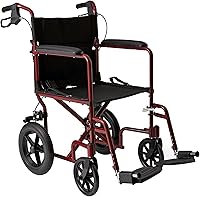
The Drive Medical Folding Transport Wheelchair weighs 26 lb. Its compact folding frame, 8-inch wheels, swing-away footrests, fold-flat backrest, and padded 17-inch nylon seat make it suited to readers who need a transport chair for outings and vehicle storage.
Its steel frame gives it a different trade-off from an aluminum transport chair. The frame adds weight, but the chair still folds for storage in a car trunk, closet, or other tight space.
The padded nylon seat wipes clean, which can help with routine care. Swing-away footrests also leave more room during transfers, but the complete chair should still be handled with care when lifting.
For a close comparison with another Drive model, see how much the Drive Cruiser III wheelchair weighs. Check the folded dimensions and full chair weight before choosing a vehicle-storage option.
Which 22 lb wheelchair suits frequent transport?
The Medline Lightweight Foldable Transport Wheelchair weighs 22 lb in its product dimensions. It has an aluminum frame, 12-inch rear wheels, handbrakes, rear-wheel manual locking brakes, a 19 in wide by 16 in deep seat, and swing-away detachable footrests.
The lower stated weight can make this chair easier to lift than heavier full-size models. Its larger rear wheels may also help with maneuvering around doorways, tight corners, and level ramps.
The handbrakes give the person behind the chair a way to control movement, while the rear-wheel locks help during transfers. Those features do not remove the need for safe transfer technique or a clear path.
The chair folds for transport, and its nylon upholstery is easy to clean. Measure your vehicle opening and doorway before ordering because a chair's total weight does not tell you whether its folded shape will fit.
How heavy is a standard folding wheelchair?
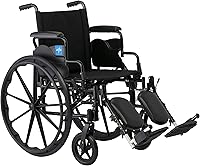
The Medline Comfortable Folding Wheelchair weighs 38 lb. It has a 20 in wide by 16 in deep seat, swing-back desk-length arms, swing-away footrests, a hammertone frame, nylon seating, and dual-axle construction.
This chair is substantially heavier than the 22 lb transport model, so it may take more effort to lift into a car. Its swing-back arms can make lateral transfers and sitting at a desk or table easier.
The chair folds for storage, and the folded width is 11.5 inches according to its dimensions. Its 300 lb weight capacity is separate from the chair's own 38 lb weight, so don't confuse user capacity with lifting weight.
For a narrower comparison of full-size models, read how much standard wheelchairs weigh. A larger chair can offer useful seating room, but the doorway, vehicle, and caregiver all need to suit it.
Is a lighter wheelchair always better?
A lighter wheelchair is usually easier to lift, but the best weight depends on how the chair will be used. Transport, storage, seat width, wheel design, and transfer features may matter more than saving a few pounds.
Choose a lighter transport chair when a caregiver will fold it often for appointments or car travel. The best wheelchairs for adults guide can help you compare broader fit and use factors.
A standard wheelchair may make more sense when the user needs a full-size frame or self-propelling features. A lightweight model can be less useful if its seat is too narrow or its design does not match the user's mobility needs.
If lifting is the main concern, start with chairs under 30 lb and compare their folded dimensions. Our guide to a lightweight wheelchair under 20 lbs focuses on the lower end of the range.
How should you plan for lifting and storage?
Plan for the complete chair, not just the frame. Keep the footrests, armrests, cushions, and other parts that travel with the chair in mind.
Before lifting, lock or secure any folding parts and keep fingers away from hinges. Use both hands, keep the chair close to your body, and ask for help if the chair is awkward or too heavy.
A vehicle may have enough floor space but still have a high trunk lip. Measure the opening, the folded chair, and the path from the ground to the storage area.
A narrow doorway can also limit your choice. See the guide to best narrow wheelchairs for small doorways if width is as important as weight.
What wheelchair weight should you choose?
Choose the lightest chair that still fits the user's seat needs, transfer routine, and transport setup. Lighter can help with lifting, but fit and daily use should guide the final choice.
A 22 lb transport chair may suit frequent lifting, especially when the caregiver folds and loads it often. Its transport design may also suit shorter trips and assisted movement.
A 26 lb model may offer a different frame and seat setup, which can suit a different transfer routine. The frame and seat details may matter more than the small weight difference for some households.
A 38 lb wheelchair may provide a fuller manual-chair design for a user who needs more seating room or self-propelling features. That added design can also make lifting and vehicle storage harder.
Before buying, compare the complete chair weight, folded dimensions, seat width, wheel size, footrests, and brake setup. Those details show how the chair will work in real daily use.
Seat width should match the user without feeling cramped during longer periods of sitting. A chair that is too narrow may be light, but it may not be comfortable or practical.
Wheel size affects maneuvering through doorways, tight corners, and level outdoor paths. Smaller wheels may keep a chair compact, while larger wheels may help in some indoor and outdoor settings.
Footrests and armrests influence transfers as much as they influence weight. Swing-away or detachable designs can leave more room, but the user still needs a safe and clear way to get in and out.
Then check that the caregiver can lift and store it safely in the actual vehicle and home. Measure the opening, the folded chair, and the path to the storage space before ordering.
Care also matters after purchase, since folding parts, brakes, and wheels need regular checks. Clean seating surfaces and keep hinges and locking parts working as intended to avoid problems later.
A wheelchair should also be used as intended, with safe transfers and clear paths. Read how to properly use a wheelchair before relying on a new chair for daily movement.
For many families, the best choice is the chair that balances weight with comfort and ease of use. That balance should reflect the user's needs first, not the number on the spec sheet alone.
Frequently asked questions
How much does a wheelchair weigh?
Most adult wheelchairs weigh about 20 to 60 lb, depending on the frame, seat width, wheels, footrests, and other parts. Lightweight transport chairs often sit near the lower end, while full-size and heavy-duty wheelchairs tend to weigh more.
Check the chair's listed weight before planning to lift it into a vehicle.
What is the lightest type of wheelchair?
Transport wheelchairs are often among the lightest adult wheelchair options, especially when they use compact frames and smaller wheels. Some folding models weigh around 20 to 30 lb, but the exact weight varies.
A lighter chair may be easier to lift, while larger wheels and added features can increase handling weight.
Is a 30 lb wheelchair easy to lift?
A 30 lb wheelchair may be manageable for some caregivers, but lifting comfort depends on the chair's shape, folded size, wheel position, and your strength. Remove detachable parts only if the design allows it, keep your back straight, and ask for help when the chair feels awkward or unsafe to carry.
Does wheelchair weight include the footrests?
The stated wheelchair weight may include the chair as a complete setup, but manufacturers do not always describe the exact weighing method. Footrests, armrests, wheels, and cushions can affect what you lift.
For vehicle storage, plan around the complete folded chair and confirm the details before ordering.