How to Choose Manual Wheelchair Power Assist
Choose manual wheelchair power assist by matching the attachment to your chair's frame, axle and wheel setup, then compare the propulsion help with your transfer and transport needs. Confirm compatibility before buying because a manual wheelchair power attachment is not universal.
On this page (10 sections)
- How to Choose Manual Wheelchair Power Assist
- What does manual wheelchair power assist do?
- Which manual wheelchair fits a power attachment?
- How should you compare propulsion needs?
- Which manual chairs are useful as a baseline?
- What should you check before buying a power attachment?
- How do power attachments affect transfers and transport?
- Can a power attachment work with a transport wheelchair?
- What is the safest way to set up and use one?
- How do you choose between a power attachment and a power wheelchair?
How to Choose Manual Wheelchair Power Assist
Choose manual wheelchair power assist by checking chair compatibility first, then matching the propulsion method to the user's strength, terrain and daily travel. A suitable attachment should also leave enough room for transfers, footrest movement and safe braking.
Power assist can help when a manual chair is comfortable and portable but tiring to push. It is not a universal upgrade.
The right attachments depend on the chair's frame, axle, wheels and available clearance. Those details decide whether the attachment can mount securely and whether the chair can still move as intended.
A base chair that already fits the user matters as much as the powered part. Seat width, back support, foot position and posture can affect comfort on longer trips.
It also helps to think about who will move the chair each day. Some users push themselves for part of the route, while others rely more on a caregiver for guidance and support.
For the user, the key question is whether powered help reduces effort without making transfers harder. A mount near the footrests or rear wheels may change how feet, legs and hands move during daily routines.
For the caregiver, the question is whether the added weight and controls make lifting, steering and stopping easier or harder. Extra hardware can affect balance, especially through doors or when loading into a vehicle.
Daily routes deserve a close look before any purchase. Level indoor paths, outdoor pavements, ramps and uneven surfaces place very different demands on a chair and on the person using it.
Transport plans should be checked early. A chair that folds neatly on its own may not fold the same way once an attachment, battery or control unit is fitted.
If you are still choosing the chair itself, start with our guide to the best wheelchairs for adults. A power attachment works only when the base chair suits the user and the attachment.
That starting point helps you separate chair fit from powered help. Seat size, wheel layout and folding design should be settled before the power question is decided.
Once the chair is right, compare how each attachment is controlled and where its weight sits. A setup that suits short indoor trips may feel different on a longer outdoor route.
Care routine also matters, since mounting points, cables and moving parts need regular checks. The chair should stay clean and dry, and loose fittings should be dealt with promptly.
Trade offs are normal, because more powered help can mean more weight, more parts and less simple storage. The aim is a setup that matches real daily use, not a list of features alone.
Confirm compatibility before buying and check controls, brakes, transfer space and folded size in the final measurement. Practice in a safe area before regular trips on ramps or uneven paths.
What does manual wheelchair power assist do?
Manual wheelchair power assist adds powered help to a manual chair while keeping the chair as the starting platform. The attachment may help with propulsion, but its control method, battery arrangement, weight and compatibility vary by design.
Before comparing models, decide what problem you need to solve:
- Less effort during longer trips
- Help with slopes or outdoor paths
- More control when the user cannot push consistently
- A way to keep a familiar manual chair
- Easier travel than a full power wheelchair may allow
Power assist does not remove the need to check brakes, transfers, turning space or transport. It can also change how the chair folds, how much it weighs and how it fits in a vehicle.
For a broader comparison, read manual wheelchair vs power wheelchair. The choice depends on control needs, transport plans and how much manual movement remains practical.
Which manual wheelchair fits a power attachment?
A compatible chair needs the right frame and wheel setup for the attachment's mounting points. Start with the exact chair model, axle position and wheel dimensions before comparing power.
Check these details:
- Chair brand and model
- Frame shape and tubing
- Rear wheel size and axle position
- Front caster position
- Brake placement
- Footrest and leg-rest clearance
- Seat width and overall chair width
- Folded size and removable parts
- User weight and the chair's stated capacity
A transport chair with caregiver handles may not work like a self-propelled wheelchair. Some attachments expect the user to operate handrims, while others may use a separate control.
Do not assume that a chair described as lightweight or folding will accept a powered accessory.
Our guide to manual wheelchair types explains why transport, standard, lightweight and self-propelled chairs can behave differently. That distinction matters when an attachment needs access to the rear wheels or a particular axle.
Does seat height affect power assist fit?
Seat height can affect posture, handrim reach and the position of an attachment relative to the chair. A hemi-height model places the seat lower for some transfer needs, but it may not match the geometry required by every attachment.
Read what is a hemi height wheelchair before choosing a lower seat. Compare the chair's seat height with the attachment instructions, not just the user's preferred transfer height.
How should you compare propulsion needs?
Choose the propulsion style around the user's daily route and available strength. A person who needs occasional help on level paths may need a different setup from someone who struggles with regular outdoor slopes.
Consider:
- Whether the user will operate the controls
- Whether a caregiver will guide the chair
- How often the chair leaves the home
- Whether the route includes ramps, slopes or uneven paths
- How much manual pushing remains comfortable
- Whether the chair must still fit in a car
- How the attachment changes turning and stopping
Ask for professional help if the user has balance concerns, limited hand control or difficulty judging speed. A powered attachment can change the chair's movement, so practice should happen in a safe, open area before regular trips.
Do not choose by motor strength alone. A heavier or more complex attachment may reduce the portability that made the manual chair useful.
Which manual chairs are useful as a baseline?
These manual chairs are not power attachments. They are examples of the chair features you should evaluate before adding powered help, including folding design, wheel layout, transfer access and caregiver handling.
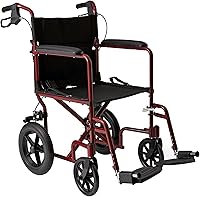
Drive Medical Folding Transport Wheelchair
The Drive Medical chair suits users who need a folding transport design for appointments, outings and caregiver-assisted movement. It has a strong steel frame, 8-inch wheels at the front and rear, padded armrests, swing-away footrests and a fold-flat backrest.
Its padded 17 in nylon seat wipes clean, and the chair weighs 26 lb with dimensions of 33 x 21.5 x 39 in. Because it is a transport wheelchair, confirm that any proposed attachment is designed for this chair type and wheel arrangement.
Medline Lightweight Foldable Transport Wheelchair with Handbrakes
The Medline transport chair suits users who need caregiver control, larger rear wheels and folding storage. It has a sturdy aluminum frame, a 300 lb weight capacity, hand brakes, rear-wheel manual locking brakes, swing-away detachable footrests and a 19 in wide x 16 in deep seat.
Its 12 in rear wheels and swivel front wheels are designed for movement around corners, doorways and ramps. The chair has easy-clean nylon upholstery and folds for car-trunk storage.
Confirm attachment clearance around the brakes, wheels and footrests.
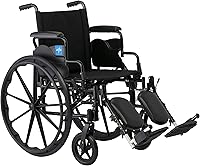
Medline Comfortable Folding Wheelchair with Swing-Back Desk-Length Arms and Swing-Away Footrests
The Medline wheelchair suits users who need a manual chair with foot-powered movement, swing-back desk-length arms and swing-away footrests. The arms can help with lateral transfers and positioning at a desk or table.
It has a high-strength hammertone frame, padded armrests, a nylon seat, smooth tires and a 300 lb weight capacity. The chair weighs 38 lb and folds to 32.5 x 11.5 x 36.5 in.
Check whether the attachment leaves the swing-back arms, footrests and transfer path usable.
What should you check before buying a power attachment?
Check fit, control and daily handling in that order. The attachment is only useful if it mounts securely, can be controlled safely and still works with your transfers and transport routine.
Use this checklist:
- Record the chair's brand and model.
- Measure the rear wheel size, axle position and chair width.
- Check the attachment's approved chair types.
- Confirm clearance around brakes, footrests and casters.
- Identify who will control propulsion.
- Ask how the chair stops and how manual movement remains available.
- Check whether the chair still folds or needs the attachment removed.
- Measure the combined chair and attachment for doors and vehicle storage.
- Confirm the total user and equipment weight limits.
- Plan practice on level ground before using slopes or crowded paths.
Do not rely on a similar-looking chair model. Small differences in axle position, frame tubing or brake location can affect mounting and control.
How do power attachments affect transfers and transport?
A power attachment should not block the user's normal transfer path. Swing-away footrests, removable parts and desk-length arms may help, but the attachment can add hardware near the front, rear or sides of the chair.
Check the chair both with the attachment mounted and with it removed. Look for contact with:
- Feet and leg rests
- Transfer boards
- Bed or toilet edges
- Door frames
- Vehicle ramps
- Folding hinges
- Caregiver handles
For users who spend long periods seated, compare the best wheelchair seat cushion and best wheelchair seat cushions for pressure relief. A cushion does not solve attachment fit, but it may affect seat height and therefore should be included in the final measurement.
Transport weight also matters. For a baseline, compare standard wheelchair weight with the added attachment weight.
The Drive Medical chair weighs 26 lb, the Medline transport model is listed at 22 lb in its dimensions, and the second Medline wheelchair weighs 38 lb.
Add the attachment and any removable power components before deciding whether one person can load the setup.
For a lighter-chair comparison, see how much a Karma Ergo Lite wheelchair weighs. Weight alone does not prove compatibility, but it helps you plan lifting and storage.
Can a power attachment work with a transport wheelchair?
A power attachment may work with some transport wheelchairs, but you must confirm the exact design. Transport chairs focus on caregiver pushing, while many powered attachments expect a self-propelled chair with a particular rear wheel and axle arrangement.
That difference is worth understanding before any money is spent. A transport chair is built around the caregiver handling movement, rather than the user pushing through handrims.
The Drive Medical and Medline transport chairs have features that affect fit, including rear wheels, hand brakes, swing-away footrests and folding frames. Those details should be checked against the attachment's requirements before you buy.
Wheel size can change how an attachment sits and how the chair rolls over thresholds or rough ground. The Drive Medical model uses 8 inch wheels, while the Medline transport model has 12 inch rear wheels for easier movement.
Brakes also need careful checking, because the attachment must not block access to them. Hand brakes and rear wheel locking brakes are safety features, and they should remain simple to reach during transfers and stops.
Swing-away footrests can help with getting in and out, but added hardware may limit that movement. The chair should be tested with the attachment fitted, with feet placed as they would be on a normal trip.
Folding frames add another layer to check, since storage in a car or closet matters to many families. A setup that no longer folds flat may become harder to lift, store and keep clean between outings.
Caregiver handling matters too, especially on slopes or in crowded places. The person pushing needs clear access to handles, brakes and controls, without reaching around unfamiliar parts.
If the user wants to push independently, a transport chair may not be the right base. Confirm the exact chair type before ordering, because looks and weight alone do not prove that an attachment will fit.
If caregiver propulsion is still the main need, a transport chair may be simpler than adding power hardware. If the user needs independent movement, compare a compatible self-propelled wheelchair and a full power wheelchair as well.
Short trips to appointments may suit a simple transport design, while longer daily travel may need a different approach. The route, transfer needs and lifting routine should guide that choice.
What is the safest way to set up and use one?
Follow the attachment instructions for mounting, charging and controls, then check that the chair remains stable before every trip. Practice stopping, turning and reversing on a clear level surface before using ramps or uneven paths.
Set up should be calm and unhurried, with the chair on a firm level surface. Read the instructions fully before fitting anything, so each part is placed in the intended position.
General setup steps include:
- Inspect the chair frame, wheels and brakes.
- Mount the attachment exactly as instructed.
- Check that no cable or component touches a wheel.
- Confirm that footrests and transfers remain clear.
- Test stopping and low-speed turning.
- Secure removable parts before transport.
- Keep the attachment and chair clean and dry according to their instructions.
- Recheck mounting hardware after early uses.
A careful inspection can reveal loose fittings, worn tyres or brakes that need attention. Small faults are easier to deal with at home than during a trip away from support.
Mounting should follow the maker instructions closely, because secure placement affects balance and control. Do not tighten, move or adjust parts in a way that differs from the guidance given.
Cables and control parts should be checked for rubbing or contact with wheels. A cable caught near a moving part can affect steering, braking and the smooth roll of the chair.
Footrests and transfer space need a practical check with the user seated. Feet should rest comfortably, and the path used for getting in and out should stay clear of added hardware.
Low speed testing in an open area can show how the chair responds to stops and turns. Start gently, with a caregiver nearby, before trying busier or sloped routes.
Transport needs a separate check, since a chair that feels fine at home may be awkward to load. Removable parts should be secured, and the folded shape should be tested against the vehicle space.
Cleaning should follow the instructions for both the chair and the attachment. Wiping surfaces clean and keeping parts dry can help protect fabrics, frame finishes and electrical components.
A power attachment can change balance and turning response. Stop using it if the chair feels unstable, the mount shifts or the controls do not respond as expected, and seek qualified advice instead of continuing.
How do you choose between a power attachment and a power wheelchair?
Choose a manual wheelchair power attachment when the existing chair fits well, the user wants powered help and the attachment is confirmed compatible. Choose a power wheelchair when the user needs a purpose-built powered system with controls and seating designed around that use.
Pick a manual wheelchair power attachment if:
- You already have a suitable manual chair
- The user wants to keep its transfer setup
- The chair must remain relatively portable
- The main problem is pushing effort
- A compatible attachment is available
Consider a power wheelchair if:
- The manual chair no longer meets propulsion needs
- The user needs powered movement for most trips
- The combined attachment setup is too difficult to transport
- Seating, controls or stability require a complete powered design
The best choice is the one that fits the user, chair and route together. Confirm compatibility before buying, and choose the simplest setup that provides the needed propulsion without blocking transfers or transport.
Frequently asked questions
What is manual wheelchair power assist?
Manual wheelchair power assist adds powered help to a chair that is otherwise manually operated. The attachment must match the wheelchair frame, axle, wheels, brakes and user controls.
Confirm exact compatibility before buying, since manual wheelchair power attachments are not universal.
Can any manual wheelchair use a power attachment?
No. A manual wheelchair power attachment may require a particular frame shape, axle position, wheel size or clearance around the footrests.
Check the attachment maker's compatibility list and measure your chair before ordering.
A transport wheelchair may not support the same attachment as a self-propelled wheelchair.
Is a power assist attachment the same as a power wheelchair?
No. Power assist keeps a manual wheelchair as the base and adds powered help, while a power wheelchair is built around powered driving.
Compare control, charging, transport, turning space and support needs before deciding which setup fits your routine.
What should I check before choosing manual wheelchair power assist?
Check the chair's frame, axle, wheel size, brake position, footrest clearance and folded dimensions. Then compare how the attachment is controlled, where its weight sits and whether you can still transfer safely.
Ask a qualified mobility professional if the fit or stability is unclear.