Lightweight vs Ultra Lightweight Wheelchairs: Choose (November 2026)
Choose a lightweight wheelchair for easier self-propulsion and a sturdier everyday chair, or choose an ultra lightweight transport chair when lifting and car storage matter most. The right choice depends on who will push the chair, how often it will be lifted, and where it will be used.
On this page (11 sections)
- Lightweight vs ultra lightweight wheelchair: what is the main difference?
- Which wheelchair is easiest to lift?
- Which chair is better for self-propulsion?
- How do transport wheelchairs compare with self-propelled chairs?
- Which model balances weight and caregiver control?
- Does a steel frame make a lightweight wheelchair too heavy?
- Which wheelchair fits narrow doorways?
- How should you choose between the 4 chairs?
- What should you check before buying?
- How do you care for a lightweight wheelchair?
- Final choice: lightweight or ultra lightweight?
Choose a lightweight wheelchair for self-propulsion and everyday support, or an ultra lightweight transport wheelchair when lifting and car storage are the priority. The lightweight vs ultra lightweight wheelchair decision is mainly about chair control, lifting effort and the places you plan to use it.
Lightweight wheelchairs can offer larger rear wheels, desk-length arms and a frame suited to independent use. Ultra lightweight transport chairs reduce the load for caregivers, but they usually depend on an attendant to push.
We compared the chair weights, seat sizes, wheel layouts, brakes and folding features of these 4 options.
Our score weighs specs, features and buyer feedback against what you're shopping for.
 Best for self-propelling
Medline Lightweight Wheelchair for Adults with Swing-Back
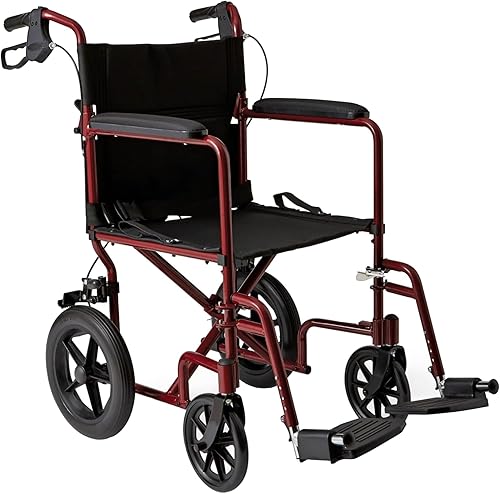 Best for caregiver control
Medline Lightweight Foldable Transport Wheelchair with Handbrakes
Lightweight vs ultra lightweight wheelchair: what is the main difference?
Lightweight models are usually the better fit for self-propulsion, while ultra lightweight models are easier for caregivers to lift. Weight alone doesn't tell you whether the chair is designed for the user or an attendant to control.
The Medline lightweight wheelchair with swing-back arms weighs 33 lb and has a 20 x 16 in seat. Its larger wheelchair format suits a user who may need to reach the rear wheels, pull up to a desk and use elevating leg rests.
The Medline ultra lightweight transport chair weighs 15 lb and has a 19 x 16 in seat. Its 8 in rear wheels, swing-away footrests and rear-wheel locking brakes make it easier to carry and guide as a transport chair.
The word “ultra” is useful for comparing lifting effort, but it doesn't automatically mean better comfort or more independence. Match the chair design to the person who will push, lift and store it.
Which wheelchair is easiest to lift?
The 15 lb Medline Ultra Lightweight Transport Wheelchair is the easiest chair here to lift, followed by the 26 lb Medline transport wheelchair. A 7 lb difference can matter when the chair goes into a car several times a week.
The 33 lb Medline lightweight wheelchair is still lighter than many full-size chairs, but it asks more of the person lifting it. The 41.3 lb Drive Medical Blue Streak is the heaviest option in this comparison.
Use the folded dimensions and the available handholds as part of your decision. A chair can be light on paper but awkward to lift if you must reach around footrests or a wide frame.
For more options in this weight range, see our guide to a lightweight wheelchair under 20 lbs. It focuses on the trade-off between a low chair weight and the features you need for regular trips.
Best product for frequent car loading
The Medline Ultra Lightweight Transport Wheelchair has a 300 lb weight capacity, a 19 x 16 in seat and a foldable design. Its swing-away footrests make getting in and out easier, while the cup holder helps during outings.
Its 8 in rear wheels and swivel front wheels suit indoor use, doorways and ramps. The smaller rear wheels are a trade-off for lower weight, so check the route if outdoor surfaces are uneven.
Which chair is better for self-propulsion?
Choose a self-propelled lightweight wheelchair when the user needs to move without an attendant. A transport chair can be easier to carry, but its smaller rear wheels and attendant-focused layout may limit independent movement.
The Medline Lightweight Wheelchair for Adults has a 33 lb chair weight, a 300 lb capacity and swing-back, desk-length arms. The larger wheelchair format gives the user a better starting point for self-propelled use than the transport models here.
The Drive Medical Blue Streak also has a manual design, push handles and a 300 lb maximum weight recommendation. Its alloy steel frame weighs 41.3 lb, so it favors a stable everyday setup more than frequent lifting.
Review the best wheelchairs for adults if you need to compare seat fit, chair type and daily mobility needs beyond the lightweight category.
Best product for independent daily mobility
Its 20 x 16 in seat, breathable nylon upholstery and swing-back arms support common daily tasks such as sitting at a table or transferring from the side. The frame folds to 10.5 in wide for storage.
The 33 lb weight makes it easier to handle than the Drive Medical Blue Streak, while the 300 lb capacity gives it the same stated capacity as the other options here. Measure the seat and doorways before choosing it.
How do transport wheelchairs compare with self-propelled chairs?
Transport wheelchairs are best when another person will push, while self-propelled wheelchairs give the user more control over movement. The difference affects more than wheel size because it changes how the chair works during stops, turns and transfers.
The Medline Lightweight Foldable Transport Wheelchair has 12 in rear wheels, handbrakes and rear-wheel manual locking brakes. Those features suit a caregiver who needs to control speed and keep the chair secure during transfers.
The Medline Ultra Lightweight Transport Wheelchair uses 8 in rear wheels and rear-wheel locking brakes. It is lighter and easier to store, but it is still an attendant transport chair.
A self-propelled wheelchair may be the better choice if the user wants to move around the home or a care setting without waiting for help. A transport chair may be the better choice for appointments, shopping trips and outings where a caregiver stays with the user.
For a related mobility decision, compare a Rollator vs Wheelchair: A Senior's Guide. A rollator may suit someone who can walk with support, while a wheelchair is better when sitting for the trip is the safer plan.
Which model balances weight and caregiver control?
The 26 lb Medline Lightweight Foldable Transport Wheelchair offers the middle ground between easy lifting and caregiver control. It is heavier than the 15 lb ultra lightweight chair but adds 12 in rear wheels and handbrakes.
The chair has a 19 x 16 in seat, a 300 lb weight capacity and a foldable aluminum frame. Its swing-away detachable footrest helps with entry and exit, and the nylon upholstery is easy to clean.
The handbrakes give the person pushing the chair more direct control during movement. Rear-wheel manual locking brakes also help keep the chair still during transfers, but they don't replace safe transfer technique.
Best product for caregiver-led outings
The 12 in rear wheels and swivel front wheels are suited to indoor routes, tight corners, doorways and ramps. The chair folds for car storage, and no assembly is required.
The product information gives 26 lb in the title and 22 lb in the specifications, so confirm the exact shipping or chair weight before ordering if lifting effort is a strict limit. The chair's stated capacity is 300 lb.
Does a steel frame make a lightweight wheelchair too heavy?
A steel frame can add lifting weight, but it may still make sense when frame material and daily stability matter more than car loading. The Drive Medical Blue Streak weighs 41.3 lb and uses an alloy steel frame.
It has an 18 in seat height, 16 in seat depth, flip-back desk arms and swing-away footrests. Push-to-lock brakes, push handles and solid wheels support a manual chair setup for home, care facilities and level outdoor use.
The Blue Streak is not the best match for a caregiver who must lift a chair alone several times a day. It makes more sense when the chair will stay in one place or when its desk-arm and footrest layout fits the user's routine.
Best product for a sturdy everyday setup
Its 300 lb maximum weight recommendation matches the other chairs in this comparison. The 18 in seat height and 16 in seat depth give you specific measurements to compare with the user's posture and transfer needs.
The Blue Streak folds for transport and storage, but its 41.3 lb weight makes it the least convenient option for repeated lifting. Measure the vehicle opening and plan how a caregiver will handle the folded chair.
Which wheelchair fits narrow doorways?
Measure the narrowest doorway and the chair's assembled width before choosing. A low chair weight cannot solve a doorway problem if the frame or wheels do not fit through the route.
The Medline lightweight wheelchair is listed at 25.5 or 27.5 in wide when assembled. The Medline transport wheelchair has a 19 in seat, but the seat width is not the same as the full chair width, so measure the route rather than assuming it will fit.
The ultra lightweight transport chair is listed at 23.25 in wide in its product dimensions. The Blue Streak's full dimensions are also separate from its 18 in seat height, so compare the complete chair width with your doorway.
Our guide to best narrow wheelchairs for small doorways can help if the hallway, bathroom or bedroom entrance is the deciding factor.
How should you choose between the 4 chairs?
Pick by the person who controls the chair first, then compare weight, seat fit and storage. This avoids choosing an ultra lightweight transport chair when the user needs to self-propel, or choosing a heavier self-propelled chair when a caregiver must lift it often.
Choose the Medline Lightweight Wheelchair for Adults with Swing-Back when self-propulsion, desk access and elevating leg rests matter. Its 33 lb weight is a reasonable middle point for a full wheelchair format.
Choose the Medline Lightweight Foldable Transport Wheelchair with Handbrakes when a caregiver wants handbrakes and 12 in rear wheels. Its 26 lb weight keeps lifting more manageable without moving to the smallest rear-wheel format.
Choose the Drive Medical Blue Streak when an alloy steel frame, flip-back desk arms and swing-away footrests matter more than low weight. At 41.3 lb, it works best when lifting is occasional.
Choose the Medline Ultra Lightweight Transport Wheelchair when 15 lb lifting weight and car storage are the main goals. Confirm that an attendant will always be available because it is a transport chair.
What should you check before buying?
Check the seat dimensions, full chair width, folded size and who will push the chair before ordering. These details affect daily use more than the label lightweight or ultra lightweight.
Measure the user's usable seat width and depth, then compare those numbers with the 20 x 16 in, 19 x 16 in and 18 in seat options here. Leave enough room for comfortable transfers without choosing a chair that is too wide for the home.
Measure the narrowest doorway, the car trunk opening and the storage space. Include footrests and armrests in your plan because the folded chair may still need a safe place where it can be lifted and stored.
Check the wheel layout next. Larger rear wheels can make a transport chair easier to guide over some routes, while smaller wheels can help reduce total weight and folded bulk.
For another brand-specific comparison, see our best Karman ultra lightweight wheelchair guide. If the user is considering the Karman LT-980, our Karman LT-980 wheelchair reviews page covers that model separately.
How do you care for a lightweight wheelchair?
Keep the chair clean, check the brakes and inspect moving parts before regular use. Follow the chair manual for maintenance, folding and adjustments because wheel and brake designs differ.
Wipe the nylon upholstery with a suitable cleaner and let it dry. Check that footrests swing or detach as intended, and keep the transfer area clear before the user sits down.
Test the locking brakes while the chair is empty and again before a transfer. A locked brake helps keep the chair still, but it does not replace a level surface and safe transfer support.
Inspect tires, push handles and folding points for damage or looseness. Stop using the chair and seek qualified help if a brake, wheel or frame part does not work as intended.
Final choice: lightweight or ultra lightweight?
Choose lightweight for self-propulsion and a fuller wheelchair layout; choose ultra lightweight for caregiver lifting and vehicle storage. For most caregiver-led trips, the 15 lb Medline Ultra Lightweight Transport Wheelchair saves the most lifting effort.
For independent daily mobility, the 33 lb Medline Lightweight Wheelchair for Adults is the stronger match.
If you need a middle option, the 26 lb Medline transport chair adds handbrakes and 12 in rear wheels. If frame material and desk access matter most, the heavier 41.3 lb Blue Streak may fit your routine better.
Frequently asked questions
What is the difference between a lightweight and ultra lightweight wheelchair?
A lightweight wheelchair is easier to lift than a standard chair and may support independent self-propulsion. An ultra lightweight wheelchair usually reduces lifting effort further, but many ultra lightweight models are transport chairs that need an attendant to push.
Check the chair type before focusing only on the weight.
Is an ultra lightweight wheelchair better for seniors?
An ultra lightweight wheelchair is better when a caregiver regularly lifts it into a car or stores it after trips. A lightweight self-propelled wheelchair may be better when the user needs to move the chair independently.
The best choice depends on who controls the chair and how often it is carried.
Can you self-propel a transport wheelchair?
Most transport wheelchairs are designed for an attendant to push rather than for independent self-propulsion. The Medline transport options here use smaller rear wheels and caregiver features such as handbrakes or rear-wheel locks.
Choose a self-propelled wheelchair if the user needs to push the rear wheels.
How light should a wheelchair be for car travel?
Choose the lightest chair that still gives the user the right control, seat fit and support. The options here range from 15 lb for an ultra lightweight transport chair to 41.3 lb for an alloy steel lightweight wheelchair.
Remember that folded size and how you grip the chair matter along with total weight.


