9 Best Wheelchair Seat Cushion (November 2026)
The best wheelchair seat cushions include the Everlasting Comfort Doctor Recommended Memory Foam Seat for everyday memory foam support, the ComfiLife Doctor Recommended Seat Cushion for portable gel memory foam, and the OMCOZY Gel Seat Cushion for a wide gel seat.
On this page (10 sections)
- The best wheelchair seat cushions for different needs
- How to choose a wheelchair seat cushion that fits
- Which wheelchair cushions help with heat and moisture?
- How do you keep a wheelchair seat cushion from sliding?
- When should you consider a pressure-relief wheelchair cushion?
- What wheelchair cushion works for a transport chair?
- How to set up and care for a wheelchair seat cushion
- Is a wheelchair cushion the same as a wheelchair back cushion?
- More guides on this topic
- Our verdict on the best wheelchair seat cushion
The best wheelchair seat cushion for most adults is the Everlasting Comfort Doctor Recommended Memory Foam Seat, because its medium memory foam, U-shaped cutout and breathable cover suit everyday sitting.
That pick suits adults who sit through work, travel and home routines and want shaped support under the hips and tailbone.
It measures 17.3 x 14 x 3.15 inches, so check the seat pan before you order.
The cover is machine washable and the bottom is non-slip, which helps on smoother chairs.
Choose the ComfiLife for portable gel memory foam, OMCOZY for a wide low-profile gel seat, or AUVON for moisture protection.
ComfiLife adds a cooling gel layer and a built-in handle for moving between seats.
OMCOZY gives a broad honeycomb gel surface at a lower 1.51 inch height.
AUVON adds a waterproof cover membrane for users who need extra moisture protection.
Wheelchair cushions change more than comfort.
They can affect sitting height, footrest position, armrest support and how easily you transfer in and out of the chair.
A few inches of height can move your knees, change your reach to wheels and alter your posture.
Always test foot contact and arm position after you add any cushion.
If you're still choosing the chair itself, start with our guide to best wheelchairs for adults.
A cushion should match the chair's width and your daily sitting needs, not just feel soft when you first sit down.
Measure width and depth first, then allow for armrests and folding parts.
That simple check saves most fit problems later.
Our picks at a glance
-
1
 Best for everyday memory foam support
Everlasting Comfort Doctor Recommended Memory Foam Seat
9.7/10 our score
See it on Amazon -
2
 Best for portable gel memory foam
ComfiLife Doctor Recommended Seat Cushion
9.6/10 our score
See it on Amazon -
3

- 4
 Best for extra-wide seatsCheck it
- 5
 Check it
Everlasting Comfort Ventilated Wheelchair Cushions for Pressure
Best for ventilated wheelchair seating - 6
 Check it
C CUSHION LAB Patented Pressure Relief Seat
Best for contoured hip support - 7
 Check it
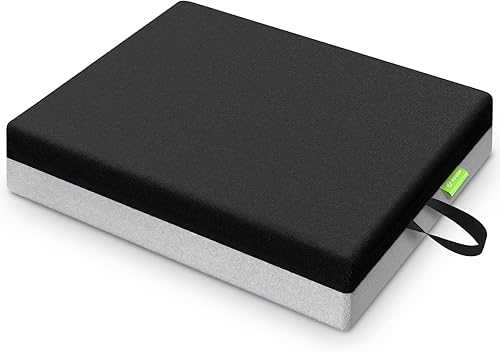
AUVON Gel Wheelchair Seat Cushion with Waterproof
Best for moisture protection - 8
 Check it
AUVON Ventilation Seat Cushion with Innovation Heat
Best for airflow and moisture protection - 9
 Check it
DMI Seat and Chair Cushion for Office
Best for simple firm foam support
The best wheelchair seat cushions for different needs
The best wheelchair seat cushion depends on your seat width, preferred material, desired height and need for airflow.
Those four points work together in daily use, so it helps to weigh them before you focus on a single feature.
Memory foam gives shaped support, while gel and ventilated designs may suit users who worry about heat.
Seat width should come first because a cushion that folds or overhangs will shift during use.
A cushion that is too wide can press against armrests and make transfers more awkward.
A cushion that is too deep can push against the backrest and change where your knees sit.
Material comes next, since foam, gel and hybrid builds feel different under load.
Memory foam often feels more contoured once you have sat for a while, while gel can feel more flexible on top.
Desired height matters for transfers, desks and footrest contact.
Even a small rise can change your reach to the wheels and your position at a table.
Airflow matters if you sit for long stretches and feel stuffy or warm.
Warmth can build quietly during a normal day, so ventilation deserves a place in the shortlist.
We compared the stated materials, dimensions, cover care, stability features and wheelchair fit.
Our score weighs specs, features and buyer feedback against what you're shopping for.
That approach helps separate daily comfort from a cushion that only feels soft at first.
Firmness also shapes the choice, from soft gel to firm foam.
A soft surface may suit users who want less obvious support, while a firmer feel can suit users who want a steadier base.
Weight matters if you lift the cushion often or move between chairs.
A lighter cushion is easier to carry from home to car, but it still needs enough structure to hold its shape.
Cover care matters too, because some covers wash by machine and others need air drying.
That detail affects your weekly routine, especially if you use the chair every day.
Stability features matter when you transfer, turn or ride over uneven ground.
A non-slip bottom or a strap can help a well-fitting cushion stay in place.
Use those points together rather than chasing one feature alone.
The safest choice is the one that fits your seat, suits your sitting hours and keeps your feet and arms in a workable position.
Everlasting Comfort Doctor Recommended Memory Foam Seat: Best for everyday memory foam support
- 100% memory foam
- 17.3 x 14 x 3.15 in
- U-shaped coccyx cutout
- Machine-washable breathable cover
This medium memory foam cushion uses a U-shaped cutout and breathable cover for everyday sitting. Its compact shape also suits car, office and travel seats.
Pros
- U-shaped coccyx cutout
- Breathable washable cover
- Non-slip bottom
Cons
- Not designed specifically for wheelchair dimensions
- Memory foam core cannot be washed
ComfiLife Doctor Recommended Seat Cushion: Best for portable gel memory foam
- Gel memory foam
- 17.5 x 13.7 x 2.8 in
- Built-in handle
- Machine-washable velour cover
ComfiLife combines a cooling gel layer with memory foam in a medium-firm cushion. The handle, non-slip base and removable cover suit wheelchair users who move between seats.
Pros
- Cooling gel layer
- Built-in carrying handle
- Non-slip rubber base
Cons
- May feel tall on soft seats
- Memory foam core cannot be washed
OMCOZY Gel Seat Cushion: Best for a wide gel seat
- Honeycomb gel design
- 18.51 x 17.33 x 1.51 in
- Breathable air channels
- Detachable cover
OMCOZY gives you a broad gel seating surface with honeycomb air channels. Its lower 1.51 in profile may work well when added seat height is a concern.
Pros
- Wide seating surface
- Honeycomb airflow design
- Machine-washable cover
Cons
- Soft feel may not suit everyone
- Wide footprint needs careful measurement
5 STARS UNITED Seat Cushion: Best for extra-wide seats
- XX-Large memory foam cushion
- 18 x 17 x 4.8 in
- Medium firmness
- Recommended for adults up to 300 lb
This XX-Large cushion is made for extra-wide seating and has a deep 4.8 in profile. Measure the wheelchair seat and check added height before choosing it.
Pros
- Extra-wide 18 x 17 in footprint
- Medium-firm memory foam
- Removable washable cover
Cons
- Adds substantial seat height
- Foam core cannot be washed
Everlasting Comfort Ventilated Wheelchair Cushions for Pressure: Best for ventilated wheelchair seating
- Ventilated gel design
- 18 x 16.93 in
- Non-slip rubberized bottom
- Removable washable cover
This cushion is sized around wheelchair use and adds ventilated gel design, a non-slip base and a removable cover. It also works on office, car and mobility scooter seats.
Pros
- Ventilation holes and airflow
- Wheelchair-focused size
- Non-slip base
Cons
- Its stated thickness is unclear
- May change the user's seating height
C CUSHION LAB Patented Pressure Relief Seat: Best for contoured hip support
- Extra-dense memory foam
- 16 x 16 in
- Ergonomic thigh and hip contours
- Soft firmness
C CUSHION LAB uses a square 16 x 16 in shape with contours for the thighs and hips. Its soft, extra-dense memory foam suits users who prefer shaped support.
Pros
- Contoured thigh and hip support
- Compact square footprint
- Extra-dense memory foam
Cons
- Smaller than several picks here
- Spot-clean care only
AUVON Gel Wheelchair Seat Cushion with Waterproof: Best for moisture protection
- 18 x 16 x 3 in
- Waterproof cover membrane
- Adjustable buckle strap
- Extra-thick gel layer
AUVON combines gel memory foam with a waterproof cover membrane, adjustable strap and anti-slip base. The firm feel and 3 in height suit users who want a stable, secured cushion.
Pros
- Waterproof cover membrane
- Adjustable buckle strap
- Built-in carrying handle
Cons
- Firm feel may not suit plush-seat fans
- Cover must air-dry
AUVON Ventilation Seat Cushion with Innovation Heat: Best for airflow and moisture protection
- 30 air holes
- 11 ventilation grooves
- 18 x 16 x 3 in
- Waterproof cover with carrying handle
This soft AUVON cushion focuses on airflow through 30 air holes and 11 ventilation grooves. Its waterproof cover and carrying handle add practical value for daily moving between seats.
Pros
- 30 air holes and 11 grooves
- Waterproof cover
- Carrying handle
Cons
- Foam may feel firm when cold
- Cover must air-dry
DMI Seat and Chair Cushion for Office: Best for simple firm foam support
- High-density foam
- 18 x 16 x 3 in
- Firm feel
- Machine-washable cover
DMI keeps the design simple with firm foam, a 3 in profile and a washable cover. It fits wheelchairs, scooters, office chairs, kitchen chairs and car seats.
Pros
- Simple high-density foam design
- Firm support
- Lightweight at 8.8 oz
Cons
- No gel or ventilation design
- Cover and foam dimensions need checking before use
| Product | Best for | Material | Size | Firmness | Our score |
|---|---|---|---|---|---|
| Everlasting Comfort Doctor Recommended Memory Foam Seat | everyday memory foam support | Memory foam | 17.3 x 14 x 3.15 in | Medium | 9.7 |
| ComfiLife Doctor Recommended Seat Cushion | portable gel memory foam | Gel memory foam | 17.5 x 13.7 x 2.8 in | Medium firm | 9.6 |
| OMCOZY Gel Seat Cushion | a wide gel seat | Gel | 18.51 x 17.33 x 1.51 in | Soft | 9.5 |
| 5 STARS UNITED Seat Cushion | extra-wide seats | Memory foam | 18 x 17 x 4.8 in | Medium | 9.4 |
| Everlasting Comfort Ventilated Wheelchair Cushions for Pressure | ventilated wheelchair seating | Gel memory foam | 18 x 16.93 in | 9.3 | |
| C CUSHION LAB Patented Pressure Relief Seat | contoured hip support | Memory foam | 16 x 16 in | Soft | 9.1 |
| AUVON Gel Wheelchair Seat Cushion with Waterproof | moisture protection | Gel memory foam | 18 x 16 x 3 in | Firm | 8.7 |
| AUVON Ventilation Seat Cushion with Innovation Heat | airflow and moisture protection | Memory foam and polyurethane | 18 x 16 x 3 in | Soft | 8.4 |
| DMI Seat and Chair Cushion for Office | simple firm foam support | Foam | 18 x 16 x 3 in | Firm | 8.2 |
How to choose a wheelchair seat cushion that fits
The right wheelchair seat cushion should fit the seat pan without folding, hanging over the edges or blocking the chair's moving parts. Measure the seat width and depth, then compare those measurements with the cushion's stated size.
A cushion that is too wide can interfere with the armrests. One that is too deep can press into the backrest or leave your knees and feet in a different position.
For a wider chair, compare the 18 x 17 in 5 STARS UNITED cushion with the 18.51 x 17.33 in OMCOZY. If your chair is closer to a standard 18 x 16 in size, the Everlasting Comfort ventilated cushion, AUVON models and DMI are easier starting points.
If you need more room than a standard chair offers, read our guide to bariatric wheelchair cushions 26 inch wide before choosing a standard-width pad.
How much height should a wheelchair cushion add?
A wheelchair cushion should add only as much height as you can use safely and comfortably. A 4.8 in cushion can feel very different from a 1.51 in cushion, especially when you transfer or reach a desk.
Check whether the added height changes your knee angle, footrest contact or arm position. The DMI, AUVON and OMCOZY options have stated heights that make comparison easier, while the Everlasting Comfort ventilated model does not state a thickness in the information.
A thick cushion can add padding, but thickness alone does not prove that it will suit your posture. If you need extra depth, compare our guide to the best thick wheelchair seat cushion.
Is memory foam or gel better for long sitting?
Memory foam is a good fit when you want a cushion that shapes around the body. Gel may appeal to users who want a softer, more flexible surface or airflow through a honeycomb design.
The Everlasting Comfort Doctor Recommended Memory Foam Seat has 100% memory foam and a medium feel. ComfiLife combines gel with memory foam and uses a medium-firm feel, while OMCOZY uses soft gel with a broad honeycomb design.
For a closer look at gel options, see the best gel seat cushion for wheelchair guide. If airflow matters most, the best air cushion seat for wheelchair guide covers a different type of seating design.
Which wheelchair cushions help with heat and moisture?
Ventilation and washable or waterproof covers are the main features to compare when heat or moisture is a concern.
A cushion with air channels may feel less stuffy, while a waterproof membrane helps protect the core from moisture.
Heat builds up faster on a solid foam surface during long sitting.
Air holes and grooves give warm air a path out instead of trapping it under you.
Washable covers help with general freshness, while waterproof membranes guard against sweat or spills reaching the core.
Neither feature fixes a cushion that is the wrong size or shape.
The AUVON Ventilation Seat Cushion has 30 air holes and 11 ventilation grooves.
That pattern is aimed at airflow through the memory foam surface.
It also uses a waterproof cover, so moisture protection and ventilation work together.
The Everlasting Comfort ventilated model uses a ventilated gel design, and OMCOZY uses a honeycomb gel structure with free-flowing air channels.
OMCOZY spreads that gel across a wide 18.51 x 17.33 inch surface.
Its 1.51 inch profile keeps added height low while still offering airflow.
AUVON's gel wheelchair cushion adds a waterproof cover membrane, adjustable buckle strap and anti-slip base.
That gel coverage is larger and thicker than a plain foam top.
Its cover should be washed separately in cold water and air-dried.
For cover choices, see our guide to the best wheelchair seat cushion cover.
A cover can make daily cleaning easier, but it does not correct a cushion that is the wrong size.
Check care labels before you wash, since heat and bleach can damage several covers.
Dry covers fully before refitting them to keep the core fresh.
How do you keep a wheelchair seat cushion from sliding?
A non-slip bottom, strap or both can reduce movement on the chair.
Place the cushion squarely on the seat pan and check that the cover is flat before sitting down.
Movement usually starts with a loose cover, a curved seat or a cushion that is too large.
Smooth the cover toward each corner so no bunching sits under your thighs.
Sit and shift your weight gently to see whether the cushion stays put.
The ComfiLife uses a non-slip rubber base and includes a built-in handle.
The rubber base grips slick seat surfaces during transfers and turns.
The handle helps you lift and reposition it without dragging the cover.
The AUVON gel model adds an adjustable buckle strap, while the Everlasting Comfort ventilated cushion uses a rubberized non-slip bottom.
A strap can anchor the cushion to the frame on wheelchairs and scooters.
That secure hold helps if you move the cushion between chairs often.
A non-slip feature does not replace a proper fit.
If the cushion still shifts, check whether the seat is curved, the cushion is too large or the chair needs a different seating system.
Also check whether the cover is zipped fully and seated correctly.
A strap should be snug without pulling the cushion out of square.
If movement continues, measure again and consider a narrower model.
When should you consider a pressure-relief wheelchair cushion?
Consider a pressure-relief wheelchair cushion when you sit for long periods and need more support than the chair's original seat provides.
The cushion should support your posture without creating pressure at the tailbone, hips or thighs.
Long sitting concentrates weight on a few points under your body.
A shaped cushion can spread that load across a wider area.
It can also lift the tailbone slightly so pressure moves to the sitting bones and thighs.
That change helps some users, but fit and posture still decide the result.
Several products here use a U-shaped cutout or contour.
The Everlasting Comfort Doctor Recommended Memory Foam Seat and ComfiLife place the cutout toward the back, while C CUSHION LAB uses thigh and hip contours.
The U-shaped models build in space at the rear for the tailbone.
C CUSHION LAB instead cradles the thighs and hips to guide upright sitting.
Both approaches aim to reduce pressure, yet they feel different in daily use.
Position matters, so place any cutout at the back before you judge comfort.
Check that your thighs, knees and feet still sit in a supported position.
A cushion may improve comfort, but ongoing pain, numbness, skin changes or suspected pressure injuries need professional advice.
The best wheelchair seat cushions for pressure relief guide can help you compare features before that conversation.
Bring notes on your chair type, sitting hours and problem areas to that discussion.
Keep using safe sitting habits while you wait for advice.
Change position often and check skin regularly during long days.
What wheelchair cushion works for a transport chair?
A transport chair cushion should be light enough to move with the chair and sized so it doesn't interfere with folding or seating.
Check the chair's seat depth, width and folding points before adding any cushion.
Transport chairs often travel in cars and fold down for storage.
A cushion that blocks a hinge or joint can stop that folding.
It can also add height that makes transfers harder for a helper.
Measure the seat and note where the frame folds before you choose.
The DMI weighs 8.8 oz and has an 18 x 16 x 3 in shape, making it a simple option for users who want firm foam and a washable cover.
That light weight suits short trips and frequent lifting.
Its firm foam gives a plain, stable surface without gel or ventilation layers.
The washable cover helps with regular cleaning between uses.
For more options, see the guide to the best transport chair seat cushion.
Compare weight, height and cover care against your usual travel routine.
A thick cushion may improve comfort but can reduce headroom under a table or change the user's position relative to the transport chair back.
Extra height can also raise the user above the backrest or arm support.
Test the fit by checking the chair's normal folding and transfer movements.
Sit in the chair and confirm footrest contact before a longer outing.
Remove the cushion if it makes folding or lifting awkward.
A lighter, lower cushion often works better for moving between home and car.
How to set up and care for a wheelchair seat cushion
Place the cushion flat with its longer edge running from the backrest toward the front of the seat.
On U-shaped cushions, place the cutout at the back near the tailbone.
That orientation lets the shape work as designed during sitting.
Turn the cushion so any logo, handle or strap sits where you expect it.
Check that the cushion does not cover the chair's folding joints, press against the wheels or extend beyond the seat pan.
Overhang can catch on frames, brakes or clothing during transfers.
Trim the fit by choosing a narrower cushion if edges push outward.
Sit upright and confirm that both feet remain supported by the footrests.
If your feet dangle, the cushion may be too thick for your chair setup.
If your knees press upward, check footrest height and seat depth again.
Remove and wash the cover according to its care instructions.
Do not wash memory foam or gel cores unless the manufacturer specifically says otherwise.
Washing a core can damage its structure and change its support.
Air-dry AUVON covers, and spot-clean the C CUSHION LAB cushion.
Cold gentle washing suits several covers, while air drying protects coatings and membranes.
Let covers dry fully before you zip them back on.
Rotate a cushion when its instructions allow it and check the foam, gel and cover for changes.
Replace or reassess it if it becomes uneven, slides often or creates a new pressure point.
Look for flattening, cracks, stretched covers or worn non-slip bases.
Early checks keep a small change from becoming a comfort problem.
Is a wheelchair cushion the same as a wheelchair back cushion?
No. A wheelchair seat cushion supports the area beneath you, while a wheelchair back cushion changes support behind your back.
They solve different fit and posture problems.
A seat cushion affects hips, thighs, tailbone pressure and sitting height.
A back cushion affects lumbar support, trunk posture and shoulder position.
One cannot fully replace the other in daily use.
If your seat feels comfortable but your back lacks support, compare a best wheelchair seat back cushion instead of adding more height under your hips.
Adding seat height may lift you without fixing the gap behind your back.
It can even worsen posture if your feet lose contact with the footrests.
That loss of contact can shift weight onto the thighs and make sitting less steady.
Some users may need both, but adding both changes your seating position.
Extra support at the back can push you forward on the seat.
Extra height below can raise your knees and change your reach.
Together, those changes can alter how you sit at a desk, reach the wheels and get in and out of the chair.
Make one adjustment at a time and check your posture, foot support and transfer height after each change.
Start with the problem you notice most during a normal day.
If pressure sits under your hips, the seat may need attention first.
If soreness sits behind your back, the back support may need attention first.
Sit for a normal period before you judge the result.
Note how you transfer, reach wheels and sit at a desk or table.
Also note whether your feet still rest flat and whether your arms still meet the armrests well.
Undo the change if it creates pressure or makes daily tasks harder.
A cushion should make daily use simpler, not add a new problem to solve.
More guides on this topic
- Best Roho Wheelchair Seat Cushions
Our verdict on the best wheelchair seat cushion
The Everlasting Comfort Doctor Recommended Memory Foam Seat is the best wheelchair seat cushion for most adults who want medium memory foam, a U-shaped cutout and a washable breathable cover.
It suits users who want shaped everyday support without moving to a gel surface.
Pick ComfiLife if you want a portable gel memory foam cushion with a handle.
That handle helps when you move the cushion between a wheelchair, an office chair or a car seat.
Pick OMCOZY if a broad, low-profile honeycomb gel cushion fits your chair.
Its wide surface can suit a larger seat pan, while the lower profile limits added height.
Choose the Everlasting Comfort ventilated model or AUVON's ventilation cushion when airflow is a priority.
Those options suit long sitting days when warmth and moisture become part of the routine.
For moisture protection, choose AUVON's gel wheelchair cushion with its waterproof cover membrane and adjustable strap.
The strap can help anchor the cushion, and the membrane helps protect the core from moisture.
For firm, simple foam support, the DMI is the most straightforward choice.
That plain design suits users who prefer a firm feel and a washable cover without added gel layers.
If you use a Drive wheelchair, compare the best drive wheelchair seat cushion guide before ordering.
That check helps you match width, height and care to your specific chair.
Users who need a larger seating surface can also compare the best bariatric wheelchair cushion.
Measure your seat pan first, then check footrest contact and transfer height after fitting a new cushion.
Keeping those checks in mind should make the final choice easier to live with each day.
Our top 3 picks at a glance
-
1
Best for everyday memory foam support
Everlasting Comfort Doctor Recommended Memory Foam Seat
9.7/10 our score
See it on Amazon -
2
Best for portable gel memory foam
ComfiLife Doctor Recommended Seat Cushion
9.6/10 our score
See it on Amazon -
3
Frequently asked questions
What is the best wheelchair seat cushion for daily use?
The Everlasting Comfort Doctor Recommended Memory Foam Seat is the best wheelchair seat cushion for many daily users because it combines medium memory foam, a U-shaped coccyx cutout, a breathable cover and a non-slip bottom. Measure your wheelchair seat first, then confirm that its 3.15 in height works for your posture and foot position.
Is gel or memory foam better for a wheelchair seat cushion?
Gel can suit users who want airflow or a cooler feel, while memory foam provides a shaped, compressive feel. OMCOZY uses a honeycomb gel design, while Everlasting Comfort and ComfiLife use memory foam or gel memory foam.
The better choice depends on heat, firmness, seat height and how well the cushion fits.
How thick should a wheelchair seat cushion be?
There is no single best thickness for every wheelchair. The cushions here range from 1.51 in to 4.8 in, and thicker models can raise your sitting position more.
Check armrest height, footrest position, desk clearance and your ability to transfer before choosing a thick wheelchair seat cushion.
How do you clean a wheelchair seat cushion?
Remove the cover when the design allows it and follow its care instructions. Several picks here have machine-washable covers, but the foam or gel core should not go in the washer or dryer.
AUVON covers should air-dry, while C CUSHION LAB recommends spot cleaning.
Can a wheelchair cushion help with pressure relief?
A suitable cushion may help spread pressure and improve comfort, but it is not a substitute for clinical seating advice. The best wheelchair seat cushions for pressure relief should fit the chair, support your posture and avoid creating new pressure points.
Ask a healthcare professional about ongoing pain, numbness or skin concerns.