How to Choose a Wheelchair Under 20 Pounds
A true wheelchair under 20 lbs must have a published complete-chair weight below 20 lbs, not just a lightweight frame. Check the folded size, wheels, seat width and user support before buying.
On this page (9 sections)
- What should you check in a wheelchair under 20 lbs?
- Does complete chair weight matter more than frame weight?
- Which chair features matter after weight?
- Which products help compare lightweight chair trade-offs?
- Is a transport chair better for travel?
- How should you measure the chair and vehicle?
- How do you care for a lightweight wheelchair?
- Can a rollator replace a wheelchair?
- How do you choose the right wheelchair under 20 lbs?
A true lightweight wheelchair under 20 lbs must weigh less than 20 lbs as a complete chair, with the parts you need for normal use attached. A frame weight alone can make a chair look lighter than it feels when you lift or load it.
Footrests, armrests, wheels and brakes add real weight. A chair sold on a low frame number can still be hard to carry into a car boot or up a step.
For many seniors, the practical question is also who will lift it, how often it will be folded, and whether the seat feels secure for longer sits. A very light design may suit short trips and car travel.
A heavier design may offer more comfort or stronger support for daily use at home.
The three examples in this guide have published weights above 20 lbs or do not clearly meet the target. Use them to understand the trade-off between a very light chair, caregiver control, folding convenience and daily support.
One folds flat and wipes clean easily. Another adds larger rear wheels and handbrakes, which changes how a caregiver pushes and stops it.
The third is much heavier, yet brings flip back arms and a conventional wheelchair layout.
Read the full specifications before you decide. Confirm whether the stated weight includes every part you plan to keep fitted during travel.
If you need a broader starting point, our guide to best wheelchairs for adults covers the main chair types and fit checks. It can help you decide whether a transport chair or a self propelled wheelchair fits your routine.
Start with the person using the chair, then consider the person moving it. Those two needs often pull in different directions, and the best chair balances both.
What should you check in a wheelchair under 20 lbs?
Start with the complete chair weight, then check what that number includes. A chair may be described as lightweight while its frame weight excludes footrests, wheels, armrests or other parts needed for use.
Before buying, confirm these details:
- Complete assembled weight
- Frame-only weight, if it is also published
- Seat width and depth
- Folded width and overall folded size
- Wheel size and wheel position
- Weight capacity
- Footrest and armrest design
- Brake type
- Whether a caregiver or the user will provide most of the movement
A chair under 20 lbs may be easier to lift into a vehicle, but low weight can come with smaller wheels, fewer comfort features or less support. The right choice depends on how the chair will be moved and used each day.
For the difference between closely related categories, read lightweight vs ultra lightweight wheelchair.
Does complete chair weight matter more than frame weight?
Yes. Complete chair weight is the useful number for lifting, storing and loading the chair as you normally use it.
Frame weight can help you compare construction, but it does not tell you what the full chair weighs.
Ask these questions when a product uses several weight terms:
- Does the weight include footrests?
- Are the armrests included?
- Are the wheels attached?
- Is the listed number for the frame only?
- Are removable parts excluded?
- Is the weight rounded or stated as a range?
If the answer is unclear, treat the published complete weight as unknown rather than assuming the chair is under 20 lbs. A difference of several pounds matters when a caregiver lifts the chair repeatedly.
The product examples below show why this check matters. Some are called lightweight, but their stated weights do not meet the under-20-lb target.
Which chair features matter after weight?
Choose the lightest chair that still has the wheels, seat size, brakes and footrests you need. A lower number is not helpful if the chair is difficult to push, hard to transfer into or too narrow for comfortable sitting.
Wheels and who pushes the chair
Transport chairs are mainly pushed by a caregiver. Larger rear wheels can make it easier for a caregiver to control the chair around doorways, ramps and turns, while smaller wheels can support a compact design.
A self-propelled wheelchair needs a wheel layout that lets the user reach and turn the rear wheels. Push handles also matter when a caregiver will provide most of the movement.
The Rollator vs Wheelchair: A Senior’s Guide can help if the user can stand and walk some of the time but needs seated support for longer outings.
Seat width and depth
Measure the user and compare the result with the chair's seat width and depth. A narrow seat may reduce bulk, but it should not create pressure or make transfers harder.
A wider seat can improve room to sit, but it can also increase the folded width. Check the doorway, vehicle opening and storage space before choosing.
Footrests and transfers
Swing-away or removable footrests can make transfers easier by opening the front of the chair. They also add parts to check when comparing total weight.
Footrests should be positioned for the user's legs and kept in place during normal movement. Follow the chair's instructions for locking or swinging them away before a transfer.
Brakes and stopping
A caregiver-controlled chair needs brakes that are easy to reach and use. Rear-wheel locking brakes can help keep the chair still during a transfer, but they do not replace careful positioning or supervision.
Test the brake action before each outing. Stop on level ground when possible, and avoid assuming that a lightweight chair will stay still on a slope.
Which products help compare lightweight chair trade-offs?
These three products show why product names and marketing terms are not enough. Compare the complete stated weight, construction, wheel design and intended use before treating any chair as a true under-20-lb option.
Drive Medical Folding Transport Wheelchair
The Drive Medical Folding Transport Wheelchair has a steel frame, a padded 17-inch nylon seat and 8-inch wheels at the front and rear. Its frame and backrest fold flat for storage in a car trunk, closet or other tight space.
Its stated product dimensions include a 26 lb weight, so it does not meet the under-20-lb target as a complete chair. The design may still suit a caregiver who values folding storage, easy-clean seating and swing-away footrests more than the lowest possible lift weight.
The padded armrests can add comfort during sitting, while the footrests can help with transfers when swung away. Check the 17-inch seat width against the user's fit needs before choosing it for daily use.
Medline Lightweight Foldable Transport Wheelchair with Handbrakes
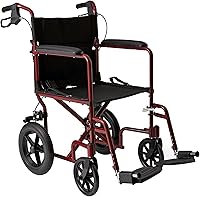
The Medline Lightweight Foldable Transport Wheelchair with Handbrakes has an aluminum frame, cushioned full-length armrests and easy-clean nylon upholstery. Its 12-inch rear wheels and swivel front wheels are intended to help with movement through doorways, corners and ramps.
The product information gives different weight figures, including 22 lbs and 26 lbs. That uncertainty means you should confirm the exact complete-chair weight before treating it as a wheelchair under 20 lbs.
Its handbrakes may suit a caregiver who wants braking control while pushing. The 19-inch seat gives more room than a narrower chair, but the wider design may need more clearance in doorways and vehicles.
Drive Medical Blue Streak Lightweight Wheelchair
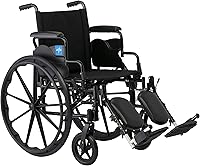
The Drive Medical Blue Streak Lightweight Wheelchair has an alloy steel frame, an 18-inch seat height, a 16-inch seat depth and a 300 lb maximum weight recommendation. It includes push-to-lock brakes, solid wheels, swing-away footrests and flip-back desk arms.
Its stated item weight is 41.3 lbs, so it is not a wheelchair under 20 lbs. The heavier frame may make more sense when the user needs a conventional manual wheelchair with desk arms and a stable single-axle design.
The flip-back arms can help the user pull up to a table or counter. The footrests swing away, and the folding design can make storage easier, but the complete chair weight remains the key issue for vehicle loading.
For a middle ground, compare best lightweight wheelchairs under 30 lbs and check whether each stated weight includes the parts you need.
Is a transport chair better for travel?
A transport chair can be better for travel when a caregiver will push the user and compact storage matters more than self-propulsion. Its wheel layout, folding frame and push handles often suit appointments, vehicle trips and short indoor or level outdoor paths.
A self-propelled wheelchair may be a better fit when the user needs to move the chair independently. That design can be heavier because it uses larger rear wheels and a frame built around user propulsion.
The best folding wheelchair lightweight guide can help you compare folding designs. Look at the folded width as well as the total weight, because a chair that is light but too wide for the vehicle is still difficult to transport.
How should you measure the chair and vehicle?
Measure the doorways, vehicle opening, storage area and turning space before choosing a chair. Compare those measurements with both the assembled and folded dimensions.
A chair can be light enough to lift and still be too wide for a hallway. Length matters as well, because a long folded chair may not fit across a car boot.
Check these points:
- The narrowest doorway on the route
- The vehicle trunk or rear-door opening
- The folded chair width
- The available storage depth
- The space needed for the user's legs
- Room to turn near tables, bathroom doors and ramps
- A safe place to lift the chair without twisting
Take the measurements at home before you order. Walk the full route the chair will travel, from the front door to the car and then to the appointment or shop.
Measure doorways at the narrowest point, not at the widest part of the frame. Note any steps, thresholds or lift buttons that affect how the chair is moved.
For the vehicle, measure the opening height and width as well as the depth inside. A folded chair may fit through the opening yet sit at an awkward angle once inside.
Think about storage at home too. A closet, hallway corner or spare room may have less depth than you expect once doors and furniture are considered.
Turning space deserves equal care. A chair that passes through a doorway may still struggle to turn near a dining table, bathroom door or narrow lift.
Check whether footrests need to be removed or swung away to reduce the folded size. Those steps can save space, but they also add time and handling each trip.
Plan the lift before you buy. Bend the knees, keep the load close and avoid twisting while the chair is in your hands.
Ask another person to help if the chair is unbalanced or loading requires bending into a vehicle.
Measure twice and compare both assembled and folded sizes. That simple check prevents many returns and frustration on the first outing.
How do you care for a lightweight wheelchair?
Keep the chair clean, dry and correctly adjusted. Wipe the seat and armrests as needed, and inspect the wheels and brakes before regular outings.
Daily care does not need to be complicated. A soft cloth and mild cleaning approach suited to the seat material will usually keep nylon seating fresh and comfortable.
Pay attention to places where dirt gathers. Wheel rims, folding joints and footrest brackets can collect grit that makes movement feel stiff or noisy over time.
Check the brakes before each trip rather than waiting for a problem. They should hold firmly on level ground and release without forcing or sticking.
Inspect the tyres or solid wheels for cuts, flat spots and loose fittings. A small issue found early is easier to fix than a wheel that stops turning on the way home.
Make sure footrests are secure before moving. They should stay in place during travel and swing away or detach only when a transfer needs more room.
Folding joints should move smoothly and lock as the instructions describe. If a joint feels loose, gritty or hard to close, clean it and check it again before storage.
Keep the chair dry when possible. Moisture left on metal parts can lead to rust and stiffness, especially in a damp utility area.
Do not exceed the stated weight capacity. Overloading can stress the frame, wheels and brakes and can make transfers less safe.
Follow the chair's care instructions for maintenance or adjustments. If you are unsure about a part, ask the supplier or a mobility specialist.
Store the chair folded in a clean, dry place where it will not be knocked or fallen on. A stable spot makes it easier to load for the next outing.
If the user needs a wider seat or higher capacity, compare the best bariatric transport chair guide rather than choosing a narrow chair only because it weighs less. A chair that fits properly will usually need less adjustment and strain.
Can a rollator replace a wheelchair?
A rollator cannot replace a wheelchair when the user needs seated mobility for longer distances or cannot safely walk while supported. A rollator may suit someone who can walk independently but needs a seat for short rests.
The key difference is how each aid supports movement. A rollator is used while walking, with the user holding the frame and taking steps between rests.
A wheelchair carries the user while seated, so the person does not need to walk to move from place to place.
That makes a wheelchair more suitable for long appointments, shopping trips or days out. Walking ability should be the first question.
If the user can stand, walk with support and recover after a short pause, a rollator may be enough for some outings.
Balance also matters. A rollator can help a steady walker feel more secure, but it cannot provide the full seated support of a wheelchair.
Endurance is just as important as strength. Someone who manages a short walk at home may still need a wheelchair for a hospital corridor or a full day at a family event.
The kind of outing can change the answer. Short trips near home may suit a rollator, while longer routes, hills, uneven paths or crowded places often favour a wheelchair.
Consider transfers as well. A rollator still requires the user to stand and walk, whereas a wheelchair allows seated transfers with footrests moved out of the way.
Safety should come before convenience. If the user becomes tired, unsteady or breathless while walking, seated transport is the safer option for that trip.
Some people use both aids for different purposes, with a rollator for daily walking at home and a wheelchair for longer journeys.
Talk with a health professional or mobility specialist if you are unsure. They can assess posture, transfers and the distances the user will realistically need to cover.
For another option, see What Is a Lightweight Rollator? What to Know.
That guide can help you judge whether a walking aid with a seat fits the user's current needs.
How do you choose the right wheelchair under 20 lbs?
Choose a wheelchair under 20 lbs only after confirming the complete assembled weight. Then match the seat, wheels, brakes, footrests and folded size to the person who will use and move it.
The examples here show three common trade-offs. The Drive Medical Folding Transport Wheelchair focuses on folding transport features but is stated at 26 lbs.
The Medline model offers handbrakes, a 19-inch seat and 12-inch rear wheels, but its published weight figures need confirmation. The Drive Medical Blue Streak adds conventional wheelchair features but is stated at 41.3 lbs.
For a strict under-20-lb search, reject any chair that gives only a frame weight or leaves the complete weight unclear. If you can accept a higher limit, compare the best lightweight wheelchair with removable wheels for designs that may simplify transfers and storage.
Frequently asked questions
What is the lightest wheelchair for travel?
The lightest travel wheelchair is one with a published complete-chair weight under 20 lbs, a compact folded size and wheels that suit the person pushing it. Check whether the stated weight includes footrests, armrests and removable parts before comparing models.
Is a 20 lb wheelchair easy to lift?
A wheelchair near 20 lbs is easier to lift than a heavier chair, but carrying comfort also depends on balance, folded size and removable parts. A chair with large rear wheels or attached footrests may feel harder to handle than its scale weight suggests.
What is the difference between a transport chair and a wheelchair?
A transport chair is designed for a caregiver to push, while a self-propelled wheelchair normally has larger rear wheels that let the user move the chair. Check the wheel design and push handles, then choose based on who will provide most of the movement.
Are lightweight wheelchairs safe for daily use?
Lightweight wheelchairs can suit daily use when the seat width, weight capacity, brakes, footrests and terrain match the user. Read the complete specifications and ask a health professional or mobility specialist if transfers, posture or support are concerns.