How to Properly Use a Wheelchair
To properly use a wheelchair, check the brakes, position the footrests, sit fully back, and move slowly over clear surfaces. Ask for help with ramps, curbs, uneven ground, and transfers when needed.
On this page (8 sections)
- What should you check before using a wheelchair?
- How should you sit and position your body?
- How do you transfer into or out of a wheelchair?
- How do you move a wheelchair safely?
- How do you handle ramps, slopes, and uneven ground?
- How do you use a wheelchair at a desk or table?
- How do you care for and store a wheelchair?
- What is the safest way to choose a wheelchair?
To properly use a wheelchair, check the brakes, sit fully back, keep your feet supported, and move slowly over clear surfaces. Ask for help with transfers, ramps, curbs, uneven ground, and any movement that feels unstable.
A wheelchair can support everyday mobility, but safe use depends on the chair, the user, and the surface. Read the chair's instructions and ask a health professional or trained caregiver for help if you are unsure about transfers or positioning.
What should you check before using a wheelchair?
Inspect the brakes, wheels, footrests, seat, and frame before each use. Make sure nothing is loose, damaged, wet, or blocking the wheels.
Place the chair on a level surface when possible. Lock both brakes before sitting down or standing up, and confirm that the chair does not roll when you apply light pressure to the hand rims or handles.
Check that the footrests are positioned correctly for the user's legs. Keep bags, blankets, and clothing away from the wheels and brake parts.
A folding chair should be fully opened before use. Do not sit in a chair that is partly folded or has a frame that does not appear secure.
If you are comparing chair sizes or transport needs, our guide to how much do wheelchairs weigh can help you think through lifting and storage.
How should you sit and position your body?
Sit with your hips centered, your back supported, and your feet resting securely on the footrests. Keep your head and shoulders between the side supports, and avoid leaning far to one side.
Your knees should point forward as much as comfortable. Keep your hands away from the wheels when another person is pushing the chair.
Do not stand on the footrests. They are for supporting your feet while seated, not for stepping up or climbing into the chair.
Avoid reaching far forward or sideways while the chair is moving. If you need something outside your reach, stop, lock the brakes, and ask for help.
A chair with swing-away footrests can make transfers easier because the foot supports move out of the way. Even so, the brakes should still be locked before the user shifts weight.
How do you transfer into or out of a wheelchair?
Lock both brakes, move the footrests aside, and place the chair close to the surface before transferring. A caregiver should assist when the user cannot safely stand, pivot, or control their balance.
Move the chair as close as possible to the bed, toilet, vehicle seat, or other destination. Remove or swing away the footrests, and move one armrest only if the chair is designed for that adjustment.
Use a transfer method recommended by a qualified professional. Do not pull on a detachable footrest, brake handle, or loose armrest to lift yourself.
If the user needs a chair mainly for assisted travel, these best wheelchairs for adults can help you compare seat, folding, and handling features.
Which chair features can help with transfers?
Swing-away footrests give the user's legs a clearer path when stepping or pivoting. Swing-back arms can also create more side access when the chair is positioned beside a bed or table.
The Drive Medical Folding Transport Wheelchair has a compact folding frame, 8-inch wheels, a strong steel frame, and a padded 17-inch nylon seat. Its fold-flat backrest and swing-away footrests suit users who need a transport chair for appointments, outings, or daily caregiver assistance.
The chair weighs 26 pounds and has padded armrests. Measure doorways and vehicle space before choosing any wheelchair, especially if you plan to fold and store it often.
How do you move a wheelchair safely?
Keep both feet on the footrests, look ahead, and use slow, controlled movements. Clear loose rugs, cords, toys, wet spots, and other obstacles from the route.
A companion should push from the handles rather than from the armrests or footrests. Move straight over small surface changes when possible, and slow down before turning.
Transport wheelchairs are generally pushed by a companion. A manual wheelchair may also be moved by its user, but the user should learn the chair's controls and limits before trying longer routes or slopes.
Use the brakes whenever the chair is stopped. Do not rely on a slight slope, a wall, or another person's hand to keep the chair in place.
How should you use handbrakes and locking brakes?
Handbrakes help a companion control the chair while moving. Rear-wheel locking brakes keep the chair still during transfers and stops.
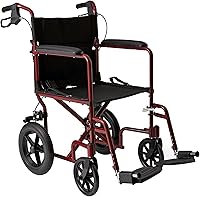
The Medline Lightweight Foldable Transport Wheelchair has an aluminum frame, a 19 in wide by 16 in deep seat, full-length cushioned armrests, and easy-clean nylon upholstery. Its 12-inch rear wheels and swivel front wheels are intended for maneuvering through doorways, tight corners, and level indoor or outdoor paths.
The chair folds for storage and transport, and its footrests swing away and detach. It requires no assembly.
Keep both hands on the handles when pushing, and apply the locking brakes before helping someone sit or stand.
How do you handle ramps, slopes, and uneven ground?
Use extra caution on ramps and slopes, and get assistance when the surface is steep, wet, loose, or uneven. Keep the chair pointed straight when moving up or down a ramp, and avoid sudden turns.
A companion should control the pace and watch for wheel slip. Keep the route clear before starting, and stop if the chair begins to roll faster than expected.
Do not take a wheelchair over a curb unless you have been taught the correct technique for that chair. A curb, pothole, threshold, or soft surface can shift the user's weight and make the chair unstable.
On a ramp, keep the user's hands clear of the wheels. Do not leave the chair unattended on a slope, even with the brakes locked.
For readers deciding between walking support and seated mobility, Rollator vs Wheelchair: A Senior's Guide explains the basic difference in use. A related comparison covers [Can a Rollator Replace a Wheelchair?
The Basics](/can-a-rollator-replace-a-wheelchair/).
How do you use a wheelchair at a desk or table?
Position the chair close to the desk or table, lock the brakes, and keep the user's feet supported. Check that the armrests and seat height allow the user to sit comfortably without leaning forward.
Swing-back desk-length arms can make side access easier. They may also allow the chair to move closer to a table, but the user should still keep the brakes locked while seated at the surface.
The Medline Comfortable Folding Wheelchair has padded armrests, a nylon seat, a hammertone frame, and swing-away footrests. Its dual axle and smooth tires are designed for movement across the varied terrain of daily life, while the chair's height can be adjusted.
The chair folds for transport or storage and supports users up to 300 pounds. Check the seat width and depth against the user's measurements before choosing it.
How do you care for and store a wheelchair?
Keep the chair clean, dry, folded only when appropriate, and stored where the frame and wheels will not be damaged. Wipe the seat and armrests using care instructions suitable for the chair's materials.
Check the wheels for hair, string, dirt, or other debris. Look at the brake parts and footrests regularly, and stop using the chair if a wheel is loose, a brake fails to hold, or the frame appears damaged.
Fold the chair only after the footrests are moved as directed. Keep fingers clear of folding joints and do not place heavy items on the folded frame.
For manual wheelchair options designed for older adults, see best manual wheelchairs for seniors. If you are deciding between powered and manually pushed mobility, compare manual wheelchair vs power wheelchair.
What is the safest way to choose a wheelchair?
Choose a wheelchair based on the user's measurements, transfer needs, support level, and where it will be used. Confirm the seat width, seat depth, chair weight, folding space, and terrain before ordering.
For short trips with a companion, a folding transport wheelchair may be practical. The Drive Medical model focuses on a compact folding frame and 8-inch wheels.
The Medline model adds handbrakes, rear locking brakes, and 12-inch rear wheels for assisted handling. The second Medline model adds swing-back desk-length arms, adjustable height, and a 20 in by 16 in seat.
If a caregiver will push most of the time, focus on brake control, handles, wheel size, and transfer access. You can also review best Drive Medical transport chair options before making a choice.
Using a wheelchair properly means locking the brakes for transfers, keeping the body centered, supporting the feet, and slowing down before obstacles or slopes. Choose the chair that matches the user's measurements and daily route, then ask for professional guidance if transfers or uneven surfaces are difficult.
Frequently asked questions
How do you properly sit in a wheelchair?
Sit fully back in the seat with your hips centered and your back supported. Keep both feet on the footrests when moving, unless you are completing a supervised transfer.
Avoid leaning far to one side or reaching beyond the chair's stable base.
When should wheelchair brakes be locked?
Lock the wheelchair brakes before sitting down, standing up, transferring, or stopping on a slope. A companion should also lock the brakes before helping the user move between the chair and a bed, toilet, vehicle, or other seat.
How do you use wheelchair footrests safely?
Move or swing the footrests aside before stepping into or out of the wheelchair. Once seated, place both feet on the footrests before moving, and keep toes clear of the floor, wheels, and nearby furniture.
Can you use a wheelchair on a ramp?
Use a ramp only when its slope, surface, width, and condition are suitable for the chair and user. A companion should assist when needed, move slowly, and avoid turning sharply.
Never use a ramp with loose debris, standing water, or a damaged surface.