Walker with Wheels vs Rollator: The Basics
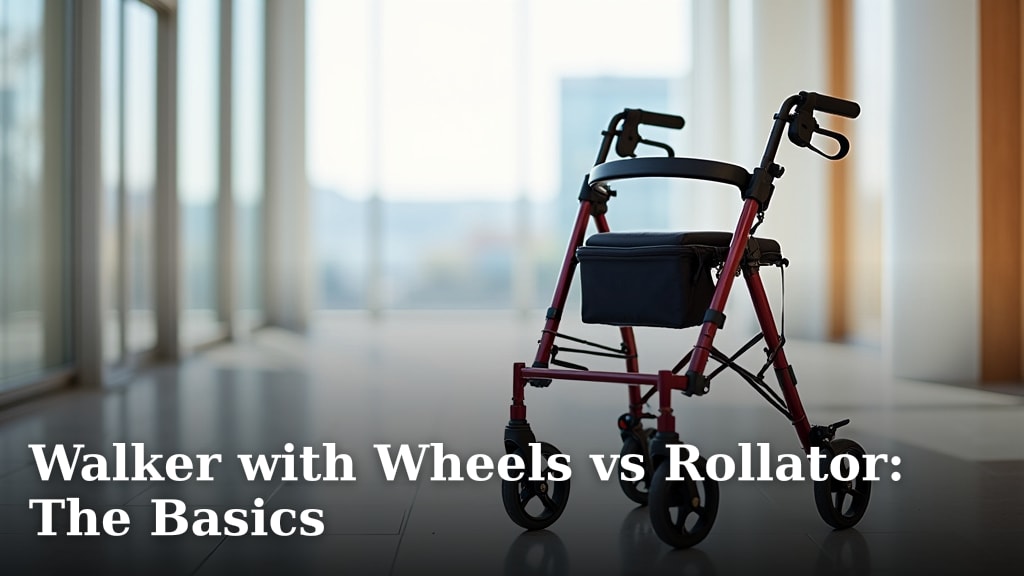
When choosing between a walker with wheels and a rollator, the key difference lies in their design and intended use. A rollator is essentially a walker with wheels, plus a built-in seat and hand brakes for added stability and convenience. Many experts suggest a rollator is a better choice for those needing to rest frequently or who want more control over speed.
Both mobility aids offer support for walking. Walkers with wheels provide easier gliding than standard walkers. Rollators offer the highest level of independence and safety for many users, incorporating features that assist with both movement and rest. We found that understanding these core differences is vital for making the right choice.
- Rollators have a seat and hand brakes; standard walkers with wheels usually don’t.
- Rollators offer more stability and a place to rest.
- Walkers with wheels are lighter and simpler.
- Your personal needs will determine the best option.
- We’ll help you figure out which is right for you.
Let’s break down the specifics of each, so you can feel confident about your decision.
Understanding Your Mobility Aid Options: Walkers vs. Rollators
Choosing the right walking support can make a big difference in your daily life. You might be looking at walkers with wheels or rollators. Both can help you move more easily. We’ve researched these tools to help you understand what makes them different and which one might fit your needs best.
What is a Walker with Wheels?
A standard walker gives you four points of contact for support. Adding wheels to the front legs makes it easier to move. You don’t have to lift the entire walker with each step. This can save a lot of energy. Think of it like a shopping cart – you just push it along.
Key Features of a Walker with Wheels
The main idea behind a walker with wheels is simplicity and enhanced gliding. They usually have two wheels on the front legs. Some might have four wheels, but this is less common for a basic “walker with wheels” and often crosses into rollator territory. The back legs typically have glides or skids. You still need to lift the walker slightly to move it forward. This design is for people who need balance support but can still manage some lifting. We found that many users appreciate the lighter weight compared to a rollator.
Who Benefits Most from a Walker with Wheels?
This type of walker is good for people who need a bit of extra stability. They might feel unsteady on their feet. They also need to be able to lift the walker a little. This helps them control the pace. It’s a step up from a standard, non-wheeled walker. Many rehabilitation centers use them initially for patients recovering from injuries. They are great for short distances around the house.
What is a Rollator?
A rollator is a more advanced mobility device. It’s built on the concept of a walker with wheels but adds significant features. The most obvious additions are a seat and hand brakes. It’s designed to give you more independence and confidence.
Defining the Rollator: More Than Just Wheels
A rollator has four wheels, typically larger than those on a walker with wheels. This allows for smooth rolling over various surfaces. You don’t lift it; you just guide it. The biggest difference is the built-in seat. This lets you take a break whenever you need to. Imagine walking around a park and suddenly feeling tired – your rollator offers an instant rest stop.
The Essential Hand Brakes
Rollators come equipped with hand brakes, similar to those on a bicycle. You squeeze the levers to slow down or stop. This feature is incredibly important for safety. It prevents the rollator from rolling away from you, especially when you’re sitting or on a slope. Many experts emphasize this brake system for added control (CDC). It offers peace of mind.
Who Needs a Rollator?
Rollators are ideal for individuals who need substantial support and cannot walk long distances without fatigue. If you find yourself needing to rest frequently, a rollator is likely a better choice. The seat is a major advantage here. It also suits people who want more control over their movement speed. The brakes help manage downhill walks. They are often recommended for seniors or those with chronic conditions affecting stamina or balance.

Comparing Features: Walker with Wheels vs. Rollator
Let’s put their main features side-by-side so you can easily see the differences. This comparison can help you pinpoint what matters most for your situation.
| Feature | Walker with Wheels | Rollator |
|---|---|---|
| Wheels | Typically 2 in front, glides/skids in back. Requires some lifting. | 4 wheels, all rolling. No lifting needed. |
| Seat | No built-in seat. | Yes, a built-in seat for resting. |
| Brakes | No hand brakes. | Yes, hand brakes for speed control and stopping. |
| Weight | Generally lighter. | Generally heavier due to seat and frame. |
| Portability | Easier to lift and store. | Can be bulkier, though many fold. |
| Stability | Good support, but requires user effort. | Excellent stability, especially with brakes engaged. |
| Use Case | Balance support, short distances, requires some lifting. | Extended walking, frequent rest needed, speed control. |
Consider Your Daily Activities
Think about where you use your mobility aid most. Do you walk short distances indoors? Or do you enjoy longer strolls in the park? If you get tired easily and need to sit down often, the rollator’s seat is a game-changer. If you mainly need help preventing stumbles and can manage to push and lift a bit, a walker with wheels might be sufficient.
Portability and Storage
If you travel often or have limited storage space, weight and size matter. Walkers with wheels are usually lighter and simpler to fold. Rollators, while often foldable, can still be quite bulky. We found that some models are designed to be more compact for storage. It’s worth checking the dimensions and weight capacity before buying.
Making Your Choice: A Simple Checklist
To help you decide, ask yourself these questions. Your answers will guide you toward the best option for your unique situation.
- Do you need a place to rest while walking?
- Do you require help controlling your speed on inclines or declines?
- Are you able to lift a walker slightly with each step?
- Do you need the lightest and simplest mobility support possible?
- How important is it for your aid to be very compact for storage or travel?
- Do you often walk longer distances or in public spaces where rest stops are few?
By considering these points, you can feel more confident about which device will best support your independence and safety. We want you to find the perfect fit.
Conclusion
Choosing between a walker with wheels and a rollator depends on your personal needs for support and rest. A walker with wheels offers simpler balance assistance and is lighter, good for those who can still lift it slightly. A rollator provides a built-in seat for breaks and hand brakes for better speed control, making it ideal for longer distances or when fatigue is a concern. We’ve outlined the key differences to help you make an informed decision. Your next step is to consider your daily activities and physical capabilities. Think about where you’ll use it most, and then select the mobility aid that best supports your independence and safety.
Frequently Asked Questions
Do I really need hand brakes on a mobility aid?
Hand brakes are a key feature of rollators, offering you better control over your speed. They are especially helpful when walking on slopes or when you need to stop quickly. If you often walk outdoors or in places with uneven terrain, brakes add an important layer of safety and peace of mind.
Can I use a walker with wheels for longer walks?
A walker with wheels is best for shorter distances and when you don’t anticipate needing to rest frequently. Because it typically has glides on the back legs and requires some lifting, it can be more tiring for extended use. If you plan on longer walks, a rollator with a seat and four rolling wheels would likely be a more comfortable choice.
Are rollators difficult to fold for storage or travel?
Many rollators are designed to fold for easier storage and transport. However, they can still be bulkier than a simple walker with wheels due to the seat and frame structure. It’s a good idea to check the specific folding dimensions and weight of any model you consider if portability is a major concern for you.
What is the main difference between a 2-wheeled walker and a 4-wheeled rollator?
The main difference is that a 2-wheeled walker has wheels only on the front legs, with skids on the back, meaning you still need to lift it slightly. A 4-wheeled rollator has wheels on all four legs, allowing you to simply push and guide it. Rollators also always include a seat and hand brakes, features typically absent on a basic walker with wheels.
Which mobility aid is better if I have trouble standing for long periods?
If you find yourself needing to rest often, a rollator is generally the better choice. The built-in seat provides a convenient place to sit down whenever you feel tired. This feature significantly enhances your ability to stay mobile for longer periods without excessive fatigue.