How to Choose a Transport Chair for a Child
A transport chair for kids should fit the child's hips, knees and feet first, not the age label. Measure seat width, seat depth and footrest height, then check brakes, folding size and caregiver push height before you choose a model.
On this page (14 sections)
- How do you measure a child for a transport chair?
- How much growth room is helpful?
- Which seat width and depth suit a child?
- What footrest height keeps a child safe?
- Which brakes and wheels matter for child transport?
- How heavy should the chair be for caregivers?
- How do push handles affect caregiver comfort?
- Which folding design fits your home and car?
- What frame and seat materials are easiest to clean?
- When should you compare adult transport chairs?
- How do you decide between transport chair and transfer chair?
- What setup checks should you do on day one?
- How should you care for a child transport chair?
- Which transport chair for kids should you pick?
A transport chair for kids should fit seat width, seat depth and footrest height before you look at color or weight. Those three measures decide whether a child sits back, bends the knees and rests the feet without sliding.
A transport chair is pushed by a caregiver, so the child does not need to propel it. That makes push handles, brakes and folding size just as important as the seat.
We compared the three models below to show the range in adult transport chairs. Their seat sizes help you see why most adult choices are too large for a small child.
How do you measure a child for a transport chair?
Measure the child while seated in a regular chair with feet supported. Hip width sets the minimum seat width, and thigh length sets the seat depth.
Have the child sit with the back against the chair back. Measure from the back of the hips to the back of the knees for seat depth.
Measure from the seat surface to the sole of the foot for footrest height.
Add room for winter clothing, a coat or a brace if the child wears one. The seat should not press into the back of the knees, and the feet should not dangle.
What numbers should you write down?
Write down hip width, thigh length, knee height and total weight. Also note height when seated, because the backrest needs to support the trunk without pushing the head forward.
Take photos or quick notes of the measurements, because you will compare them with product dimensions later. A small error can matter when seats differ by only a few inches.
Rule: buy by measured fit, not by age or height alone.
How much growth room is helpful?
A small amount of growth room helps, but a chair that is too large today is not a safe bargain. Choose the closest fit now and plan to remeasure as the child grows.
Kids grow unevenly, so weight and leg length can change at different rates. A seat that fits in winter may feel tight after a growth spurt, while a seat bought for next year may be loose for months.
For a child who will grow quickly, look for adjustable footrests and a backrest that does not force a poor posture. If no adjustment is available, expect to replace the chair sooner rather than accept a bad fit now.
Growth room should never mean extra seat depth that leaves the knees unsupported. The child still needs feet on the footrests and hips back in the seat.
Rule: leave room for clothing and near-term growth, not for a child to slide around.
Which seat width and depth suit a child?
Seat width should clear the hips without a large gap at the sides. Too wide a seat lets the child lean, slide or sit off center, which can make pushing and transfers harder.
Seat depth should support most of the thigh while leaving space behind the knees. If the seat is too deep, the front edge can press behind the knees and push the child forward.
That is why many adult transport chairs do not suit young children. For context, one option below has a 19-inch wide seat, and another has a 17-inch padded seat.
A 19-inch seat may suit a larger older child or teen, but it is usually far wider than a small child needs. Carex makes a carex transport wheelchair with 19 inch seat that shows how adult widths are described, so compare your hip measure first.
Rule: the seat should match hip width and thigh length within a small margin.
What footrest height keeps a child safe?
Footrest height should let the feet rest flat with knees bent at about a right angle. Dangling feet can cause pain and make the child slide forward during a push.
If the footrests are too high, the knees lift and the hips roll back. If they are too low, the child may press the front edge of the seat and slouch.
Swing-away footrests help with transfers because they move aside when the child gets in or out. Flip-down footrests also work, but check that they stay secure during movement.
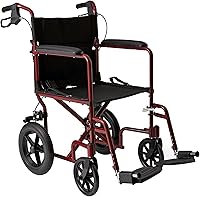
The Medline model above has swing-away footrests and a seat described as 19 inches wide by 16 inches deep. Those numbers show why you must measure the child before assuming a larger seat is better.
Rule: feet flat, knees bent, and no pressure behind the knees.
How do you check footrest fit at home?
Place the child in the chair and check the feet, knees and hips in that order. Feet should touch the footrests without stretching, knees should bend without the seat edge digging in, and hips should stay back.
Then check transfers on a flat surface. The caregiver should lock the brakes, move the footrests aside and help the child shift without the chair rolling.
Rule: if the feet do not rest flat, keep looking for a closer size.
Which brakes and wheels matter for child transport?
Locking brakes matter most on a transport chair, because the caregiver pushes while the child sits passively. Brakes should lock before every transfer and hold on a slight slope.
Look for brakes the caregiver can reach from behind without bending over the child. Rear-wheel locking brakes are common, but check the position and force needed to set them.
Wheels should suit the ground you will use. Small front wheels and larger rear wheels, often around 8 inches, roll well on smooth indoor floors and level paths.
Our best indoor transport chair guide helps if most trips are inside the home, at school or at a clinic. Indoor use puts more weight on tight turns, door width and easy braking.
Rule: the chair must stay still when brakes are locked, before the child moves.
How heavy should the chair be for caregivers?
A lighter chair is easier to lift into a car, carry up steps with help, or store in a closet. Frame weight matters, but folded size matters just as much.
Check the folded dimensions and the weight together. A chair that is light but folds to a long shape may still be hard to fit in a small trunk.
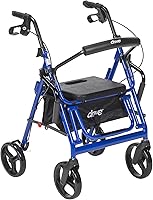
The Drive Medical folding model below weighs 26 pounds and has a 17-inch padded nylon seat. That weight can be manageable for many caregivers, but it may be heavy for repeated lifting by one person.
The Medline model weighs 15 pounds in its bullet specifications and has a 300 lb weight capacity. That could help a caregiver, but its 19-inch seat may be too wide for a small child.
Rule: choose the lightest chair that still fits the child and folds to fit your space.
How do push handles affect caregiver comfort?
Push handles should let the caregiver stand upright with arms slightly bent. Handles that are too low force bending, and handles that are too high can strain shoulders during longer pushes.
Check handle height against the caregiver's hip and waist level. A caregiver who pushes a child daily should not need to hunch over the backrest.
Padded armrests can help the child feel secure, but they should not force the shoulders up. The child should sit with arms resting without gripping the sides to stay in place.
The Drive Medical Duet below has a smaller seat, listed at 13.5 inches wide by 13 inches deep. That smaller seat is closer to some children's needs than a 17-inch or 19-inch adult seat.
The Duet converts between a rolling walker and a transport chair by moving the backrest and adjusting armrests and footrest. That combo may help a child who can walk short distances and needs to be pushed for longer trips.
Rule: pick handle height for the caregiver who will push most often.
Which folding design fits your home and car?
Folding design decides where the chair lives between trips. A flat fold fits closets and trunks better than a chair that folds into a bulky shape.
Check folded length, width and height, not just open size. Measure the car trunk, closet depth and doorway width before you order.
A fold-flat backrest and swing-away footrests can reduce bulk. Some models fold in seconds, while others need the footrests removed or locked in place.
The Drive Medical folding model has a compact folding frame and a fold-flat backrest. The Medline model folds with swing-away footrests that lock in place for storage.
Rule: folded size must fit the car and the storage spot you will actually use.
How do you plan storage from day one?
Decide where the chair will go when it is not in use. A closet, corner or trunk space should match the folded dimensions with room to lift it in and out.
Avoid storage in a damp garage or outside area if the fabric and frame would be exposed to moisture. Indoor storage helps the upholstery and metal parts last longer.
Rule: measure the storage space before you buy, not after delivery.
What frame and seat materials are easiest to clean?
Padded nylon seats wipe clean easily and suit daily use with spills. Easy-clean fabric matters for kids, because food, drinks and outdoor dirt are common.
A steel frame can feel sturdy, while an aluminum frame can be lighter. The right choice depends on weight capacity, folded size and how often the caregiver lifts the chair.
Check weight capacity against the child plus clothing, shoes and any items carried in a pouch during trips. A capacity well above the child's weight gives a safety margin for daily use.
The Drive Medical Duet supports up to 300 pounds and has a removable under-seat storage pouch. Storage can help with small items, but keep the pouch light so it does not change the chair's balance.
Rule: easy-clean fabric and a safe weight margin beat looks for daily child use.
When should you compare adult transport chairs?
Adult transport chairs can suit older children and teens when the seat and footrest measurements match. Compare adult models only after you have the child's numbers.
If the child needs a 13-inch or 14-inch seat, an adult 17-inch or 19-inch seat will likely be too wide. If the child needs a 16-inch or 17-inch seat, a smaller adult model may be closer.
Our best transport chair for seniors guide shows adult sizing and features, so use it as a comparison point, not as proof a model fits a child. Check best wheelchairs for adults if a transport chair is too limited for longer trips.
For color and style options, best transport chair blue can help you compare models after size is settled. Color should come after fit, brakes and folding size.
Rule: adult models are options only when every key measurement matches the child.
How do you compare the three models above?
Use the three product boxes as size references. The Duet has the smallest seat at 13.5 by 13 inches, the Drive Medical folding model has a 17-inch seat, and the Medline model has a 19-inch seat.
That range shows the main trade-off. A smaller seat may fit a child better, while a larger seat may suit a teen but offer poor support for a small child.
Also compare weight and folding. The Duet is listed at 20 pounds, the Drive Medical folding model at 26 pounds, and the Medline model at 15 pounds in its specifications.
Rule: rank models by fit first, then by weight, folding and ease of cleaning.
How do you decide between transport chair and transfer chair?
A transport chair is for caregiver-pushed travel over short distances. A transfer chair is usually smaller and lighter for bedside or bathroom moves, so the names are not interchangeable.
Our transport chair vs transfer chair guide explains the difference in size, wheels and use. Use it if your main need is moving a child between bed, chair and bathroom.
A transport chair for kids should have stable wheels for hallways, clinics, school and level outdoor paths. A transfer chair may have smaller wheels and a narrower frame for tight indoor spaces.
If you need a broader range of sizes, our best drive medical transport chair guide shows how one brand varies by seat and frame. Compare each model against the child's measurements.
For walking support, How to Choose a Rollator: A Simple Guide helps if a child can walk short distances but tires easily. The Duet combo above tries to cover both walking and pushed travel in one unit.
Rule: choose a transport chair for pushed travel, and a transfer chair for tight indoor moves.
What setup checks should you do on day one?
Set up the chair on a flat floor and check every moving part before the first trip. Lock the brakes, swing the footrests and fold and unfold the chair until each step feels familiar.
Check that the seat is clean, the brakes hold, the footrests stay in place and the backrest is secure. Confirm the chair folds flat enough for your car or storage space.
Then sit the child in the chair and recheck hip width, knee space and foot position. Adjust footrests if the model allows it, and lock brakes before any transfer.
Keep the first trips short and on smooth, level ground. That lets the child and caregiver get used to pushing, turning and braking without added stress.
Rule: do not use the chair for a trip until fit, brakes and folding pass a home check.
How should you care for a child transport chair?
Wipe the seat and armrests after spills or outdoor trips. Nylon upholstery that wipes clean helps you keep the seat hygienic without scrubbing.
Check brakes, wheels and footrest locks every few weeks. Tighten or adjust parts only as the maker directs, and stop using the chair if a brake or lock fails.
Store the chair folded in a dry indoor spot. Avoid leaving it in rain, snow or a hot car trunk for long periods, because heat and moisture can affect fabric and metal.
Recheck fit as the child grows. Measure hip width and thigh length every few months, and compare the numbers with the seat and footrest height.
Rule: clean spills fast, check brakes often, and remeasure as the child grows.
Which transport chair for kids should you pick?
Pick the model whose seat width, seat depth and footrest height match the child today. Fit first, then brakes, folding size and caregiver weight.
If the child needs a small seat near 13.5 by 13 inches, the Drive Medical Duet is the closest size reference among the three models above. If the child needs a 17-inch seat, the Drive Medical folding model is closer than a 19-inch seat.
If the child is a larger teen who needs a 19-inch seat, the Medline model may be worth comparing for its light frame and swing-away footrests. Size still comes before brand, color or extra features.
Next, confirm the chair folds to fit your car and storage space, and that the caregiver can lift it safely. Those checks will help you choose a transport chair for kids that works in daily life, not just on paper.
Frequently asked questions
What seat size does a child need in a transport chair?
Start with the child's hip width, thigh length and knee-to-heel height, and add a small amount of room for clothing and growth. The hips should sit back in the seat, the knees should bend without pressure behind them, and the feet should rest flat on the footrests.
Can an adult transport chair work for a child?
An adult model can work for some older or larger children, but only when seat width, seat depth and footrest height match the child. A seat that is too wide or deep can leave the child sliding forward or sitting too far from the backrest.
What safety features matter most for caregiver pushing?
Locking brakes on the push handles, secure footrests, stable wheels and a frame the caregiver can lift safely matter most. Check that brakes lock before transfers and that the child can be held securely during short moves.
How much growth room should you leave in a kids transport chair?
Leave a small amount of room for clothing and near-term growth, but do not buy a chair the child will swim in today. Poor fit now can reduce comfort and control, so remeasure every few months as the child grows.