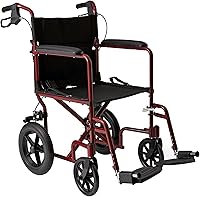
How to Assemble a Medline Transport Chair
To assemble a Medline transport chair, unpack and inventory every part, fit the rear wheels and footrests, then check brakes, locks, and folding before first use. Keep the model number handy, because Medline uses different hardware and parts on different models.
On this page (10 sections)
- What tools and parts do you need before you start?
- How do you unpack and inspect the frame safely?
- How do you fit the rear wheels on a Medline transport chair?
- How do you install the footrests and heel loops?
- How do you fit arm pads and push handles?
- What model specific checks should you do before first use?
- How do you test brakes, folding, and steering?
- What common assembly mistakes should you avoid?
- When should you contact Medline or a dealer for help?
- How do you finish medline transport chair assembly and keep it ready?
To assemble a Medline transport chair, unpack and inventory every part, fit the rear wheels and footrests, then check brakes, locks, and folding before first use. Medline transport chair assembly is simple, but it is not guesswork.
The exact steps change by model. Some chairs arrive mostly unfolded with only wheels and footrests to fit.
Others need the back, arm pads, or push handles installed. Your manual is the authority for your serial number.
Use it first, and use this guide to understand what you are seeing.
What tools and parts do you need before you start?
You need the chair, its manual, the boxed hardware, and a flat work area before you touch a bolt. Most models need only the tools in the box, and some parts fit by hand.
Lay out the wheels, footrests, arm pads, and push handle parts. Count screws, washers, and caps against the parts list, and keep small parts in a cup.
A helper makes it easier to hold the frame steady while you fit a wheel.
Keep the box until the chair passes its first checks. Note the model and serial numbers in your phone.
Read the safety section for the weight limit and brake use. Our guide to the medline transport chair weight limit explains why that number belongs to one model.
How do you unpack and inspect the frame safely?
Unpack one part at a time and check each piece for bends, cracks, or loose hardware before assembly. A damaged transport chair should not be fixed with a first ride.
Lift the frame out by the tubes, not by the seat fabric. Set it on a flat floor with the seat facing up.
Open the folding frame slowly and let it lock into its normal position. Do not force a tube past a stop or a latch.
Check the seat and back fabric for cuts or loose stitching. Look at welds and joints for cracks, and check that cables, if fitted, are not pinched.
Spin each small front caster by hand. It should turn without grinding or sticking.
If the chair came with a tool kit, keep it with the manual.
How do you fit the rear wheels on a Medline transport chair?
Fit the rear wheels one side at a time, with the axle fully seated and the lock or cap in place. Large rear wheels are pushed by you, while small front casters steer.
Hold the frame steady. Align the hub with the axle and push until it seats, then add the retaining hardware as the manual shows.
That may be a push button, a nut, or a cap.
Spin the wheel. It should turn freely and sit straight, with no rubbing.
If it feels tight or wobbles, reseat it. When you need spares, our guide to best transport chair replacement wheels helps you match diameter, axle, and tire type.
When should you replace a rear wheel during assembly?
Replace a wheel during assembly only if it is bent, cracked, or the wrong size for the axle. Do not swap in a larger or smaller wheel to change seat height.
The Wiykkur 12 Inch Wheelchair Wheels Replacement is a pair of 12 1/2 x 2 1/4 inch rear wheel assemblies for manual wheelchairs and transport chairs. The wheel diameter is 11.8 inches, the axle head length is 2.18 inches, and the bearing hole is 0.47 inches.
The tire is polyurethane, the hub is polypropylene, and the bearing model is 6201.
Measure your old wheel and axle before you order. The set includes bolts, a socket wrench, and an open-end wrench.
It is not for electric wheelchairs. A wheel that fits the axle but sits at the wrong height can change braking and balance, so the manual for your model still controls.
How do you install the footrests and heel loops?
Install the footrests last among the main parts, and lock each one before you test a transfer. They swing away so the passenger can stand or slide with less obstruction.
Slide each footrest into the front receivers and push it down until it locks. Swing it out and back.
It should latch clearly, not rattle loosely.
Check that each footplate is flat and level, and that the heel loop is intact and behind the heel. Replace a bent footplate rather than bending it back.
The ForconMed Blue Streak Wheelchair footrest Replacement is an economy swing-away pair with composite footplates and heel loops. Hinge spacing is 1.46 inches, so measure before you order.
It fits standard chairs with that spacing and adjusts in length without tools.
Color is a separate check. This pair is blue and matches Blue Streak chairs, but other blue chairs may use a different shade.
Fit matters more than color for safety.
How do you fit arm pads and push handles?
Fit arm pads with the screws from the box, snug and even, and check that they do not shift when you press down. They give the passenger arm support and help you hold the chair steady during a transfer.
Match each pad to its side and follow the manual for front and rear screw positions. Tighten in small steps so the pad sits flat, since a rocking pad will loosen.
The ComsenMed Universal 14” Full Arm Pad is a pair of 14 inch full length vinyl pads with hardware. Hole spacings are 2, 6.8, 8.9, or 10 inches, and it fits wheelchairs and transport chairs from all brands, not power chairs.
The pair measures 13.86 x 2.11 x 1.42 inches and weighs 11.99 ounces.
Measure the hole spacing on your frame before you order. ComsenMed recommends checking the specs first, because a universal pad only helps when the holes line up.
Unscrew the old pad, set the new one in place, and use the screws provided.
What model specific checks should you do before first use?
Do model specific checks by serial number, not by looks, because two Medline chairs can share a frame color and use different parts. The frame label links you to the right manual, weight limit, and spares.
Write down the model number, serial number, and purchase date. Find the manual for that exact model, confirm the parts list, and check for any recall or safety notice for that serial range.
Confirm the weight limit, including anything carried in a pouch or bag. If you are unsure of the chair type, our guide to transport chair vs transfer chair explains the difference.
Steps may resemble our carex transport chair assembly instructions in order, but hardware and part numbers are not interchangeable.
How do you test brakes, folding, and steering?
Test the chair on a flat floor, with a helper holding it, before the passenger sits down. A transport chair is pushed by you, so brakes and steering must work predictably.
Lock both rear brakes and push gently. Neither rear wheel should roll.
Release them and confirm both wheels turn again.
Fold and unfold the chair three times. It should open fully, lock in place, and fold flat without forcing.
Push in a straight line and in a slow turn. Front casters should trail behind the direction of travel and not flutter.
If the chair pulls to one side, check wheel seating, tire condition, and caster alignment before adding a passenger.
What common assembly mistakes should you avoid?
Avoid forcing a part, skipping a lock, or riding before every check passes. Most first use problems come from a small missed step.
Common mistakes include a rear wheel not fully seated, a footrest not locked, an arm pad screw left loose, and a brake not tested on both sides. Setting footrests too low puts pressure behind the knees, and too high lets feet slide.
Do not use a chair with a missing part as a temporary fix. A missing wheel cap, footrest, or brake part changes balance and stopping.
Stop and order the correct part. Our guides to best medline transport chair replacement parts and best transport chair replacement parts help you match hole spacing, axle size, and hinge spacing before you buy.
When should you contact Medline or a dealer for help?
Contact Medline or your dealer when a part is missing, damaged, or does not fit the manual for your serial number. Keep the model label, serial number, and photos of the part ready.
Also get help if the frame will not lock open, a brake will not hold, or a wheel will not seat straight. Those are safety parts, and a dealer or mobility technician can check torque, alignment, and frame condition with the right tools.
If you need a wider choice of chairs for a passenger who cannot walk far, our guide to best wheelchairs for adults compares transport chairs with standard wheelchairs and power chairs. That helps you confirm that a transport chair, pushed by a caregiver, is the right type for the trips you plan.
How do you finish medline transport chair assembly and keep it ready?
Finish medline transport chair assembly by storing the manual, tool kit, and model details with the chair, then rechecking locks and brakes weekly. A short routine keeps a new chair safe and makes later part orders easier.
After the first checks, fold the chair and open it once more. Confirm that both footrests lock, both brakes hold, and both rear wheels are secure.
Wipe vinyl arm pads and seat fabric with a damp cloth.
Save the model and serial number in your phone. When you order a wheel, arm pad, or footrest, those numbers let you confirm size in minutes instead of guessing from a photo.
For a chair that will see daily use, a short monthly check of screws, tires, and footrest locks is worth the time.
Frequently asked questions
How long does medline transport chair assembly take?
Most owners finish initial assembly in about 30 to 60 minutes when all parts are present and the manual matches the model. Allow extra time to unfold the frame, fit wheels and footrests, and run the safety checks.
If hardware is missing or a part does not fit, stop and contact the seller or Medline support.
Can I use a transport chair without assembling the footrests?
No, do not use the chair without both footrests fitted and locked in place. Footrests support the passenger's feet and help keep legs positioned safely during movement.
Check that each footrest swings away and locks for transfers, and that the heel loops and footplates are intact before riding.
How do I know which Medline model I have?
Look for the model and serial label on the frame, usually near the seat rail or rear frame tube. Match that number to the manual and parts list before you order wheels, arm pads, or footrests.
A close looking part can still have the wrong hole spacing, axle size, or hinge spacing.
What should I check before the first ride?
Lock both brakes, test that the chair does not roll, fold and unfold it fully, and confirm that wheels spin freely without wobble. Check footrest locks, arm pad screws, tire pressure on pneumatic tires, and the weight limit for your exact model.
Ask a second adult to help with the first transfer.