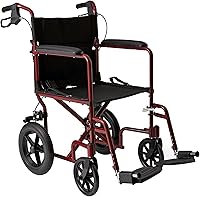
How to Assemble a Carex Transport Chair
Carex transport chair assembly starts with unfolding the frame, fitting the footrests, and checking every lock and brake before use. Keep the chair empty during setup and follow the manual for your exact model.
On this page (9 sections)
- What should you check before starting Carex transport chair assembly?
- How do you unfold a Carex transport chair?
- How do you attach Carex transport chair footrests?
- How do you check the wheels and wheel locks?
- How do you check the arm supports and push handles?
- What should you test after assembly?
- How do you use a Carex transport chair safely after setup?
- How should you care for the chair after assembly?
- What is the correct Carex transport chair assembly order?
Carex transport chair assembly starts with unfolding the frame, fitting the footrests, and checking the brakes before anyone sits down. Keep the chair empty during setup, work on a level surface, and use the manual for your exact Carex model.
Most transport chairs arrive with the main frame already connected. If you need a higher-capacity model, compare bariatric transport chairs before choosing.
The setup usually involves opening the folded frame, attaching or positioning the footrests, checking removable parts, and making sure the wheels and brakes work as expected.
What should you check before starting Carex transport chair assembly?
Before starting, confirm that you have the chair, its footrests, any included hardware, and the correct model instructions. Do not discard the packaging until you know the chair is complete and stable.
Place the folded chair on a clear, level floor. Keep fingers away from hinges and folding joints while opening the frame, and ask another adult to help if the chair is difficult to control.
Inspect the frame for bent tubes, damaged upholstery, loose fasteners, or cracked plastic. Stop setup if a structural part looks damaged, because assembly cannot correct a damaged frame.
If you are comparing transport chair styles, our guide to best wheelchairs for adults explains how transport chairs differ from full-size manual wheelchairs.
How do you unfold a Carex transport chair?
Stand the chair upright, release the folded frame, and press the seat down evenly until the frame opens fully. Keep your hands on the outside of the frame so your fingers do not enter the folding points.
Open one side slightly, then the other, instead of forcing one rail into place. Press down on the seat area only where the instructions allow, and check that the seat is flat from front to back.
Do not sit in the chair while it is partly folded. A frame that looks open may still need the seat to be pressed down or a locking part engaged.
Once open, gently rock the empty chair by its push handles. It should feel like one frame, without a loose side or a folding motion at the seat.
How do you attach Carex transport chair footrests?
Align each footrest with its mounting point, attach it as shown in the manual, and confirm that it locks or swings into its working position. Check both sides before using the chair.
Keep the footrests out of the way while the user sits down or stands up. Once seated, position the footrests so the user's feet have a stable place to rest without dragging on the floor.
Check that each footplate moves as intended and does not hang loose. Look for a clear difference between a footrest that is properly attached and one that is only resting against the frame.
If a footrest is missing or damaged, the ForconMed Blue Streak Wheelchair footrest Replacement is a pair of blue economy footrests for wheelchairs and transport chairs. It has 1.46 in spacing between swing-away hinge brackets, so measure the chair before considering it.
The ForconMed footrest is described as compatible with most standard wheelchairs and as consistent in function and structure with Drive PH-SF and T93. Its title identifies composite footplates and heel loops, while the product data identifies the pair as blue.
Check the chair's hinge spacing and color before ordering.
How do you check the wheels and wheel locks?
Check that every wheel turns freely and that both wheel locks hold the chair in place. Do this before transferring anyone into the seat.
With the chair empty, push it a short distance on the level floor. Watch for wobbling, scraping, or a wheel that does not turn smoothly.
Engage each wheel lock separately, then try to move the chair gently. The chair should stay in place when the locks are engaged.
Wheel locks are for parking, not for controlling a moving chair down a slope.
If a rear wheel needs replacement, the Wiykkur 12 Inch Wheelchair Wheels Replacement is a pair for manual wheelchairs and transport wheelchairs. The set uses 12 1/2 x 2 1/4 in wheels, with a 11.8 in wheel diameter, a 2.18 in axle head length, and a 0.47 in bearing hole.
Wiykkur identifies these wheels as unsuitable for electric wheelchairs. The tire is polyurethane, the hub is polypropylene, and the bearing model is 6201.
Measure the existing wheel and axle area before ordering, because a similar-looking wheel may not fit.
For more replacement options, see best transport chair replacement wheels. If the frame uses another brand's parts, best drive transport chair parts may help you compare common replacement categories.
How do you check the arm supports and push handles?
Check that both arm supports and the push handles are secure before use. The caregiver should be able to hold the handles without shifting the frame.
Press lightly on each arm support and look for movement at the mounting points. Do not use a chair with a loose arm support until the fasteners have been checked and tightened according to the model instructions.
If a worn arm pad needs replacement, the ComsenMed Universal 14” Full Arm Pad is a pair of black full-length vinyl arm pads with hardware. It is 14 in long and has hole spacing options of 2 in, 6.8 in, 8.9 in, or 10 in.
ComsenMed describes these pads as compatible with wheelchairs and transport chairs when the mounting holes match, but not power chairs. Measure the existing mounting points before ordering.
The basic installation involves removing the old pad and using the supplied screws for the replacement.
You can also review best transport chair replacement parts when the chair needs more than a single arm pad.
What should you test after assembly?
Test the empty chair in stages: brakes first, movement second, and transfers last. Keep the chair on a level surface during the first check.
Use this order:
- Confirm that the frame is fully open and the seat is flat.
- Check that both footrests are attached or safely moved aside.
- Engage each wheel lock and gently test that it holds.
- Release the locks and push the empty chair a short distance.
- Apply the hand brakes, if your model has them, and confirm that they respond.
- Inspect the arm supports, push handles, wheels, and fasteners again.
After the empty-chair test, have the user sit down slowly while another adult steadies the chair. Keep the wheel locks engaged during the transfer, then reposition the footrests before moving.
If the chair feels unstable, folds unexpectedly, pulls to one side, or makes a new scraping sound, stop using it. Check the manual and contact the manufacturer or seller for the correct part or repair guidance.
How do you use a Carex transport chair safely after setup?
Use the chair on suitable surfaces, keep the user seated while it moves, and use the caregiver handles to control the chair. A transport chair is not a replacement for a vehicle seat or a reason to skip transfer assistance.
Keep the user's hands and feet inside the chair while moving. Watch for thresholds, loose rugs, uneven pavement, and narrow doorways.
Apply the wheel locks whenever the chair is parked or during a transfer. Do not leave the user unattended on a slope, even when the locks are engaged.
The chair's weight and folded size affect storage and lifting. If you are comparing transport chair models, read best lightweight transport chairs for seniors and check how much a Medline transport chair weighs for a related model comparison.
How should you care for the chair after assembly?
Keep the frame, wheels, brakes, and footrests clean and inspect them regularly. Wipe surfaces with a suitable damp cloth, then dry areas around moving parts and fasteners.
Check the chair before each use if it is used often. Look for loose screws, damaged upholstery, bent footrests, worn wheels, and wheel locks that no longer hold firmly.
Do not make unapproved frame changes or substitute hardware without confirming that it fits the model. Use the model instructions when removing parts for cleaning, folding, or storage.
For another setup example, see medline transport chair assembly. If you are comparing chair weights before lifting one into a vehicle, see drive cruiser iii wheelchair weight.
What is the correct Carex transport chair assembly order?
The safest order is inspect, unfold, attach the footrests, check the arm supports and handles, test the wheels and locks, then perform an empty-chair test. Only after those checks should someone sit down.
Choose replacement parts by measuring the chair first. The ForconMed footrests require hinge-spacing checks, the Wiykkur wheels require wheel and axle measurements, and the ComsenMed arm pads require matching mounting holes.
After assembly, pick the next step based on the problem: use best transport chair replacement parts for a worn component, or review the related Carex instructions again if the frame does not open or lock correctly.
Frequently asked questions
How do you assemble a Carex transport chair?
Unfold the chair frame, press the seat down until it is open, attach the footrests, and check the arm supports, wheels, hand brakes, and wheel locks. Keep the chair empty during setup and confirm that every removable part is secure before a person sits down.
Do Carex transport chairs come assembled?
Carex transport chairs may arrive partly assembled, but the footrests and some removable parts still need attention. Unpack the chair, compare the contents with the model manual, unfold the frame, and complete the brake and stability checks before use.
How do you attach transport chair footrests?
Align each footrest with its mounting point, insert it according to the chair manual, and check that it locks or swings into position correctly. Confirm that both footplates sit at the same usable height and that neither footrest can detach during normal movement.
How do you check a transport chair after assembly?
Check that the frame is fully open, the seat is flat, the arm supports are secure, and both wheel locks engage. Test the chair without a passenger by pushing it slowly, applying the hand brakes, and looking for loose parts or unusual movement.