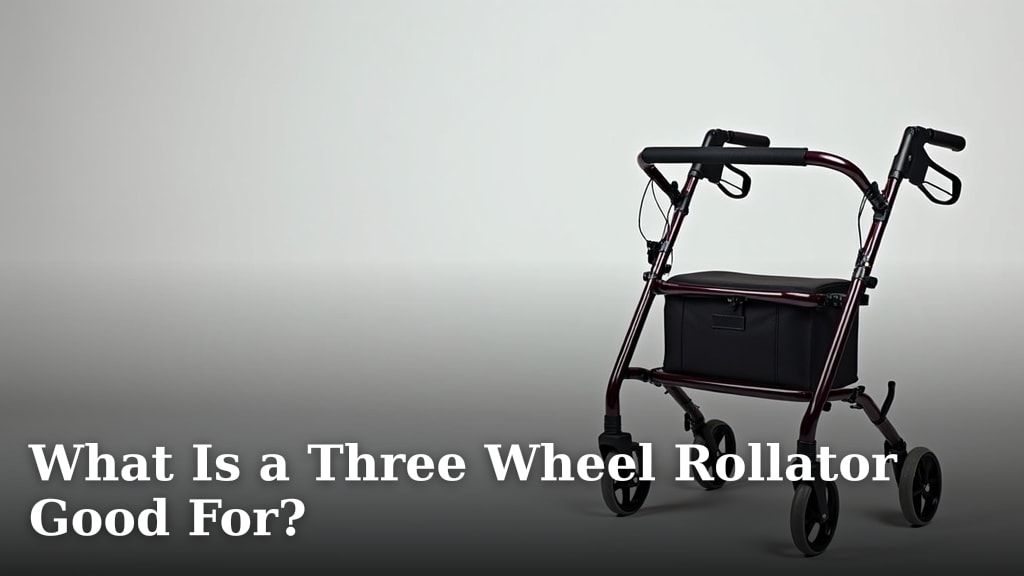
How to Choose a Three Wheel Rollator with a Seat
A three wheel rollator with a seat gives you a compact walker and a place to rest, but it may feel less stable than a four wheel model. Check seat and brake design, fit, weight capacity and how you plan to use it before choosing.
On this page (6 sections)
- Can you find a three wheel rollator with a seat?
- What trade-offs come with a three wheel rollator seat?
- How should you compare three wheel rollators with seats?
- Which seated rollators can help you compare features?
- How do three wheel and four wheel rollators differ?
- How do you choose the right three wheel rollator with a seat?
A three wheel rollator with a seat combines a three-wheeled frame with a place to rest, but seated designs can vary in stability, weight and how the brakes work. Check that the seat is intended for use, that the frame fits you, and that you can lock the brakes before sitting.
Some three wheel models are designed for compact handling, while others trade a lighter frame for a seat and backrest. The three examples below are four wheel rollators with seats, so they can help you compare seat, brake and weight features, but they are not three wheel models.
If you're weighing the three-wheel format itself, start with what a three wheel rollator is good for. Then compare it with a three wheel rollator vs four wheel rollator for seniors before choosing.
Can you find a three wheel rollator with a seat?
Some three wheel rollators include a seat, but the seat and frame design differ by model. Confirm the specific model has a seat made for resting, and follow its instructions for stopping and sitting.
A three wheel frame usually has a narrower shape than a four wheel rollator. That can help in tight indoor spaces, but the smaller support footprint may feel less steady when turning or sitting.
Compare narrow rollators for small spaces if maneuvering indoors is a priority.
A seat does not make every model suitable for every user.
Check the model's user weight limit, seat dimensions, handle range and brake design. A seat that looks roomy in a photo may not fit your needs, and a model that feels easy to steer may still be hard to lift or fold.
If you want a compact walker and do not need a seat, compare these best lightweight 3 wheel rollators. If you want a seat but are open to other frames, our best rollator walker with no seat page can help you compare seat-free alternatives.
What trade-offs come with a three wheel rollator seat?
A seat adds a place to rest, but it can add weight and change how the walker handles. For lighter seated options, compare lightweight rollators with seats.
Compare the complete frame with your walking route and resting needs, not just the wheel count.
| Factor | What to check |
|---|---|
| Stability | Whether the frame feels controlled during turns and while stopped |
| Seat | Seat width, depth, height and back support, if included |
| Brakes | Whether you can squeeze and lock them comfortably |
| Weight | Whether you can lift or load the walker when folded |
| Fit | Handle height, user weight limit and upright posture |
| Storage | Whether a bag or basket affects access to the seat or brakes |
A three wheel design may suit a person who values a narrow turning profile and can manage the frame confidently. A four wheel rollator may be preferable if a broader base and a seat are higher priorities.
Do not assume that a rollator seat works like a chair. Use it only when the model's instructions allow it, on level ground, with brakes engaged.
Is a lighter three wheel rollator with a seat easier to lift?
A lighter frame may be easier to lift into a car, but you still need to compare the model's folded size and how it locks. For a named example, read the byACRE Carbon Ultralight rollator review.
A compact frame that is awkward to grip may be harder to manage than a slightly heavier one that folds securely.
NOVA's GetGo Classic weighs 14 lb. and has a Lock N Load folding system that secures it folded. It also has a padded seat, locking hand brakes and a 300 lb. weight capacity.
This is a four wheel rollator, not a three wheel model.
For a closer look at weight and fit, read what a lightweight rollator is. Compare both the carry weight and the handle height range with your needs.
Does adding a seat affect rollator stability?
A seat can change the frame's balance and how you use it, so check the maker's instructions for sitting and locking the brakes. Do not sit while the rollator is moving or use it on a slope or uneven surface.
Before sitting, stop on level ground and set the brakes as directed. Keep your feet planted, and avoid pulling on the handles to lower yourself unless the instructions say to do so.
If you have trouble standing up from a seat, ask a clinician or mobility specialist to help assess a safe setup.
A four wheel model with a seat may be worth comparing if you want a wider base. For another mobility option with a different riding position, see our guide to best 3 wheel mobility scooters for seniors.
How should you compare three wheel rollators with seats?
Compare the features that affect your daily use: seat fit, brake control, frame weight and handle height. Match each one to your body, routes and ability to fold or transport the walker.
Check these details before you decide:
- Seat size and position: Check width, depth and height. Make sure you can sit and rise without stretching or leaning heavily on the frame.
- Brake operation: Confirm you can squeeze the brakes and set the locks with your hands. A rollator must stay still before you sit.
- Handle fit: Adjust the handles so you can stand upright with a relaxed grip. The available adjustment range should suit your height.
- User weight limit: Choose a model rated for your weight and any items you carry.
- Folded size and weight: Measure the space where you'll store it and consider whether you can lift it into a vehicle.
- Indoor route: Check doorways, turns, rugs and tight spaces along the path you use most.
- Outdoor route: Consider the surfaces you encounter and follow the model's guidance for where it can be used.
If you have limited movement on one side, don't assume a rollator is the right tool. A guide to the range of motion needed to use a hemi walker can help you understand a different walking aid to discuss with a clinician.
What should you know about seat and brake use?
The seat is for resting only when the manufacturer intends it for that purpose. Stop on level ground and lock the wheels before you sit or stand.
Keep both hands available to control your descent, and avoid using the seat if the frame is not on a firm, level surface. Do not lean on the rollator while it is unprotected or treat the seat as a transport surface.
If you need walking support and seated transport, compare rollator and transport chair combos.
Before the first outing, practice stopping, locking the brakes, sitting and standing in a clear area. Ask someone qualified to check your technique if balance or strength makes any step difficult.
Which seated rollators can help you compare features?
These four wheel examples are not three wheel rollators, but each shows a different balance of weight, seat and wheel size. Use them to compare features while you look for a three wheel model that meets your needs.
Medline Steel Rollator Walker for Adult Mobility
This Medline model has a steel frame, an under-seat storage area and a padded 12 x 12 in seat with backrest. It weighs 19 lb., supports up to 350 lb. and has 8 in wheels.
The handles adjust from 31 to 35 in. Its brakes engage by squeezing the handles and lock by pushing them down.
Consider the higher weight if you plan to lift the frame into a car or carry it up steps.
NOVA GetGo Classic Rollator Walker for Seniors
The NOVA GetGo Classic weighs 14 lb. and has a 13.75 x 12.75 in padded seat, a storage pouch and 6 in wheels. It supports up to 300 lb.
Its handles adjust from 32.5 to 36.5 in, and the Lock N Load system secures the frame folded. Check that the height range works for you and compare its weight limit with your needs.
Medline Steel Rollator Walker with Seat
This Medline model weighs 16.5 lb. and has a padded 12 x 12 in seat with backrest. The steel frame supports up to 350 lb. and uses 6 in wheels.
The handles adjust from 31 to 35 in, and the frame folds for transport and storage. It has storage beneath the seat, which may suit you if you want a place for essentials without a separate bag.
How do three wheel and four wheel rollators differ?
A three wheel rollator has one front wheel and two rear wheels, while a four wheel rollator has two wheels at each end. The three wheel frame may be easier to steer in tight spaces, while a four wheel model often gives you a wider base and a seat option.
Neither layout is automatically the right choice for every person. Consider how much support you need while walking, how often you plan to sit and whether you can control the brakes.
If you also need powered seated mobility, explore rollator and electric wheelchair combos.
If you need a seat, check the seat dimensions and instructions before buying. If tight turns matter more, compare the width and turning space of specific models rather than relying on wheel count alone.
How do you choose the right three wheel rollator with a seat?
Choose a three wheel rollator with a seat only if the model includes a seat intended for resting, fits your body and feels manageable to control. Prioritize brake use and stability on your usual routes, then compare weight, folding and storage.
Pick a compact three wheel design if steering in narrow indoor spaces is your main concern and you can use it safely. Pick a seated four wheel model if you prefer a broader base or want a wider choice of seats and backrests.
Ask a clinician or mobility specialist to help you assess fit and safe use if you are unsure about balance, sitting or standing. For more context, revisit what a three wheel rollator is good for.
Frequently asked questions
Can you sit on a three wheel rollator?
Only sit if the rollator has a seat designed for that use, and follow its instructions. Set the brakes before sitting, choose level ground, and avoid using the seat while the walker is moving.
If the model has no seat, don't improvise one.
Are three wheel rollators with seats stable?
A three wheel rollator has a different support layout from a four wheel model, so it may feel less stable, especially while turning or sitting. Check the maker's instructions, use the brakes as directed, and ask a clinician or mobility specialist whether the design suits your balance and needs.
What should I check before buying a seated rollator?
Check the handle height, seat size and height, user weight limit, folded dimensions and brake operation. Confirm that the seat is intended for resting and that you can lock the brakes before sitting.
Measure doorways and storage space, then compare the complete setup with your daily route.
Is a three wheel rollator lighter than a four wheel rollator?
Some three wheel rollators weigh less, but wheel count alone doesn't determine weight. Compare the actual model weights and folded dimensions, along with the seat, frame and storage.
A lighter walker can be easier to lift, while fit and control matter during use.