Three Wheel Rollator vs Four Wheel Rollator: For Seniors
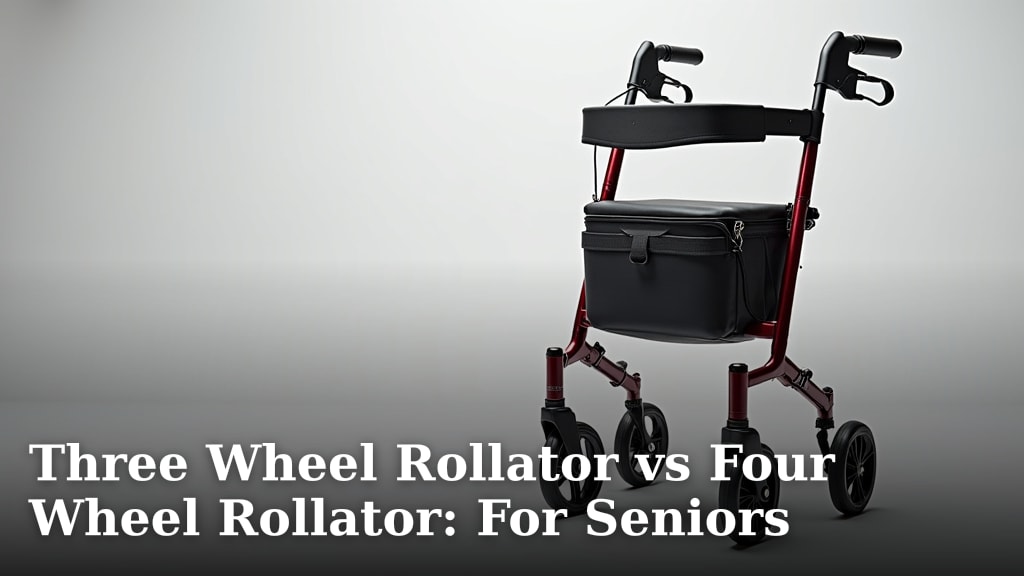
Choosing between a three-wheel rollator and a four-wheel rollator for seniors depends on your needs for stability versus maneuverability. A three-wheel rollator offers excellent agility for indoor use and navigating tight spaces. A four-wheel rollator provides superior stability and braking, making it a safer choice for those needing more support or using it outdoors.
We found that both types of rollators can greatly enhance mobility and independence. The key difference lies in their design and intended use. Understanding these distinctions helps you make the best choice for your situation. Think about where you’ll use it most often and what kind of support you need.
- Three-wheel rollators are lighter and more nimble for indoors.
- Four-wheel rollators offer more stability and better brakes for outdoors.
- Consider your walking needs and environment when choosing.
- Both can boost confidence and make daily tasks easier.
Let’s dive into the specifics of each type to help you decide which rollator is your perfect match.
Choosing the Right Rollator Walker for Seniors
Deciding between a three-wheel and a four-wheel rollator walker is a key step for improving your mobility. Both offer great support. They help you move around more confidently and safely. Your choice really comes down to your personal needs and where you plan to use it most. We looked into what makes each type unique to help you find the best fit.
Understanding the Three-Wheel Rollator
A three-wheel rollator is designed for agility and indoor use. It has three wheels, typically one at the front and two at the back. This design makes it very easy to steer and maneuver. Think of it like a nimble shopping cart. It can turn on a dime.
Pros of a Three-Wheel Rollator
One of the biggest advantages is its lightweight nature. This makes it easier to lift and store. Many fold up compactly. This is perfect for smaller homes or apartments. It’s also great for navigating crowded spaces. Think about busy grocery stores or narrow hallways. You can easily glide through them.
Another benefit is its ease of turning. The three-wheel design allows for sharper turns. This is helpful if you have limited space. You won’t bump into furniture as much. Many people find them less cumbersome than four-wheel models.
Cons of a Three-Wheel Rollator
The main drawback is that three-wheel rollators usually lack a seat. They are built for walking and support, not for resting. If you need to take frequent breaks, this might not be ideal. You’ll still need to find a chair or bench.
Also, the braking system can be different. While they have hand brakes, they might not feel as robust as those on a four-wheel model. This means they might not be the best choice for steep slopes. You need to be more mindful on inclines.
Who is a Three-Wheel Rollator Best For?
A three-wheel rollator is a good option if you:
- Are mostly walking indoors.
- Need a lightweight and easy-to-maneuver walker.
- Don’t need a built-in seat for resting.
- Are navigating tight spaces regularly.
- Are looking for something that feels more like an extension of your natural walking stride.
Exploring the Four-Wheel Rollator
The four-wheel rollator, often called a rollator walker, offers the most stability. It has four wheels, usually two in the front and two in the back. This design provides a very stable platform. It feels secure with every step you take.
Pros of a Four-Wheel Rollator
Stability is the number one benefit. The four wheels provide a firm foundation. This is especially important if you have balance concerns. Many people feel much safer using a four-wheel model. It also usually comes with a built-in seat. This is a huge plus if you need to rest often.
Another great feature is the advanced braking system. Most four-wheel rollators have loop-style hand brakes. You squeeze them to slow down or stop. They often have a locking mechanism too. This is perfect for parking your rollator. You can sit down on the seat without worrying about it rolling away. These brakes are generally considered more effective (Cleveland Clinic).
These rollators are also better suited for outdoor use. They can handle uneven sidewalks and surfaces more smoothly than three-wheelers. The larger wheels often roll over bumps more easily.
Cons of a Four-Wheel Rollator
The main disadvantage is their size and weight. They are typically heavier than three-wheel models. This can make them harder to lift into a car trunk. Folding them might also be a bit more work. They can feel bulkier in tight indoor spaces.
Maneuverability can also be a concern. While they turn, they aren’t as nimble as a three-wheel version. You might need a bit more space to make sharper turns. Think about maneuvering around furniture in your living room. It requires a slightly wider turn radius.
Who is a Four-Wheel Rollator Best For?
A four-wheel rollator is ideal if you:
- Need the highest level of stability.
- Plan to use your rollator outdoors frequently.
- Require a seat for frequent rest breaks.
- Are looking for reliable brakes, especially on slight inclines.
- Don’t mind a slightly heavier or larger mobility aid.
Key Differences at a Glance
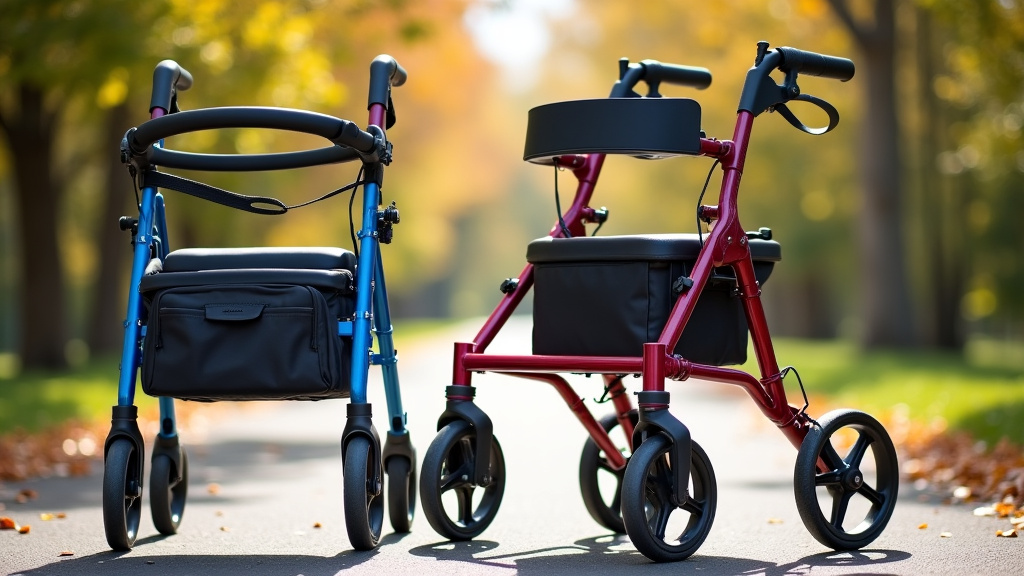
To help you visualize the differences, we’ve put together a quick comparison. Think about which features matter most for your daily life.
| Feature | Three-Wheel Rollator | Four-Wheel Rollator |
|---|---|---|
| Stability | Good, but less than four-wheel. | Excellent. Very stable. |
| Maneuverability | Excellent, very agile. | Good, but less nimble than three-wheel. |
| Seat for Resting | Typically none. | Usually included. |
| Braking System | Hand brakes, may be less robust. | Hand brakes with lock, generally more effective. |
| Weight | Lighter. | Heavier. |
| Best Use Case | Indoor, navigating tight spaces. | Outdoor, general use, needing rest. |
Making Your Final Decision: A Checklist
Before you decide, ask yourself these questions. They will help guide you to the right rollator for your needs. We found this process really helps clarify things.
- Where will you use your rollator most often? Indoors or outdoors?
- Do you need a place to sit down and take breaks?
- How important is light weight for you (e.g., for lifting)?
- Do you navigate tight spaces regularly?
- What is your level of concern about stability and balance?
Your answers will point you towards the rollator that will best support your independence and safety. We want you to feel confident with your choice.
Conclusion
You’ve learned the key differences between three-wheel and four-wheel rollators. A three-wheel rollator is your agile choice for indoor navigation. It’s lightweight and easy to steer through busy spaces. A four-wheel rollator offers superior stability and reliable brakes. It’s ideal for outdoor use and for those needing extra support or a place to rest. Think about where you’ll use it most and what features are most important for your independence and safety. Your next step is to consider your personal needs and environment to select the rollator that will best help you move with confidence.
Frequently Asked Questions
Can a three-wheel rollator be used outdoors?
While a three-wheel rollator is primarily designed for indoor use due to its lighter build and less robust braking, you can use it outdoors on smooth, level surfaces. It’s best suited for paved paths or shopping centers. Avoid uneven terrain or inclines where its stability might be less adequate.
Are four-wheel rollators heavy to push?
Four-wheel rollators are generally heavier than three-wheel models, but they are designed for smooth rolling. Most feature large, easy-rolling wheels that make pushing feel manageable, especially on various surfaces. The added weight contributes to their stability, which often makes them feel secure rather than difficult to move.
Do three-wheel rollators have brakes?
Yes, three-wheel rollators typically have hand brakes. These are usually simple loop brakes that you squeeze to slow down or stop. While functional, they may not offer the same level of secure stopping power or locking ability as the brakes found on most four-wheel rollators, particularly on slopes.
Is a four-wheel rollator difficult to store or transport?
Four-wheel rollators can be bulkier and heavier, which might make storage and transport a bit more challenging. Many models fold for easier storage and fitting into car trunks. It’s helpful to check the folded dimensions and weight if you plan to travel with your rollator frequently.
Which type is better for someone with significant balance issues?
For individuals with significant balance issues, a four-wheel rollator is generally recommended. Its design offers the highest level of stability, and the reliable braking system provides added security when sitting down or on slight inclines. This makes it a safer choice for those who need dependable support.