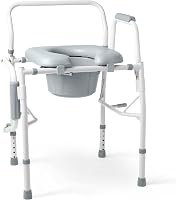
How to Set Up a Bedside Commode
Set up a bedside commode by assembling the frame, fitting the seat and bucket, adjusting the height, and placing it on a level floor near the bed. Always follow the instructions for your specific model before use.
On this page (10 sections)
- What should you check before setting up a bedside commode?
- How do you assemble the commode frame?
- How do you attach the seat and lid?
- How do you adjust the commode height?
- How do you fit the bucket or pan?
- Can you use a liner in a bedside commode?
- Where should you position the commode?
- What should you check before the first use?
- How do you clean and maintain a bedside commode?
- What is the safest way to choose a setup?
Set up a bedside commode by assembling the frame, attaching the seat, fitting the bucket, adjusting the height, and placing it securely beside the bed. Read the manufacturer's instructions first because frame locks, seat attachments, buckets, and height controls vary by model.
A bedside commode can help when walking to the bathroom is difficult at night or during recovery. People who need toileting support while seated can also compare reclining wheelchairs with commodes.
For more bathroom safety options, see our guide to a commode chair.
What should you check before setting up a bedside commode?
Before setting up a bedside commode, check the assembly instructions, floor space, user's weight, and transfer path. Make sure the chosen model's weight limit and adjustment range suit the person who will use it.
Clear a path from the bed to the commode. Remove loose rugs, footstools, baskets, and cords that could catch a foot or walker.
Measure the available space beside the bed. Leave enough room for the user to approach, turn, sit, and stand without hitting a wall or nearby furniture.
If you are still choosing a model, our guide to the best bedside commode for elderly users explains which features may matter for different setups.
How do you assemble the commode frame?
Assemble the frame by opening or joining the legs as directed, securing every connection, and checking that the frame stands evenly. Do not use the commode while any leg, brace, armrest, or seat connection is loose.
A folding model may need its legs opened until the frame locks. A push-button model may require each leg to be inserted until its spring button passes fully through the adjustment hole.
Check both sides of the frame. The buttons or locking points should sit at the same height, and the feet should touch the floor without rocking.
The Drive Medical Folding Bedside Commode uses fold-up steel legs, push-pin height adjustments, a snap-on seat and lid, and a 7.5-quart bucket. Its adjustable design suits users who need a folding frame with a stated support limit of 350 lb.
Do not force a hinge or push pin into place. If the frame does not open or lock as the instructions show, stop and check the assembly steps before adding the seat or bucket.
How do you attach the seat and lid?
Attach the seat and lid only after the frame is open and stable. The seat should sit flat, and the lid should open and close without pulling the frame out of position.
Some commodes use snap-on parts, while others use hinges or separate fasteners. Follow the supplied instructions for the exact order and check that the seat cannot lift away during a normal transfer.
Keep fingers clear of hinges and folding joints. If the model includes armrests, confirm that both sides are attached and do not move independently from the frame.
The HOMLAND Bedside Commode has a 42 mm thickened padded seat, a foam-padded backrest, widened armrests, and a 24 in wide frame. Its push-button height adjustment ranges from 18 to 23 in, and its aluminum frame has a stated capacity of 350 lb.
Choose a padded seat when sitting comfort and a wider frame are priorities. Measure the room first because a wider commode may leave less space beside the bed.
How do you adjust the commode height?
Adjust the bedside commode so the user's feet are flat on the floor and the knees are close to a right angle when seated. This position can make sitting and standing more controlled than a seat that is too high or too low.
Have the user stand beside the commode while you set the height, if they can do so safely. Otherwise, use their usual chair height as a starting point and follow the model's adjustment instructions.
For push-button legs, press the button, slide the leg to the desired hole, and confirm that the button springs completely through. Set every leg to the same position unless the instructions allow another arrangement.
After adjustment, press down lightly on the seat and check for rocking. Recheck all four legs before the first transfer and after moving the commode to another room.
How do you fit the bucket or pan?
Fit the bucket or pan from the direction shown in the instructions, then check that it sits fully under the seat opening. The container must be supported by the frame and must not hang loosely or tilt.
Keep the lid nearby if the design includes one. A splash shield or cover can help contain mess during removal, but it does not replace careful handling.
The Drive Medical model includes a 7.5-quart bucket with a splash shield, carry handle, and protective cover. The HOMLAND model includes a 6.8-quart removable bucket with a lid and splash guard.
Check the container after each move. A bucket that shifted while the commode was being carried may not be seated correctly when placed beside the bed.
Can you use a liner in a bedside commode?
Use a liner when it fits the bucket and the manufacturer's instructions allow it. A liner can make removal easier, but it must be opened fully and secured so it does not slip into the bucket opening.
The Elzrghs Commode Liners are 21 x 16 in disposable liners with drawstrings and a 100-count pack. The material is medical grade LDPE, and the package does not include an absorbent pad.
Check the bucket size and liner dimensions before use. A liner that bunches around the opening can interfere with the seat or allow waste to escape.
After use, tie the drawstrings as directed and dispose of the liner according to local waste rules. Wash your hands after handling the bucket, liner, or waste.
Where should you position the commode?
Position the commode on a level, dry surface close to the bed with a clear transfer path. The user should not need to step over cords, turn sharply, or reach around furniture.
Place the seat at a height that matches the user's transfer needs. Keep the commode far enough from the bed to open the lid and sit fully, but close enough to reduce unnecessary walking.
Avoid thick rugs and uneven flooring. If the commode rocks, move it to a firmer surface and inspect the leg settings and feet.
If the commode is designed for use over a toilet, follow the instructions for that configuration instead of assuming the bedside setup applies. Our guide explains how to use a bedside commode over a toilet.
What should you check before the first use?
Before the first use, check that the frame is locked, the seat is secure, the bucket is seated, and all feet touch the floor. Ask the user to transfer slowly while holding the approved armrests or support points.
Do not let the user pull on a loose backrest, lid, bucket, or removable part. Keep needed toilet paper, wipes, and personal items within reach without blocking the transfer path.
If the user also needs a shower seat, review how to use a shower chair correctly for related transfer and floor-safety guidance.
Recheck the commode after it has been folded, carried, cleaned, or adjusted. Moving the frame can change the leg positions or leave the bucket partly out of place.
How do you clean and maintain a bedside commode?
Clean the seat, frame contact points, bucket, and splash guard according to the manufacturer's instructions. Empty the container promptly, wash removable parts as directed, and dry them before reassembly.
Inspect the legs, push pins, hinges, armrests, feet, seat, and bucket for damage. Do not use the commode if a part is cracked, bent, missing, or unable to lock.
For cleaning steps and supplies, see how to clean a bedside commode. Replace worn components with parts that match the model, as explained in our guide to the best bedside commode replacement parts.
What is the safest way to choose a setup?
The safest setup matches the commode height, frame width, support limit, bucket arrangement, and available floor space to the user and room. Follow the manufacturer's instructions at every stage, then check the frame after each adjustment or move.
Choose a folding model when storage or transport matters. Choose a padded, wider frame when the seat dimensions suit the room and the user.
Use a liner only when its size matches the bucket.
For help comparing formats, read best 3-in-1 bedside commodes and bedside commode vs 3-in-1 commode. The right choice is the one that stays stable, fits the transfer space, and can be maintained safely.
Frequently asked questions
How high should a bedside commode be?
Set the bedside commode so your feet rest flat on the floor and your knees are close to a right angle when seated. Adjust the legs according to the manufacturer's instructions, then check that all push pins or locking parts are fully engaged before use.
Where should you place a bedside commode?
Place the bedside commode on a level, dry floor close enough to the bed for a safe transfer, with a clear path between the bed and the chair. Keep it away from loose rugs, cords, and furniture that could interfere with sitting down or standing up.
Can you use a liner in a bedside commode?
You can use a liner if it fits the bucket and the manufacturer allows it. Fit the liner over the inside of the bucket, secure it as directed, and check that it cannot slip into the opening.
Dispose of waste according to local care instructions.
How do you know a bedside commode is assembled correctly?
A bedside commode is ready when the frame is fully locked, the seat and lid are secure, the bucket or pan sits correctly, and every leg rests evenly on the floor. Test it gently without putting your full weight on it, then recheck the instructions.