6 Best Reclining Wheelchairs with a Commode (November 2026)
The best reclining wheelchairs with a commode include the Vive Reclining Shower Chair with Wheels for bathroom routines, the Medline Reclining Wheelchair for full recline, and the Medline Reclining Wheelchair for adjustable head support.
On this page (6 sections)
- The best reclining wheelchair with a commode for bathroom care
- Which reclining wheelchair works best for toileting?
- How much recline do you need?
- What should you check before buying?
- How should you use and care for a reclining commode wheelchair?
- Verdict: which reclining wheelchair with a commode should you choose?
The best reclining wheelchair with a commode is the Vive Reclining Shower Chair with Wheels because it combines transport, shower, shampoo and commode use with adjustable recline. That mix suits households where one chair needs to move between rooms and stay in regular use.
Choose a Medline or Vive Mobility model when full-body positioning is the main need and bathroom care will happen with a separate commode. Those chairs focus on deeper recline and longer seated support.
A reclining wheelchair with a commode can reduce transfers during assisted bathroom routines. Fewer moves can make settling in and getting up feel more settled for both the user and the caregiver.
The key choice is whether you need one bathroom-ready chair or a wheelchair with the widest recline range. A smaller tilt often fits bathing tasks, while near-flat recline fits rest and position changes.
Measure the user as well as the room before you decide. Seat width, weight capacity and the path through doorways all affect whether a chair works on a daily basis.
Think about cleaning and who will lift, fold or push the chair each day. Wet-area chairs need surfaces that suit rinsing and drying, while living-room wheelchairs need upholstery that is easy to wipe down.
For broader bathroom planning, start with our bathroom safety aids guide. It helps place a reclining commode chair within a wider routine rather than treating it as the only change.
If the chair will be used in a shower, compare these picks with our guide to the best shower commode chair. Shower use adds drainage, floor space and turning room to the decision.
Also plan where the user will transfer after bathing or toileting. A chair that fits the bathroom may still need a clear route to the bed, wardrobe or living area.
Our picks at a glance
-
1
 Best for bathroom routines
Vive Reclining Shower Chair with Wheels
9.5/10 our score
See it on Amazon -
2

-
3

- 4
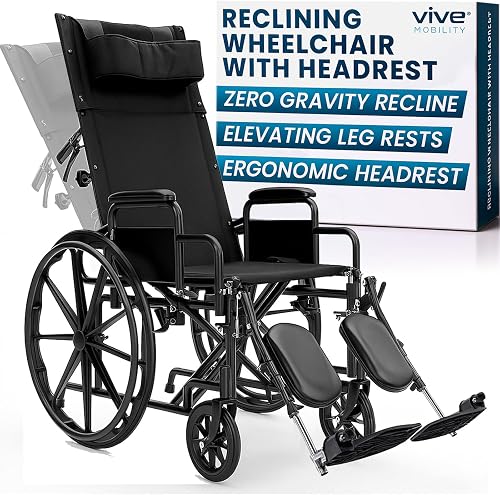 Check it
Vive Mobility Reclining Wheelchair with Elevating Leg
Best for zero-gravity positioning - 5
 Check it
WEYRAL Super Lightweight Reclining Travel Wheelchair
Best for travel weight - 6
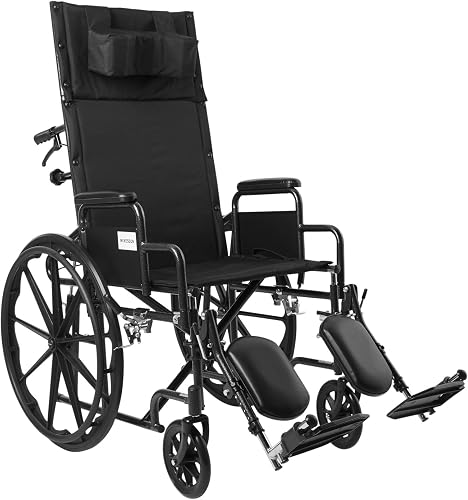 Check it
McKesson Reclining Wheelchair and Detachable Desk Arms
Best for higher capacity
The best reclining wheelchair with a commode for bathroom care
The Vive Reclining Shower Chair with Wheels is the clearest match for this keyword because it has a stated commode function alongside shower and transport use. The other picks are reclining wheelchairs that may work beside a commode, but their product information does not state a built-in commode.
Our score weighs specs, features and buyer feedback against what you're shopping for. We compared recline range, bathroom functions, seat size, weight capacity, positioning features and practical movement needs.
| Product | Best for | Recline | Capacity | Seat | Our score |
|---|---|---|---|---|---|
| Vive Reclining Shower Chair with Wheels | bathroom routines | Up to 35 degrees | 300 lb | 17 x 17 in | 9.5 |
| Medline Reclining Wheelchair | full recline | Up to 180 degrees | 300 lb | 20 x 18 in | 9.7 |
| Medline Reclining Wheelchair | adjustable head support | 90 to 140 degrees | 18 x 18 in | 9.4 | |
| Vive Mobility Reclining Wheelchair with Elevating Leg | zero-gravity positioning | Up to 180 degrees | 300 lb | 9.3 | |
| WEYRAL Super Lightweight Reclining Travel Wheelchair | travel weight | 220 lb | 9.0 | ||
| McKesson Reclining Wheelchair and Detachable Desk Arms | higher capacity | 350 lb | 8.5 |
Vive Reclining Shower Chair with Wheels: Best for bathroom routines
- Reclines up to 35 degrees
- Transport chair, shower chair, shampoo chair and commode
- 300 lb capacity
- 17 x 17 in seat
This chair combines transport, shower, shampoo and commode functions in one design. Its waterproof cushion, adjustable neck rest and wheel locks suit assisted bathroom routines.
Pros
- Built-in commode function
- Waterproof 1.5 in cushion
- Tool-free assembly
Cons
- Recline stops at 35 degrees
- 17 in seat width
The Vive Reclining Shower Chair with Wheels is the best choice when one chair must cover several bathroom tasks. It combines a transport chair, shower chair, reclining shampoo chair and commode, which can help reduce equipment changes between rooms.
Its recline adjusts to any position up to 35 degrees. That range is suited to a more relaxed sitting angle or tilting the user's head back for shampooing, but it does not provide the flat positioning of a 180-degree wheelchair.
The chair has a 17 x 17 in seat, a 300 lb capacity and a waterproof 1.5 in cushion. The rust-resistant aluminum frame and latex-free upholstery suit wet-area care, while height-adjustable leg rests and a neck rest allow more setup choices.
Front and rear wheel locks help keep the chair in place during stationary routines. Tool-free assembly also reduces setup work, but measure the bathroom route and shower space before ordering.
Medline Reclining Wheelchair: Best for full recline
- Reclines up to 180 degrees
- Desk-length arms
- Elevating leg rests
- 300 lb capacity
The full-recline range supports users who need major position changes during seated rest. It is a wheelchair rather than a combined commode chair, so pair it with a suitable bathroom aid.
Pros
- 180-degree recline
- 20 in seat width
- Breathable nylon upholstery
Cons
- No commode function stated
- 66 lb package weight
The Medline Reclining Wheelchair is the strongest fit when the user needs a full 180-degree recline rather than a bathroom chair with a smaller tilt range. Its desk-length arms and elevating leg rests can support transfers and changes in seated position.
The 20 x 18 in seat gives this model more width than the 17 in Vive bathroom chair. That extra width can suit users who need more room around the hips during longer periods seated.
Its 300 lb capacity and breathable nylon upholstery suit users who need a durable wheelchair for repeated daily positioning. The hammertone frame is built for steady routine use at home or in care settings.
Desk-length arms are meant to let the chair sit closer to a table or counter. That matters for meals, reading or watching television while reclined in smaller amounts.
Elevating leg rests help raise the lower legs when the back is tilted back. For some users that change can ease pressure, while others will prefer the legs lowered for transfers.
This is not described as a commode wheelchair, so plan for a separate commode chair or shower commode. Our bedside commode versus shower chair guide explains when those bathroom tools serve different needs.
Choose this Medline when recline depth is the priority. Choose the Vive bathroom chair when reducing transfers into a separate commode matters more.
Medline Reclining Wheelchair: Best for adjustable head support
- Reclines from 90 to 140 degrees
- 18 x 18 in seat
- Elevating leg rests
- 300 lb capacity
This Medline model adds a tall seatback, removable headrest and an adjustable reclining range. It suits users who need supported positioning but can use a separate commode or shower chair.
Pros
- Removable 10 in headrest
- Anti-tippers
- Swing-away elevating leg rests
Cons
- No commode function stated
- 18 in seat width
The 18 in Medline Reclining Wheelchair suits users who want adjustable positioning with more head support. Its hydraulic mechanism reclines from 90 to 140 degrees, and the tall seatback works with a removable 10 in headrest.
That headrest can be removed when it gets in the way of transfers or when the user prefers a lower back profile. Keeping it fitted gives support when the chair is tilted back for rest.
The chair has elevating leg rests, desk-length arms and a 300 lb capacity. Its carbon steel frame, nylon upholstery and composite mag-style wheels are aimed at routine wheelchair use rather than wet-room toileting.
Seat width should be checked against the user's seated hip measurement. An 18 in seat will suit a narrower range of users than the 20 in models in this group.
Swing-away leg rests and plastic foot plates can help with transfer setup. Moving the rests aside can clear space for a caregiver standing beside the chair.
Rear anti-tippers and locking wheel brakes are also included, but the bathroom routine still needs a separate commode or shower chair. Those safety features help during transfers and when the chair is sitting still.
This is a practical middle choice between an upright wheelchair and a full-recline model. Pick it when head support and adjustable recline matter more than a built-in commode.
Vive Mobility Reclining Wheelchair with Elevating Leg: Best for zero-gravity positioning
- Reclines to 180 degrees
- Elevating leg rests
- Detachable cervical cushion
- 300 lb capacity
The full-recline frame, leg rests and cervical cushion focus on extended seated support. Large rear wheels and locking brakes help with movement and transfers, but a separate commode is needed.
Pros
- 180-degree recline
- Detachable neck support
- Locking rear brakes
Cons
- No commode function stated
- Separate bathroom aid required
The Vive Mobility Reclining Wheelchair with Elevating Leg Rests is built for users who need 180-degree recline plus leg elevation. Its detachable cervical cushion and integrated headrest add support during longer seated periods.
The cervical cushion can be removed when the user wants more freedom to turn the head. That choice can matter during conversation, meals or moving within a room.
The reinforced steel frame supports up to 300 lb. The chair also has padded armrests, a reinforced backrest, 24 in rear wheels, 8 in front casters and locking rear brakes.
Larger rear wheels can make indoor movement and short outdoor paths feel easier to push. Front casters help the chair turn, so check that the turning space is clear at home.
The removable leg rests can simplify transfers into a bed, vehicle or another chair. Caregivers should have a clear side approach before lifting or guiding a transfer.
Dual calf pads on the leg rests add support when the legs are raised. They can help keep the lower legs settled while the back is reclined for rest.
This model does not have a stated commode function. That can help with room-to-room care, but this model does not have a stated commode function.
Choose it for full-body positioning and larger wheels. If the chair must roll directly over a toilet or into a shower routine, choose the Vive bathroom model instead.
WEYRAL Super Lightweight Reclining Travel Wheelchair: Best for travel weight
- Reclines from 90 to 165 degrees
- 28 lb chair weight
- 220 lb capacity
- Folds in 3 seconds
At 28 lb, this folding transport wheelchair is the easiest pick here to move for travel. Its 90-to-165-degree recline helps with positioning, but it does not include a stated commode function.
Pros
- Lightest option here
- Folds in 3 seconds
- Detachable cushions
Cons
- 220 lb capacity
- No commode function stated
The WEYRAL Super Lightweight Reclining Travel Wheelchair is the best option here for buyers who must move the chair often. It weighs 28 lb, folds in 3 seconds and fits in the trunk of a small vehicle.
Its back reclines from 90 to 165 degrees, giving more positioning range than the Vive bathroom chair but less than the 180-degree models. That range can suit short trips where a more upright seat is not comfortable for long.
The stated capacity is 220 lb, so confirm the user's weight before choosing it. That limit is lower than the 300 lb models in this group and should be treated as a firm check.
The aluminum alloy frame, detachable seat and back cushions and rear storage bag support travel-focused use. Detachable cushions can be washed separately and the bag can hold small daily items.
Solid 12 in rear wheels and 7 in rubber front wheels are designed for movement across various terrains. Solid rear wheels avoid the need to inflate tyres, while the front wheels turn to help with steering.
Anti-tippers are included to reduce tipping when the back is reclined or the chair is tilted over a curb. They are a useful safeguard, but the chair still needs careful handling on slopes and steps.
This is not a commode chair. Pair it with a suitable bathroom aid when toileting or shower access is part of the routine, and compare transport needs with our Rollator vs Wheelchair guide.
McKesson Reclining Wheelchair and Detachable Desk Arms: Best for higher capacity
- 20 in seat width
- 350 lb capacity
- Detachable desk arms
- Reclines up to 180 degrees
The 20 in version and stated 350 lb capacity make this the higher-capacity choice in the group. Its reclining wheelchair design still needs a separate commode for bathroom use.
Pros
- 350 lb capacity
- 20 in seat option
- Detachable padded desk arms
Cons
- No commode function stated
- Product information includes 18 in and 20 in variants
The McKesson Reclining Wheelchair and Detachable Desk Arms is the higher-capacity choice, with a stated 350 lb capacity for the 20 in version. Its product information also includes an 18 in version with a 300 lb capacity, so confirm the exact configuration before ordering.
That version check matters because seat width and capacity change together. Ordering the wrong configuration could leave too little room or a lower limit than expected.
The chair has detachable padded desk arms, swing-away elevating footrests and a carbon steel frame with a silver vein finish. Detachable arms can help with side transfers and with fitting the chair closer to a table.
Its hydraulic mechanism reclines through infinite adjustments up to 180 degrees. Small steps in recline can suit a user who needs gradual position changes rather than one fixed angle.
Nylon upholstery, urethane tires and composite mag-style wheels support routine wheelchair use. The upholstery is described as lightweight and breathable for lasting comfort during seated periods.
The chair does not have a stated commode function, so bathroom care will require a separate commode or shower commode. Choose McKesson when the wider seat and higher capacity fit the user's measurements, and review our best bariatric shower commode chairs guide for a bathroom-focused setup.
Which reclining wheelchair works best for toileting?
The Vive Reclining Shower Chair with Wheels is the best direct toileting choice because it is described as a commode wheelchair and combines bathroom functions in one chair. A standard reclining wheelchair may still be useful, but it does not replace a commode unless the specific configuration includes one.
That distinction matters during a routine at home. A wheelchair built for rest may still leave the user needing a transfer into a separate commode, which adds time and effort.
Check the route from the bed or room to the bathroom before choosing. Measure doorways, turning space and the area beside the toilet or shower, then compare those measurements with the chair's dimensions.
A chair that is too deep can struggle to turn in a small bathroom. Measuring the full depth with leg rests in place can prevent a poor fit on the first day.
For users who need side access during transfers, our guide to drop arm shower commode chairs covers a different chair design. A drop-arm feature may be more useful than deeper recline when the main challenge is moving between a bed, chair and commode.
Side access can make it easier for a caregiver to stand close and provide support. It can also help when the user moves with a board or from a particular side.
Wheel locks should be checked before toileting begins. A chair that shifts during a transfer can make the routine feel less secure for everyone involved.
How much recline do you need?
Choose up to 35 degrees for a bathroom chair that supports bathing, shampooing and a relaxed seated angle. That smaller range keeps the user more upright while still allowing a change from a standard seat.
Choose 140 to 165 degrees for more substantial positioning support, or 180 degrees when near-flat reclining is the main goal. Those deeper ranges are closer to lying down and can support longer rest periods.
More recline does not automatically make a chair better for toileting. A full-recline wheelchair can still require a separate commode, while the Vive bathroom chair offers the built-in bathroom function with a smaller recline range.
The task should guide the choice more than the number alone. Shampooing may need a head tilt, while rest may need the back lowered in stages.
Elevating leg rests can also affect daily use. They may make transfers and leg positioning easier, but check that the user's legs remain supported and that the chair can still approach the intended bathroom fixture.
Consider head and neck support at each angle, and lock the wheels with feet supported before changing the angle for a transfer. A deeper recline may help a user rest after toileting, while a smaller tilt may make getting up quicker.
What should you check before buying?
Start with the user's weight, seated hip width and transfer needs. The picks here range from a 17 in seat and 220 lb capacity to a 20 in seat and 350 lb capacity.
Then check the chair's intended setting. Wet-area features such as a waterproof cushion, rust-resistant frame and commode function matter more for shower routines than they do for a living-room wheelchair.
Think about cleaning and storage as well. The Vive bathroom chair has latex-free upholstery and a waterproof cushion, while the Medline and McKesson wheelchairs use nylon upholstery.
The WEYRAL model adds detachable cushions for easier cleaning.
For consumable cleanup supplies, see our guide to bedside commode liners with absorbent pads. If sitting comfort is the main concern, our guide to padded drop arm commodes may help you compare a separate bathroom option.
How should you use and care for a reclining commode wheelchair?
Lock the wheels before transfers, keep the user's feet supported and adjust the recline gradually. Sudden changes can feel unsettling and may shift the user's position in the seat.
Follow the chair's instructions for assembly, cleaning and safe weight limits, and keep the route clear before moving between rooms. A clear path reduces the need to turn in tight spaces while the user is seated.
A caregiver should check the chair's position before bathing or toileting. The correct recline depends on the task, the user's comfort and the amount of support needed during the routine.
Ask the user before changing the angle during a routine. Small adjustments can be checked one at a time so the user can say whether the position feels right.
Clean wet-area surfaces after use and allow them to dry as directed. Water left under cushions or around fasteners can lead to odours and make the chair less pleasant to use.
Inspect wheels, brakes, leg rests, cushions and fasteners regularly, especially when the chair is used for repeated transfers. Worn brakes or loose parts should be dealt with before they affect a transfer.
Store the chair where it can dry fully between uses. A bathroom cupboard or a dry corner with airflow can help, depending on the space available.
Keep the commode area clean and check for damage after each use. Cracks or loose fittings can make the next routine harder to manage safely.
Teach anyone who helps with a simple routine for locking wheels and setting the recline. A shared routine can reduce confusion when more than one caregiver is involved.
Verdict: which reclining wheelchair with a commode should you choose?
Choose the Vive Reclining Shower Chair with Wheels when you need one chair for transport, showering, shampooing and toileting. Its smaller recline range is suited to bathroom tasks rather than near-flat rest.
Choose the Medline 20 in model or Vive Mobility wheelchair when 180-degree recline and extended positioning matter more than a built-in commode. Those models suit users who spend longer periods seated and need major position changes.
Pick the WEYRAL for a lightweight travel chair, and choose the McKesson when the 20 in configuration and higher capacity fit the user. The WEYRAL suits frequent lifting and car travel, while the McKesson suits a wider seat and a higher stated limit.
The 18 in Medline sits between those choices for users who want head support without a full commode function. It can be a sensible middle option when a separate bathroom aid is already in place.
Before ordering, match the seat width, weight capacity, bathroom route and transfer plan to the person's daily needs. A chair that fits the measurements but not the room will still be hard to use.
Check cleaning needs as well as comfort. Wet-area use, travel use and living-room use each place different demands on upholstery and frames.
The best choice is the one that matches the main routine first. Bathroom function, recline depth and portability should be weighed in that order for each household.
Our top 3 picks at a glance
-
1
Best for bathroom routines
Vive Reclining Shower Chair with Wheels
9.5/10 our score
See it on Amazon -
2
-
3
Frequently asked questions
What is the best reclining wheelchair with a commode?
The Vive Reclining Shower Chair with Wheels is the best reclining wheelchair with a commode for combined bathroom routines. It works as a transport chair, shower chair, reclining shampoo chair and commode, with recline up to 35 degrees, a 17 x 17 in seat and a 300 lb capacity.
Do reclining wheelchairs usually include a commode?
No. Many reclining wheelchairs focus on position changes, leg support and transport.
The Vive Reclining Shower Chair with Wheels is the combined option here with a stated commode function.
The Medline, Vive Mobility and McKesson wheelchairs need a separate bathroom aid.
Is a 35-degree recline enough for bathroom use?
A 35-degree recline can help create a more relaxed seated angle or tilt the user's head back during shampooing. It is different from a full 180-degree wheelchair recline, so choose based on the positioning needed during bathing, toileting and transfers.
How do you choose the right seat width?
Measure the user's usable hip width while seated and compare it with the chair's seat width. The options here range from 17 in to 20 in.
Leave enough room for comfortable positioning without choosing a chair so wide that bathroom movement becomes difficult.


