Shower Stool vs Shower Bench: Which Should You Choose? (November 2026)
Choose a shower bench for tub transfers and a shower stool for compact, seated support inside the shower. Your bathroom layout, balance needs and reach matter more than the name.
On this page (9 sections)
- Shower stool vs shower bench: which is better for you?
- Which option takes less bathroom space?
- Which shower seat supports a bathtub transfer?
- How do height ranges compare?
- Which model gives you the most weight capacity?
- Do backrests and handles matter?
- How should you set up and care for a shower stool or bench?
- What should you check before buying?
- Shower stool vs shower bench: which should you choose?
Choose a shower bench for tub transfers and a shower stool for compact, seated support inside the shower. In a shower stool vs shower bench comparison, the best choice depends on whether you need to cross a bathtub wall, how much room you have and how much support you need while sitting.
A bench gives you a longer surface and is the better match for a sit-and-slide transfer. A stool takes less room and works better when you can enter the shower safely but need a seat for washing.
This comparison covers 2 transfer benches and 2 compact shower chairs. We checked their listed dimensions, height ranges, materials, capacities and stated features.
 Best for sit-and-slide tub transfers
Drive Medical Tub Transfer Bench for Bathtub
 Best for heavy-duty tub transfers
Medline Transfer Bench for Bathtubs and Showers
Shower stool vs shower bench: which is better for you?
Choose a shower bench if stepping over the tub wall is difficult. Choose a stool if you need seated support after entering the shower.
A transfer bench extends across the bathtub edge. You sit down outside the tub, move across the bench and then turn or slide into the bathing area.
A shower stool stays inside the shower or tub. Its smaller footprint leaves more open floor around it, but it does not create the same long transfer path.
People who need a commode chair and other bathroom safety aids may also need to think about toilet transfers, doorway space and how several aids will fit together.
When should you choose a shower bench?
A shower bench is the stronger choice when standing on one leg, stepping over a tub wall or turning on a wet surface feels unsafe. It gives you a place to sit before the transfer begins.
The Drive Medical Tub Transfer Bench for Bathtub has height-adjustable legs, a supportive backrest, drainage openings and suction cup feet. Its aluminum frame supports up to 350 lb, and its height adjusts in 0.5 in increments.
The Medline Transfer Bench for Bathtubs and Showers supports up to 400 lb. Its seat height adjusts from 17.6 to 21.9 in, its backrest is reversible and its stationary armrest gives you another point of support when sitting or standing.
When should you choose a shower stool?
Choose a shower stool when your main need is a compact place to sit inside the bathing area. This format suits smaller showers and people who can manage entry without a long transfer surface.
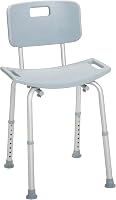
Dr. Kay's Shower Chair for Inside has a padded seat, drainage holes and built-in side handles.
Its aluminum construction supports up to 350 lb, with a stated height range of 14.5 to 19.5 in.
The HOMLAND Shower Chair for Inside Shower has a 17 x 10.5 in seat, a 14 to 19 in height range and a 400 lb maximum weight recommendation. It also has suction feet, an aluminum alloy frame, a bath sponge, a clip holder and a soft anti-slip cushion.
For more compact options, compare our guide to the best shower stools for seniors.
Which option takes less bathroom space?
A shower stool usually takes less space than a transfer bench. Measure the shower floor, tub width and the path you need to enter before choosing.
The HOMLAND seat measures 17 in wide and 10.5 in deep. Dr.
Kay's seat measures 16.7 by 10.5 in. Those dimensions leave more open floor than a long bench in many shower layouts.
The Drive Medical bench measures 29 in across its listed product dimensions. The Medline bench has a 26.5 in seat and 28.7 in overall width.
Those longer surfaces need enough tub length and clearance around the bathroom entrance.
Do not judge fit from the seat alone. Include the backrest, legs, armrest and the space needed to sit down or stand up.
A narrow shower may favor a stool, but a stool is not automatically safer if you must step over a high tub wall. In that case, the transfer path matters more than the compact footprint.
Which shower seat supports a bathtub transfer?
The Drive Medical and Medline benches are the better choices for bathtub transfers because they extend across the tub edge. A compact stool does not replace that sit-and-slide surface.
The Drive Medical bench is built around an easy slide tub bench design. Its height-adjustable legs help you set the seat to the tub and floor, while the backrest supports your upper body during bathing.
The Medline bench also works as a tub transfer bench or bath seat. Its reversible backrest can face either side, which helps when the bathroom layout determines where you sit and transfer.
The Dr. Kay's and HOMLAND seats are intended for use inside the shower or tub.
Their smaller seats can support bathing, but they do not give you the same length for crossing the tub wall.
If you use a wheelchair, the transfer method and shower layout need extra planning. Our guide on how people in wheelchairs shower explains why seat position, transfer space and caregiver access matter.
How do height ranges compare?
Adjustable height helps you keep your feet supported and your sitting position stable. Choose a range that works with your leg length, tub edge and shower floor.
The Drive Medical bench adjusts in 0.5 in increments. Small changes can help you match the bench to the height difference between the bathroom floor and the tub.
The Medline bench adjusts from 17.6 to 21.9 in according to its product details. Its push-button adjustment is designed for tool-free changes during setup.
Dr. Kay's chair has a stated adjustable range of 14.5 to 19.5 in.
Its product details also list individual height settings of 13.4, 14.4, 15.4, 17.2 and 18.5 in, so confirm the exact adjustment information before ordering.
The HOMLAND stool adjusts from 14 to 19 in in 1 in increments. That range may suit a lower shower seat, but the right height still depends on your body and the floor surface.
After adjustment, check that every leg sits evenly and that the seat does not rock. Follow the assembly directions, and do not use an unstable seat on a wet floor.
Which model gives you the most weight capacity?
The Medline bench and HOMLAND stool have the highest stated capacity at 400 lb. Capacity is only one part of fit, so also consider seat size, transfer method and the support you need.
The Drive Medical bench supports up to 350 lb. Dr.
Kay's shower chair also supports up to 350 lb.
The Medline bench supports up to 400 lb and has a wider 26.5 in seat. Its overall design suits users who need a larger transfer surface and an armrest.
The HOMLAND stool has a 400 lb maximum weight recommendation, but its recommended user weight is 300 lb. Its seat is 17 in wide and 10.5 in deep, so it offers high stated capacity in a compact format.
Never treat a maximum capacity as a target. Consider clothing, movement during transfers and the stability of the installed seat.
Ask a qualified health professional or caregiver for help if you are unsure which setup matches your mobility needs.
For users who need a larger compact stool, see our guide to the best bariatric shower stools.
Do backrests and handles matter?
A backrest can support your sitting position, while handles can give you another place to steady yourself. Neither feature removes the need for a level setup and careful transfers.
The Drive Medical bench has a supportive backrest. The Medline bench has a reversible backrest and a stationary armrest.
Dr. Kay's chair has built-in side handles.
The product details describe them as useful for better control of a handheld showerhead as well as added security.
The HOMLAND stool has a soft anti-slip cushion and a clip holder for a showerhead. It is a more open design than the benches, which can make it easier to reach around yourself while washing.
Choose features based on the movement you need. If you push up from the seat, an armrest or handle may matter more than a backrest alone.
If you tend to lean while washing, a backrest may offer useful support.
How should you set up and care for a shower stool or bench?
Set up the seat on a level surface, confirm every leg is locked and keep the feet clear of soap or debris. A height-adjustable seat is only useful when it remains stable during use.
For a transfer bench, check that the bench spans the tub securely and that the transfer side fits your bathroom layout. The Drive Medical and Medline models use suction-style or wide feet to help anchor the bench, but the floor and tub surfaces still need to be clean.
For a stool, place all feet fully on the shower floor. Do not balance one leg on a raised edge or drain cover unless the instructions specifically allow it.
Keep drainage openings clear so water does not pool on the seat. Wipe the seat and frame according to the care directions, and inspect the feet or suction surfaces when the stool or bench begins to move.
Assembly details vary. The Medline bench uses tool-free push-button assembly, while Dr.
Kay's chair uses wing-tipped screws without tools. HOMLAND includes a step-by-step manual for setup.
If you need a seat that is higher than a standard stool, compare the best tall shower stools. For outdoor bathing areas, see the best outdoor shower stools.
What should you check before buying?
Measure the bathroom first, then choose the transfer style, seat height and capacity. Product names can overlap, so dimensions and use matter more than whether a page calls an item a stool, chair or bench.
Check these points:
- Measure the tub width and the open floor beside it if you need a transfer bench.
- Measure the shower floor if you need a compact stool.
- Compare the seat height with your leg length and the tub edge.
- Check the maximum capacity and any separate recommended user weight.
- Decide whether you need a backrest, armrest or side handles.
- Confirm that the seat leaves room for a caregiver or wheelchair transfer if needed.
- Plan where the showerhead, soap and towels will sit so you do not twist or overreach.
A rollator can also affect bathroom access and turning space. Our guide on How to Choose a Rollator: A Simple Guide covers the measurements that help you plan mobility equipment around the home.
If a standard transfer bench does not match your shower entrance, a transport chair may be worth considering. See the best transport chairs for the shower for another approach to assisted bathing.
Shower stool vs shower bench: which should you choose?
Pick the Drive Medical bench for a height-adjustable sit-and-slide transfer, or choose the Medline bench when you want a 400 lb capacity and reversible backrest. Pick Dr.
Kay's chair for padded compact seating with side handles, or HOMLAND for a compact 400 lb stool with 1 in height adjustments.
The main shower stool vs shower bench decision is about how you enter and use the bathing area. A bench supports the transfer across a tub wall, while a stool supports seated washing after you are inside.
Measure first, choose the seat height carefully and keep the final setup stable. The best shower stool or bench is the one that fits your bathroom and the movement you can perform safely.
Frequently asked questions
What is the difference between a shower stool and a shower bench?
A shower stool is a compact seat for resting inside the shower, while a shower bench is longer and may support a sit-and-slide transfer across a bathtub edge. Stools use less space, but benches usually give more room for repositioning and transfer support.
Is a shower bench safer than a stool?
A shower bench is usually the better fit for someone who must transfer over a bathtub wall without standing. A shower stool can be suitable for someone who can enter the shower safely but needs a stable seat while washing.
The right choice depends on the bathroom and your movement needs.
Which shower seat is best for a bathtub?
A tub transfer bench is usually best when you need to sit outside the tub and slide across before showering. The Drive Medical and Medline benches are designed for this type of transfer, while the Dr.
Kay's and HOMLAND seats are compact options for use inside the bathing area.
How high should a shower stool be?
Set the stool so your feet rest flat and your knees stay near a right angle when seated. Adjustable models help you match the seat to your leg length and shower floor.
Make changes gradually, and keep the seat stable before using it on a wet floor.