Can You Add Arm Extensions to a Rollator?
You can add arm extensions to a rollator only if the manufacturer approves an extension for your exact model. Improvised height changes can affect grip, brake access, and stability, so check the manual or contact the maker before changing the handles.
On this page (8 sections)
- Can you add arm extensions to a rollator?
- How can you check whether an extension fits?
- Why can an improvised height change be unsafe?
- Are handle extenders the same as arm extensions?
- What if the handles still feel too low?
- Can other rollator accessories solve a different problem?
- What should you do before using an altered rollator?
- Which rollator walker arm extensions should you choose?
You can add rollator walker arm extensions only when the manufacturer approves them for your exact model. A homemade height change can affect your grip, brake access, and the way the frame handles your weight, so check the manual or ask the manufacturer first.
The phrase “arm extensions” can mean different things, from a taller handle assembly to a padded cover. Those parts solve different problems, and a handle pad does not safely increase the rollator's height.
Can you add arm extensions to a rollator?
Yes, but only if the extension is approved for your rollator model. Use the model name or number to check compatibility with the manufacturer, then follow its installation instructions.
Rollator handles are part of the frame's control points. An extension can change your hand position, how easily you reach the brakes, or how your weight transfers through the handles.
Don't rely on a part's appearance or a broad “universal fit” label alone. A clamp that seems to fit the tube may still be the wrong length, orientation, or design for your rollator.
If you are comparing walking aids as well as accessories, start with Is a Rollator Better Than a Walker? The Basics and Rollator vs Standard Walker: For Seniors.
Those guides can help you decide whether the rollator itself suits your needs.
How can you check whether an extension fits?
Match the extension to the rollator's exact model and the maker's instructions. Before ordering, confirm that the manufacturer allows the change and specifies the right part.
Check these details in the manual or with customer support:
- The rollator's brand, model, and version
- Whether arm or handle extensions are approved
- Which side or sides the part fits
- Whether installation changes the brake cables or lever position
- Whether the maker requires a service center or specific tools
Keep the manual and model label handy when contacting the manufacturer. If the rollator was bought used and the model label is missing, ask a mobility equipment provider to identify it before changing any parts.
A safer height adjustment may already be built into the rollator. Follow the model's adjustment steps and make sure both handles are set as directed.
Why can an improvised height change be unsafe?
An improvised extension can put your hands and brakes in unfamiliar positions. It may also loosen, rotate, or shift during use if it isn't designed for that frame.
Avoid adding pipe, wood, stacked grips, loose sleeves, or hardware-store clamps to raise the handles. These additions can cover controls, alter your grip, or create a weak connection that the rollator maker has not approved.
After an approved part is installed, check that it is secure and that you can reach and operate each brake as the manual describes. If anything moves, feels unstable, or blocks a control, stop using the rollator and contact the manufacturer or a qualified mobility equipment provider.
For changes related to posture, pain, or balance, ask a physical or occupational therapist to assess the fit. A different handle setting or mobility aid may be a better option than an extension.
Are handle extenders the same as arm extensions?
Not always. Some handle extenders change the handle position, while padded grips add a softer surface without raising the frame.
If you mean an accessory that changes handle position, compare it with handle extenders for rollator and confirm the specific model fit with the manufacturer. Don't treat a grip cover as a substitute for a height adjustment.
If hand comfort is the issue, pads may add cushioning while leaving the rollator's handle assembly in place. Our guide to best rollator walker handle pads compares that kind of accessory.
Can padded grips raise the handles?
Padded grips are for the hand contact area, not for changing handle height. They may make a hard handle feel softer, but a cover should not be stacked or built up to imitate an extension.
The Drive Medical grips are made for the Drive Nitro Rollator, model 10266. Their stated grip size is 1 inch, so check that your rollator is that model before considering them.
The supregear Walker Grips use hook-and-loop closures and are described as fitting almost any size and style of walker. They have contoured foam padding and a textured neoprene underside, but they are not listed as an approved height extension for a rollator.
Don't cover a brake lever or cable with a grip. Stop if a cover slips, twists, or makes the controls harder to reach.
What if the handles still feel too low?
Use the rollator's built-in adjustment range first, then ask for a fit check if needed. A therapist or mobility equipment provider can help check handle position and your standing posture.
Stand inside the frame as the manual directs, with your arms relaxed and your hands on the grips. Use the maker's instructions for setting the handle height; general guidance can vary by model and should not override the rollator manual.
If you cannot set the handles comfortably within their adjustment range, contact the manufacturer before buying an extension. They can tell you whether an approved part exists or whether another model may fit better.
Can other rollator accessories solve a different problem?
Choose an accessory for the problem it is designed to solve. A cup holder can carry a drink, and a padded grip can change handle feel, but neither raises the handles.
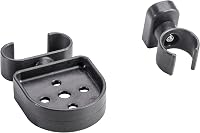
The NOVA Adjustable Cup Holder for Walkers attaches to straight or slanted tubes and fits tubing listed as 3/4 in, 7/8 in, or 1 in. It accommodates cups, cans, bottles, and mugs from 2.25 in to 3.75 in wide.
Check that a mounted accessory won't block the brake cable, folding parts, or your hands. Follow the rollator and accessory instructions, and remove anything that shifts or interferes with control.
What should you do before using an altered rollator?
Use only parts approved for your model, installed as directed. Before walking, confirm that handles are secure and the brakes work as the rollator manual explains.
If the frame or handles were modified already, ask the manufacturer or a qualified provider to inspect them. Don't use the rollator if a handle rotates, a clamp slips, or a brake is obstructed.
If you need support while moving between a rollator and a seat or toilet, use equipment designed for that task. Our guide to drop arm commode use explains how that commode feature supports transfers.
Which rollator walker arm extensions should you choose?
For rollator walker arm extensions, choose only a model-specific part approved by the rollator's manufacturer. If the maker does not approve one, keep the handles within their built-in adjustment range and ask a therapist or mobility equipment provider to check the fit.
Choose padded grips when your concern is the feel of the handle, and a cup holder when you need a place for a drink. Neither is a safe way to raise the rollator handles.
Frequently asked questions
Can you add arm extensions to any rollator?
No. An extension should be approved for the exact rollator model and installed as its maker directs.
Handle height and position affect how you hold the frame and reach the brakes.
Check the manual or contact the manufacturer before fitting parts, and don't use a homemade extension.
How do I know if rollator handle extensions will fit?
Check the rollator's brand and model, then look for an extension the manufacturer identifies as compatible. Confirm the mounting method and any installation steps in the manual.
A part that fits around a tube can still be unsuitable if it changes the handle position or brake access.
Can I raise rollator handles with extra grips?
Padded grips can change comfort and the feel of the handle, but they aren't arm extensions and shouldn't be used to raise the handle height. Keep the grips secure and the brake levers easy to reach.
If the handle height is wrong, ask the maker or a mobility professional about approved options.
What should I do if my rollator handles feel too low?
Check the manual for the handle-height adjustment range and the fitting instructions for your model. If the handles still feel too low, ask the manufacturer or a physical or occupational therapist to review the fit.
Don't add tubing, spacers, or other improvised parts.