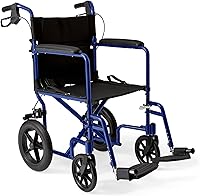
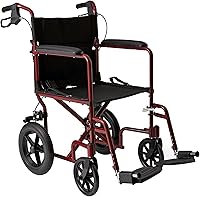
Medline Reclining Wheelchair Weight: How Much?
The Medline reclining wheelchair weight listed for the two Medline models here is about 65 to 66 lb as packed, while the Vive Mobility model listed here is 60 lb as packed. Use those numbers as a starting point for lifting and vehicle planning, and check the exact size for the model you choose.
On this page (10 sections)
- How much does a Medline reclining wheelchair weigh?
- Why does chair weight matter for lifting?
- How do you lift a reclining wheelchair safely?
- How does seat size affect weight and fit?
- What recline range should you choose?
- How do you choose between these three models?
- Can a reclining wheelchair work for travel?
- How do you check fit before you order?
- What care helps a reclining wheelchair last?
- Which Medline reclining wheelchair weight should you plan for?
The Medline reclining wheelchair weight listed for the two Medline models here is about 65 to 66 lb as packed, while the Vive Mobility model listed here is 60 lb as packed. Use those numbers as a starting point for lifting and vehicle planning, and check the exact size for the model you choose.
Match weight to seat size and your plan for moving the chair. A chair that fits a room may still be hard to load into a car, so packed size matters as much as the number on the listing.
How much does a Medline reclining wheelchair weigh?
The two Medline models list package weights of 66 lb and 65.55 lb. The 66 lb model has a 20 in x 18 in seat, and the 65.55 lb model has an 18 in seat.
These are package weights, not the weight of the chair alone. Packaging can change the total you lift, so use the packed total for transport planning.
Both use nylon upholstery meant for easy cleaning. The totals are close, so let seat size and recline range guide your choice more than the small weight gap.
If you will lift the chair often, also compare packed dimensions. A slightly lighter chair can still be awkward if it is wide, tall or hard to fold small.
Why does chair weight matter for lifting?
Chair weight matters because a reclining wheelchair moves as one bulky load. The frame, wheels, leg rests and upholstery make the lift harder than the number alone suggests.
A chair near 65 lb can be too much for one person to lift into a trunk safely. Reaching, twisting or raising it to shoulder height raises the risk of back strain, so two people are safer for most caregivers.
Seat width also changes the lift. The 20 in x 18 in Medline model gives more room for the user, but its wider frame can be harder to grip and turn than the narrower 18 in Medline model.
Plan for the hardest lift on your usual route. Lifting into a low trunk, a high SUV or up stairs each puts a different strain on the lifter.
How do you lift a reclining wheelchair safely?
Use two people, keep the chair close, and bend your knees instead of pulling with your back. Clear the path first, lock the brakes, and set the chair as the maker directs for transport.
The second person should take the opposite side. Agree on a count before you lift, keep the load near your hips, and set the chair down if you need to turn or change grip.
Remove only parts meant to come off. The Medline 18 in model includes swing-away elevating leg rests, plastic foot plates, rear anti-tippers and locking wheel brakes.
The Vive Mobility model has swing-away, height-adjustable leg rests that are easily removable for transfers.
Keep removable parts secure so they do not shift in the trunk. If you cannot lift the chair safely, ask for help or use a ramp or vehicle service made for mobility equipment.
How does seat size affect weight and fit?
Seat size affects weight and comfort. The Medline 20 in x 18 in model gives a wider seat than the 18 in x 18 in Medline model, which helps a larger user sit with more room.
A wider seat can make transfers harder for some people. Desk-length arms and elevating leg rests help, but arm height and seat depth still need to match the user.
Measure seat width at the widest point and seat depth from the back to the front edge. Compare those numbers with the user's hips, thighs and lower legs, and leave space for clothing, posture aids and a wheelchair tray table.
The Vive Mobility model lists product dimensions of 50 x 27 x 48 in and 60 lb. Check the full chair size, not just the seat, since a workable seat can still be too tall or too long for a tight room or vehicle.
For a broader look at seat width and chair type, start with wheelchairs for adults and then narrow the list by recline style.
What recline range should you choose?
The Medline 20 in x 18 in model reclines up to 180 degrees in infinite positions. The Medline 18 in model reclines from 90 to 140 degrees with a hydraulic mechanism.
A full 180 degree recline suits long rest and a near flat position. The Vive Mobility model also reclines to a true 180 degrees and locks at multiple angles for pressure relief.
A 90 to 140 degree range suits posture change and leg elevation in a smaller space. Check the room behind the chair, since head and heels need clear space when lowered.
Head support matters when reclined. The Medline 18 in model has a 22 in high seatback and 10 in removable headrest, while the Vive Mobility model has an integrated headrest and detachable cervical cushion.
Compare reclining wheelchairs with head support and manual wheelchair headrests if needed.
How do you choose between these three models?
Choose by seat size, recline range and lift plan, not by weight alone.
Choose the Medline 20 in x 18 in model for a wider seat with desk-length arms, elevating leg rests and recline up to 180 degrees. Its listed package size is 38 x 37 x 13 in at 66 lb, so measure storage and your vehicle opening first.
Choose the Medline 18 in model for a narrower seat, a 300 lb weight limit and recline from 90 to 140 degrees. Its carbon steel frame, silver vein finish and 22 in high seatback suit users who need head support without flat recline.
Choose the Vive Mobility model for full recline and head support. It has dual calf pads, swing-away leg rests, padded armrests, a reinforced backrest, 24 in rear wheels and 8 in front casters, and lists 60 lb with product dimensions of 50 x 27 x 48 in.
For more recline options, see best reclining wheelchairs for seniors and reclining wheelchairs with elevating leg rests.
Can a reclining wheelchair work for travel?
A reclining wheelchair can work for travel if the packed size fits your vehicle and you have help lifting. Weight alone does not make a chair travel ready.
Start with the trunk or rear cargo area. Measure opening width, height and depth with seats folded and compare with packed dimensions, not just seat size.
Rollators and wheelchairs serve different needs, so use rollator vs wheelchair if you are unsure which aid fits the trip. A rollator is lighter for short walks, while a reclining wheelchair suits seated rest, leg elevation or transfer support.
For air travel or long car trips, check help at each stop for transfers, restroom stops and loading. A lightweight wheelchair for travel may be easier in airports but may not give the same recline.
Pack removable cushions, headrests or foot plates so they will not shift. Clean the wheels and check locking brakes after the trip.
How do you check fit before you order?
Measure the user, the chair and the space it must pass through. That three-part check prevents most fit problems.
Measure seat width, seat depth, arm height and foot plate position for the user. Then measure doorways, hallway turns, the space where the chair will sit while reclined, plus your vehicle cargo area and storage space.
If possible, ask the user to sit in the chair. Check whether heels rest on the foot plates, arms support the forearms, and the head feels supported when reclined.
All three models support up to 300 lb. That limit applies to the user plus any items carried on the chair.
If the user needs more leg elevation, compare reclining wheelchairs with elevating leg rests. If head support is the main issue, compare reclining wheelchairs with headrests.
What care helps a reclining wheelchair last?
Clean the upholstery, check the brakes and keep the recline mechanism free of dirt.
Wipe nylon upholstery with a soft cloth and mild cleaner made for the material. The Medline models use nylon for easy cleaning.
The Medline 18 in model has a carbon steel frame with silver vein finish that is easy to maintain.
Check locking wheel brakes before each transfer. They should hold on a firm surface and release fully.
Inspect leg rests and foot plates for wear. Swing-away elevating leg rests should move smoothly and lock in place, and cracked or bent parts should be replaced.
Keep wheels clean and check for damage after outdoor use. The Medline 18 in model has composite mag-style wheels with precision sealed wheel bearings.
The Vive Mobility model has 24 in rear wheels and 8 in front casters.
Store the chair in a dry place and keep recline controls clean.
Which Medline reclining wheelchair weight should you plan for?
The Medline reclining wheelchair weight to plan for is about 65 to 66 lb as packed for the two Medline models here. Add help for lifting, and measure the packed size before you choose a model.
Pick the 20 in x 18 in Medline model for a wider seat and recline up to 180 degrees. Pick the 18 in Medline model for a narrower seat, a 22 in high seatback and recline from 90 to 140 degrees.
Pick the Vive Mobility model if full recline, calf pads and neck support matter most.
For your next step, compare best reclining wheelchairs for seniors if comfort is the top goal. If lifting is the main concern, check best lightweight wheelchairs for travel before you buy, and look at wheelchairs for adults to confirm the seat size fits the user.
Frequently asked questions
How much does a Medline reclining wheelchair weigh?
The two Medline models compared here list package weights of 66 lb and 65.55 lb. Those figures help with lifting and vehicle planning, but packaging can add weight, so confirm the chair weight and packed size for the exact model before you order or plan a lift.
Can one person lift a reclining wheelchair into a car?
Some people can, but a chair near 65 lb is heavy for one person to lift safely. Remove detachable parts only if the maker allows it, fold it as directed, use two people when possible, and lift with your legs rather than your back.
Is a lighter reclining wheelchair better for travel?
A lighter chair is usually easier to load, store and carry, but seat width, recline range and support also matter. Compare the packed weight and dimensions with your vehicle space, and think about whether you need full recline or only the 90 to 140 degree range.
What should I measure before buying a reclining wheelchair?
Measure the user for seat width and depth, then measure doorways, hallway turns and your vehicle cargo space. Check the packed dimensions as well as the chair dimensions, since a chair that fits a doorway may still be hard to load into a trunk or rear seat.