9 Best Lightweight Folding Walkers for Seniors (November 2026)
The best lightweight folding walkers for seniors include the Medline Lightweight Two Button Folding Walker for a simple daily walker, the Stander Space Saver Walker for the smallest storage footprint, and the PLANET WALK Super Lightweight Rollator Walker for walking and seated breaks.
On this page (5 sections)
The best lightweight folding walker for most seniors is the Medline Lightweight Two Button Folding Walker, because its 6 lb aluminum design is easy to lift while its 5 in wheels and 300 lb capacity provide practical daily support. It suits a senior who wants help at home without giving up the ability to carry the walker to a car or store it in a small space.
Choose Stander for the smallest folded footprint, or PLANET WALK when a seat matters during longer walks. A standard walker is usually lighter than a rollator because it has fewer parts and no seat, so it is simpler to lift and turn in tight rooms.
A rollator can be more useful when you need to sit during longer trips, carry small items or move over outdoor surfaces with larger wheels. The trade-off is added weight, wider frames for some models and brake use that needs learning before regular trips.
If you are comparing walker styles, start with What Is a Lightweight Rollator? What to Know and our guide to the best lightweight walkers for seniors.
Those pages help you decide whether seated rest, storage or a plain frame should come first.
Our score weighs listed specs and features against the needs behind this search. We compared portability, folding design, height adjustment, wheel style, capacity and the trade-off between standard support and seated rest.
Weight alone does not settle the choice, because a light frame may have no seat and a heavier rollator may make a long outing easier. Height range also matters, since handles set too high or too low can make walking less comfortable over time.
Folded size deserves a close look before you order for travel. A walker that folds flat may fit a closet or car trunk more easily, while a rollator still needs room for its wheels, seat and brakes.
Capacity and wheel style should also guide your choice. Stay within the stated limit to protect the frame, and pick smaller wheels for smooth indoor floors or larger wheels for paths and uneven ground.
Our picks at a glance
-
1
 Best for a simple daily walker
Medline Lightweight Two Button Folding Walker
9.7/10 our score
See it on Amazon -
2

-
3
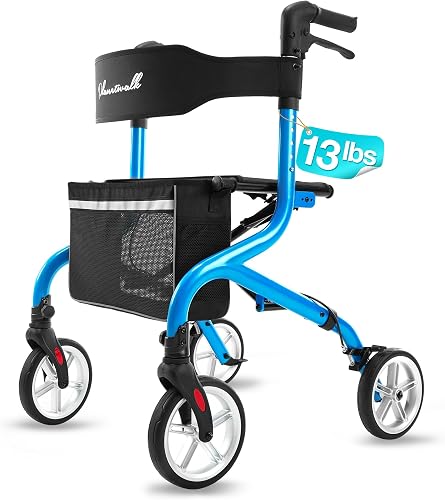 Best for walking and seated breaks
PLANET WALK Super Lightweight Rollator Walker
9.6/10 our score
See it on Amazon
- 4
 Check it
BlessReach Lightweight Foldable Rollator Walker with Seat
Best for a padded seat and storage - 5
 Check it
Vive Mobility Lightweight Walker for Seniors
Best for narrow indoor paths - 6
 Check it
HOMLAND 16 Pounds Lightweight Walkers for Seniors
Best for a narrow seated rollator - 7
 Check it
Loyoda Folding Walker with 2 Skis
Best for a very light ski-glide walker - 8
 Check it
Vive Ultra Lightweight Rollator Walker with Seat
Best for a compact seated rollator - 9
 Check it
Loyoda Folding Walker with 2 Precut Tennis
Best for floor-friendly glide balls
The best lightweight folding walkers for seniors
The best choice depends on whether you need the lowest lifting weight, a very small folded size, narrow indoor movement or a seat. The products below are ordered by score, with the highest-scoring option first.
Medline Lightweight Two Button Folding Walker: Best for a simple daily walker
- 6 lb lightweight design
- 5 in wheels
- 300 lb capacity
- 32 to 38 in height adjustment
A light aluminum walker with two-button folding and 5 in wheels. It suits seniors who want a standard walker that can move across indoor and outdoor surfaces.
Pros
- Lightest standard walker in this group
- Two-button folding
- Height adjusts from 32 to 38 in
Cons
- No seat
- Standard walker design has fewer resting features
The Medline is the strongest all-purpose pick for a senior who wants a standard walker without a seat. At 6 lb, it is light enough to lift into storage or a vehicle, and the two-button mechanism lets each side fold for transport.
Its aluminum frame supports up to 300 lb. The height adjusts from 32 to 38 in, which covers users between 5 ft 5 in and 6 ft 4 in according to the product information.
The 5 in wheels are designed for indoor and outdoor use. The 17 in space between the grips gives your hands room for a natural walking pace, while the ergonomic grips may help reduce hand fatigue during routine use.
Choose the Medline if you want the lightest standard walker in this group with useful wheel support. It is not the right choice if you need a built-in seat or rollator storage.
Stander Space Saver Walker: Best for the smallest storage footprint
- Folds to a 5 x 7 in footprint
- 8 lb weight
- 6 in fixed wheels
- 32.5 to 39 in handle adjustment
The Stander folds four times smaller than an average walker and arrives assembled. Its fixed 6 in wheels and rear ski glides suit buyers focused on compact storage.
Pros
- Very compact when folded
- No assembly required
- Padded adjustable handles
Cons
- Fixed front wheels
- Heavier than the Medline
The Stander Space Saver is the best pick when folded storage matters most. Its EZ Fold-N-Go design folds four times smaller than an average walker into a stated 5 x 7 in footprint, so it can fit in a tight closet or vehicle area.
It weighs 8 lb and supports up to 300 lb. The padded handles adjust from 32.5 to 39 in, and the standard size is intended for many users from 5 ft 6 in to 6 ft 3 in.
The two 6 in front wheels stay fixed, while rear ski glides help the frame move across indoor and outdoor surfaces. The walker arrives assembled, so setup is limited to unfolding it and adjusting the handle height.
Pick Stander when compact folding is more important than the lowest possible weight. If you want swivel front wheels, this model is not the match because its front wheels are fixed.
PLANET WALK Super Lightweight Rollator Walker: Best for walking and seated breaks
- 13 lb weight
- 8 in rubber wheels
- Foldable seat
- 300 lb capacity
A 13 lb rollator with a seat, backrest, storage bags and 8 in rubber wheels. It fits seniors who can walk but need regular breaks and outdoor maneuverability.
Pros
- Seat and backrest
- Large 8 in wheels
- One-hand folding
Cons
- Wider and heavier than standard walkers
- Requires installation
PLANET WALK is the best seated option for seniors who can walk but need frequent breaks. Its 13 lb aluminum rollator has a foldable seat, a backrest, storage bags and four 8 in rubber wheels.
The seat is 18.5 in wide, and the handles adjust from 35 to 39 in for users listed between 4 ft 8 in and 5 ft 8 in. The frame supports up to 300 lb and has two-way parking brakes.
The front wheels rotate 360 degrees, which helps with turning, while the rubber tread is intended for indoor and outdoor surfaces. The rollator folds to 26.5 x 10.9 x 35 in, making it easier to place in a vehicle trunk than a full-size frame.
The PLANET WALK needs installation, with the product information describing a setup time of about 10 minutes. Choose it for a lighter seated rollator with large wheels, but measure your doorways because the frame is 25 in wide.
BlessReach Lightweight Foldable Rollator Walker with Seat: Best for a padded seat and storage
- 19.18 lb hybrid frame
- 300 lb capacity
- 5-position handle
- Flip-up seat and storage pockets
This seated rollator combines an aluminum front frame with carbon steel rear supports. Its flip-up seat, storage areas and two-mode brake suit users who value rest stops and carrying space.
Pros
- Flip-up seat
- Under-seat pouch and side pockets
- 5-position handle adjustment
Cons
- Heaviest rollator in this group
- Wider than narrow walker frames
BlessReach is aimed at users who want a seated rollator with storage and a stable hybrid frame. Its front frame uses aluminum and its rear supports use carbon steel, giving the walker a stated 19.18 lb weight and 300 lb capacity.
The handle has 5 positions for users from 5 to 6 ft. Its flip-up seat allows the frame to fold, while the under-seat pouch and side pockets give you places for groceries, medicines or personal items.
The brake works in two ways: lift the handle to slow down and press down to lock the rollator for parking. Cat-eye reflectors are included for visibility, and the tubing is 30 mm wide with a 1.4 mm wall thickness.
This rollator suits users who value a seat and storage more than minimum lifting weight. At 25 in wide, it needs more doorway clearance than the HOMLAND or Vive narrow options.
Vive Mobility Lightweight Walker for Seniors: Best for narrow indoor paths
- 9.5 lb weight
- Narrow open frame
- 6 in wheels
- 33 to 39 in handle adjustment
A narrow folding walker with an open frame, hand brakes and 6 in wheels. It suits seniors who need room for turns through small hallways and crowded areas.
Pros
- Narrow open-frame design
- One-step folding
- Pre-assembled
Cons
- No seat
- Heavier than the lightest standard walkers
The Vive Mobility Lightweight Walker is the best standard-style option for narrow paths. Its open-frame design leaves out obstructive rear bars, which can help when turning through small hallways or crowded areas.
The frame weighs 9.5 lb, supports up to 300 lb and folds in one step. A locking system keeps it folded for storage, while the 33 to 39 in handle range gives you room to adjust the walker for posture and grip comfort.
Its 6 in wheels are designed for carpets, tile, pavement and uneven surfaces. Hand brakes provide stopping control, so this model feels closer to a compact rollator in use even though it has no seat.
Vive Mobility says the frame has a lifetime guarantee, and the product is described as FSA and HSA approved. Choose it when a narrow open frame matters, but pick a lighter standard walker if lifting weight is your first concern.
HOMLAND 16 Pounds Lightweight Walkers for Seniors: Best for a narrow seated rollator
- 16 lb weight
- 12 x 12 in padded seat
- 300 lb capacity
- 21.9 in front width
This narrow rollator adds a padded seat, removable backrest and storage bag while keeping the front width at 21.9 in. It suits users who need indoor access and occasional rests.
Pros
- Narrow front width
- Padded seat and backrest
- Removable backrest
Cons
- Heavier than non-seated walkers
- Use requires following brake and surface precautions
HOMLAND is a practical choice when you want a narrow rollator with a seat. The front width is 21.9 in and the rear width is 24.4 in, which can help it pass through many standard indoor doorways.
That narrow shape suits a home with tight turns between rooms. It can also help in a smaller apartment where a wider rollator may scrape or stop at a door frame.
It weighs 16 lb and supports up to 300 lb. The padded seat measures 12 x 12 in, and the handle adjusts through 5 positions from 30 to 34.5 in.
The lower handle range may suit shorter users who need a comfortable grip without bending forward. Check your wrist height before use so your arms can stay relaxed while you walk.
The removable backrest saves space when the walker is folded. That can help when the rollator goes into a car trunk or a small storage corner.
An under-seat storage bag has reflective strips, and the frame uses four puncture-resistant wheels. The bag gives a place for small items so your hands can stay free for support.
Follow the instructions carefully with this model. The product information warns against forcing the walker while the brakes are locked, using it on slopes, stairs or curbs, exceeding the weight capacity, or storing it in extreme temperatures or moisture.
Those limits are worth taking seriously during daily use. Gentle handling and a dry storage spot help keep the brakes, wheels and frame working as intended.
Loyoda Folding Walker with 2 Skis: Best for a very light ski-glide walker
- 6.03 lb weight
- 5 in wheels
- Folding frame
- Replaceable ski glides
A 6.03 lb folding walker with 5 in wheels and ski glides. It is a strong fit for seniors who want low lifting weight and a sliding aid for routine movement.
Pros
- Very light
- Folding design
- Skis can replace round feet
Cons
- No seat
- Less information about height adjustment in the data
The Loyoda with 2 Skis suits seniors who want a very light folding walker with a sliding option. It weighs 6.03 lb, has 5 in wheels and includes ski glides that can replace the pre-installed round feet.
That low lifting weight can make a real difference when the walker goes in and out of a car. It may also suit a caregiver who needs to move the frame often between rooms.
The updated handle is intended to improve stability, but the information does not give a height range or weight capacity. Measure the user and check those details before ordering if either one affects fit or safety.
Fit matters because a walker set at the wrong height can make walking tiring. A clear capacity figure also helps you stay within the design limits of the frame.
Its 20.47 x 26.42 x 37.87 in product dimensions describe a full-size frame, while the folding design helps with transport and storage. Measure your storage space before ordering so the folded shape will fit.
The ski option may be useful for moving across suitable indoor floors without lifting each side. That sliding action can feel smooth on the right surface, but it is different from rolling wheels.
Choose this Loyoda when low weight and replaceable ski glides are the main goals. The Medline is a better choice when you need a clearly stated height range and capacity.
Vive Ultra Lightweight Rollator Walker with Seat: Best for a compact seated rollator
- 14 lb weight
- 6 in wheels
- 14 x 12 in padded seat
- 31 to 36 in handle adjustment
A 14 lb foldable rollator with a padded seat, backrest and under-seat storage. Its 24 in frame gives seated support without the weight of the larger BlessReach.
Pros
- Light seated rollator
- Padded seat and backrest
- 6 in wheels for indoor and outdoor use
Cons
- Requires assembly
- Seat is narrower than some full-size options
The Vive Ultra Lightweight Rollator is the best compact seated option for users who want a lighter frame than the BlessReach. It weighs 14 lb, supports up to 300 lb and folds for storage and transport.
That weight sits between the lightest standard walkers and the heavier seated models. It suits a user who wants a seat without carrying the heaviest frame in the group.
The frame is 24 in wide and 23 in deep. Its padded seat is 14 in wide and 12 in deep, with a seat height of 21 in from the floor.
Seat height matters for sitting down and standing up with less strain. Compare that 21 in height with the user before you rely on it for frequent rest breaks.
The handles adjust from 31 to 36 in. That range can help shorter and taller users keep a more upright posture while walking.
Six-inch wheels are designed for indoor and outdoor movement. They can suit smooth floors and paved paths, though very rough ground may still be harder to cross.
Under-seat storage gives you room for essentials, while the backrest adds support during seated breaks. That setup can help on errands where a phone, keys or a small item needs a place to go.
This rollator requires assembly, although no tools are needed and the product information describes setup as taking minutes. Set it up indoors and test the brakes before the first trip.
Pick it when you want a seat, storage and a lighter rollator, but compare the seat height with the user's ability to sit and stand.
Loyoda Folding Walker with 2 Precut Tennis: Best for floor-friendly glide balls
- 7.01 lb weight
- 5 in wheels
- Precut tennis glide balls
- 32 to 38 in height adjustment
A folding aluminum walker with 5 in wheels, precut tennis glide balls and a 350 lb capacity. It suits users who want a light frame and glide balls designed to protect common hard floors.
Pros
- Highest stated capacity here
- Precut glide balls included
- Trigger-release folding
Cons
- No seat
- Tennis glides are a different setup from ski glides
The Loyoda with 2 Precut Tennis Balls is the best fit for users who want a light walker with floor-friendly glide balls. It weighs 7.01 lb, has 5 in wheels and includes 2 precut tennis glide balls designed to avoid scuffing common hard floors.
That light frame suits daily movement around the home. The glide balls may help protect wood, linoleum and similar floors from marks during routine walks.
Its aluminum frame supports up to 350 lb, the highest stated capacity in this group. Height adjusts from 32 to 38 in, and the trigger-release mechanism folds the walker for transport or storage.
The height range gives many users room to set the handles at a comfortable level. A relaxed arm position can make longer walks feel easier and reduce strain.
The tennis balls arrive precut so they can slide onto the walker legs. That setup differs from the ski-glide design on the other Loyoda, so choose based on the floor surfaces and movement style you prefer.
Precut balls can simplify fitting compared with cutting a ball to size. Check the fit after fitting and replace them when they wear down or stop gliding well.
This model suits a buyer who wants a higher stated capacity than the Medline or Stander. Choose the Medline instead if the lowest weight and two-button design matter more.
How do you choose a lightweight folding walker?
Choose a standard walker when lifting weight and simple support matter most. Choose a rollator when a seat, storage or larger wheels will make daily trips easier.
What weight should a lightweight walker have?
A lightweight walker in this group weighs about 6 to 9.5 lb when it has a standard frame. Seated rollators weigh more because they add wheels, brakes, a seat, a backrest and storage.
The Medline weighs 6 lb, the Loyoda with ski glides weighs 6.03 lb and the Stander weighs 8 lb. The rollators range from 13 lb for PLANET WALK to 19.18 lb for BlessReach.
Should you choose wheels, skis or tennis glides?
Choose wheels when you need to roll across mixed surfaces. Choose ski glides or tennis balls when you prefer sliding support on suitable indoor floors.
The Medline has 5 in wheels, while the Stander has fixed 6 in front wheels and rear ski glides. The Loyoda models use different glide choices, so check that the feet match the flooring and movement style in your home.
How much height adjustment do you need?
Set the handles so your arms stay relaxed while you hold the walker. The Medline and both Loyoda models adjust from about 32 to 38 in, while the Vive Mobility reaches 39 in.
A correct range matters more than a large number of adjustment positions. If the user's height falls near the edge of a stated range, confirm the fit before ordering.
Does the walker need to fit through a doorway?
Measure the narrowest doorway, hallway turn and storage space before choosing a rollator. The HOMLAND has a 21.9 in front width, Vive Ultra is 24 in wide, and PLANET WALK and BlessReach are 25 in wide.
A difference of a few inches can decide whether a rollator passes smoothly. It can also affect turning in a bathroom, kitchen or small entryway.
A folded size also matters if the walker goes in a car. The Stander has the smallest stated folded footprint, while the seated models need enough room for their frames and seats.
Measure the trunk or closet before you decide, not after delivery. A frame that fits when open may still be awkward to lift or store when folded.
Think about where the walker will live most of the time. A model used daily at home needs clear paths, while a travel model needs a shape that fits your vehicle.
If space is very tight, a standard walker may be easier to store than a rollator. If seated breaks matter more, make room for the wider frame.
Standard walker or rollator: which is better for seniors?
A standard walker is usually the better choice for low weight and close support, while a rollator is better for users who need seated breaks. The right pick depends on how you walk, where you go and how often you need to rest.
Read [Is a Rollator Better Than a Walker?
The Basics](/is-a-rollator-better-than-a-walker/) before choosing between the two designs. That guide can help you sort out whether wheels, a seat and brakes fit your daily routine.
The Rollator vs Standard Walker: For Seniors comparison explains why wheels, brakes and seats change how a walker behaves. A rollator can move more smoothly, but it also needs brake control and more space.
A standard walker gives support through the arms and frame as you step forward. It tends to be lighter to lift, simpler to fold and easier to move through narrow indoor spaces.
A rollator lets you walk with wheels rolling ahead of you. That can reduce the effort of lifting the frame with each step, especially on longer trips.
The seat on a rollator changes the plan for a walk in a useful way. You can stop, lock the brakes, sit and rest before continuing, rather than finding a chair along the way.
Storage on a rollator can also help with small items. A bag or pouch can hold essentials, though you should stay within the stated weight limits.
Brakes need care and practice on a rollator. Test them before you sit, and learn how they behave on a slope before you use the walker in a busy place.
If walking is not safe or practical for longer trips, a walker may not be enough. Our guide to best wheelchairs for adults covers another mobility option, while best folding mobility scooters may help when you need powered travel.
How do you set up and care for a folding walker?
Unfold the frame fully before use, confirm that the folding locks engage, and adjust the handles to a comfortable height. Take a moment to check that both sides feel firm before you put weight on the walker.
Check wheels, glides and brakes regularly, especially after folding the walker for travel. A quick look for loose parts, worn glides or uneven brake action can catch small problems early.
Wipe the frame with a clean cloth and keep it dry after use. A dry storage spot helps protect metal parts, grips and wheels from needless wear.
Follow the product instructions for surfaces, storage and weight limits, and do not use a walker on stairs or curbs unless the instructions specifically allow it. The right surface matters for wheels, skis and tennis glide balls.
For rollators, test the parking brakes before sitting. Press and release them a few times so you know how the walker responds on the ground you are using.
Set the height so your shoulders stay relaxed and your elbows bend a little. That position can help you walk with better posture and less hand strain.
Store the folded walker away from damp floors, heat and direct moisture. If the walker travels often, check the locks and brakes after each trip.
Which lightweight folding walker should you choose?
Choose the Medline if you want the lightest standard walker with clearly stated height adjustment, wheels and capacity. Its light aluminum frame suits daily support without a seat.
Choose Stander if folded storage is the main problem, and choose PLANET WALK if you need a light rollator with a seat and larger wheels. Each pick solves a different part of the walking routine.
For narrow indoor movement, compare Vive Mobility and HOMLAND. Measure your doorways first, because a wider seated frame may not pass where a narrow one will.
For a floor-friendly glide setup, choose between the Loyoda ski model and the Loyoda tennis-ball model based on the surface you use most. One slides with skis, and the other uses precut tennis balls.
If rest breaks are part of the plan, look closely at seat size, seat height and brake use. A seat that is easy to reach can make a longer walk feel more manageable.
If travel is the priority, compare folded size and lifting weight before you compare features. The best walker is the one you can carry, store and use without hassle.
Set the handles to wrist height and test the walker in your home before a long trip. That short check can show whether the fit, wheels and brakes suit your daily paths.
Our top 3 picks at a glance
-
1
Best for a simple daily walker
Medline Lightweight Two Button Folding Walker
9.7/10 our score
See it on Amazon -
2
-
3
Best for walking and seated breaks
PLANET WALK Super Lightweight Rollator Walker
9.6/10 our score
See it on Amazon
Frequently asked questions
What is the best lightweight folding walker for seniors?
The Medline Lightweight Two Button Folding Walker is the best overall choice here because it weighs 6 lb, has 5 in wheels, adjusts from 32 to 38 in and supports up to 300 lb. Choose a seated rollator instead if regular rest breaks are part of the walking routine.
Are folding walkers safe for seniors?
A folding walker can be suitable when its height, wheel style and weight capacity match the user. Set the handles so your arms stay comfortable, confirm the frame is fully open and locked, and follow the instructions for brakes, glides and uneven surfaces.
What is the lightest walker in this roundup?
The Medline weighs 6 lb, making it the lightest walker here by the stated product weight. The Loyoda with 2 Skis weighs 6.03 lb, while the Loyoda with precut tennis balls weighs 7.01 lb.
Is a rollator better than a standard folding walker?
A rollator may be better when you need a seat, storage or larger wheels for outdoor movement. A standard folding walker may be better when you want a lighter frame and a simple support tool.
Compare the differences in [Is a Rollator Better Than a Walker?
The Basics](/is-a-rollator-better-than-a-walker/) and Rollator vs Standard Walker: For Seniors.
How do you choose a lightweight walker for travel?
Choose by folded size, lifting weight, wheel design and the space in your vehicle. The Stander folds to a 5 x 7 in footprint, while rollators add seats but weigh more.
Measure the storage area and doorway before you decide.