How to Install Bathroom Grab Bars for Seniors
Install bathroom grab bars into wall studs whenever possible, then check every screw, flange, and connection before use. Measure the user's reach and movement first so each bar supports a real transfer or balance point.
On this page (8 sections)
- What should you do before installing bathroom grab bars?
- How should you choose the bar length and grip?
- How do you install a grab bar into a stud?
- What if there is no stud where the bar should go?
- Where should a toilet grab bar go?
- How do you install a grab bar on tile?
- How do you check that the installation is secure?
- Which grab bar suits your installation?
Bathroom grab bars for elderly installation should start with the user's movement path, then use the strongest suitable wall attachment. Mount into studs when possible, keep the grip easy to reach, and inspect the finished bar before use.
A grab bar is a support aid, not a towel bar. The wall, fasteners, flange, and bar must work together, especially beside a toilet or in a wet shower area.
What should you do before installing bathroom grab bars?
Watch how the user enters, sits, stands, turns, and reaches before choosing a location. Mark a comfortable grip point while the user is supervised, and keep the bar clear of doors, fixtures, controls, and moving shower equipment.
Check the wall surface and construction. Tile, drywall, plaster, cement board, and hollow partitions need different drilling and attachment methods.
Gather a tape measure, level, stud finder, pencil, drill, suitable bits, screwdriver, and the fasteners required for the chosen mounting method. Read the bar's installation instructions before drilling.
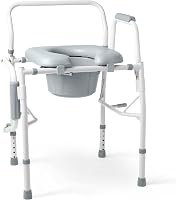
A commode chair may help with bathroom access during recovery, but it does not replace a properly attached grab bar.
How do you find a safe mounting point?
Find the studs behind the finished wall and confirm their position at every planned fastener. A stud finder can help, but verify the result with careful probing or a small test hole where appropriate.
Avoid guessing from the room's trim or nearby fixtures. Stud spacing and wall framing can vary, and a misplaced hole can leave the bar supported by weak material.
If the desired position does not line up with studs, use only a grab-bar anchor system designed for that wall and bar. For a separate look at temporary options, see suction cup bathroom grab bars and check each product's stated limits.
Ordinary plastic plugs are not a suitable substitute for a load-rated attachment.
How should you choose the bar length and grip?
Choose the length and shape that give the user a steady handhold without blocking movement. A shorter bar may suit a small transfer area, while a longer bar can provide support across more of a standing or turning path.
The Moen Bathroom Safety 12-Inch Peened Textured Grip is a 12 in stainless steel grab bar with a textured peened finish and concealed screws. It supports up to 500 lb when installed in a stud or with SecureMount anchors, which are sold separately.
Choose this bar when the user needs a shorter grip and a slip-resistant textured surface. The bar is ADA compliant, and Moen backs it with a limited lifetime warranty.
For more selection guidance, compare best bathroom grab bars for elderly before you mark the wall.
How do you install a grab bar into a stud?
Align the mounting holes with the stud, keep the bar level, and drive the specified screws without stripping them. The exact screw type and hole size should come from the bar's instructions and the wall material.
- Hold the bar at the marked position and confirm the user's reach.
- Mark every mounting hole through the flange.
- Drill pilot holes sized for the supplied or specified screws.
- Place the bar against the wall and start each screw by hand.
- Tighten the screws evenly until the flange sits firmly and flat.
- Fit any concealed covers according to the instructions.
Do not overtighten screws into a stud. A damaged screw head or crushed wall surface can make later inspection harder.
The Moen 8730 Bathroom Safety 30-Inch Stainless Steel is a 30 in stainless steel bar with a 1.25 in diameter, concealed screws, and a stainless finish. It supports up to 500 lb when installed in a stud or with SecureMount anchors, which are sold separately.
Its longer reach can help when the user needs support across more than one movement, but it also needs a clear wall area. Confirm that the full bar and both flanges avoid the shower door, controls, shelving, and towel storage.
See best long bathroom grab bars for longer support layouts. For wet-area placement, best shower grab bars for seniors covers related choices.
What if there is no stud where the bar should go?
Use a purpose-designed SecureMount anchor system or change the bar position to reach a stud. SecureMount anchors are sold separately for the Moen bars above, so confirm the anchor model and wall type before starting.
Follow the anchor instructions for drilling, insertion, tightening, and load limits. Hollow-wall anchors must engage the wall correctly, and the flange must sit flat without crushing tile or drywall.
Do not combine random anchors with a grab bar simply because the screw fits. If the wall is damaged, unusually thin, or difficult to identify, ask a qualified installer to assess it.
Where should a toilet grab bar go?
Place a toilet-side bar where the user can grip it before sitting and while standing, without twisting too far. Leave enough room for knees, clothing, the toilet lid, and any helper who may need access.
The Moen Brushed Nickel Bathroom Safety 8-Inch Wall Mounted Grab Bar with Integrated Toilet Paper Holder is an 8 in bar with a 1 in diameter, brushed nickel finish, and integrated toilet paper holder. It supports up to 250 lb, mounts to a stud, is ADA compliant, and has a limited lifetime warranty.
This compact design suits a toilet wall with limited space, but its 250 lb capacity is lower than the 500 lb capacity of the 12 in and 30 in bars above. Confirm that the stud location gives the user a straight, comfortable reach.
For toilet-area comparisons, see best bathroom grab bars for toilet. A how to clean a bedside commode guide can help if a bedside commode is also part of the care setup.
How do you install a grab bar on tile?
Drill slowly through the tile with a bit made for that surface, then attach the bar to the confirmed structure behind it. Use masking tape to help keep the bit from slipping, and avoid hammer action unless the tool and tile manufacturer allow it.
Measure twice before drilling. A tile hole is difficult to move, and a small placement error can prevent the flange from sitting flat.
Keep water away from the drill and electrical connections. Seal wall penetrations only with a method suitable for the tile, backer, and wet-area construction.
A shower chair may change where the user reaches. Review how to use a shower chair correctly before finalizing the bar height and angle.
How do you check that the installation is secure?
Inspect the bar before use, then apply controlled pressure in several directions. The bar should not rotate, slide, flex away from the wall, or make clicking sounds.
Check each screw head and flange cover. Look for cracked tile, crushed drywall, gaps behind the flange, or sealant that has separated.
Test the bar with increasing pressure while standing safely on the floor. Do not make a first test during a wet transfer or while stepping over a tub wall.
Recheck the fasteners after the first few uses and during routine bathroom cleaning. Stop using the bar if it moves, and repair the attachment before relying on it.
Which grab bar suits your installation?
Pick the 12 in Moen bar for a compact textured grip, the 30 in Moen bar for a longer support path, and the 8 in Moen bar for a toilet-side handhold with an integrated paper holder.
The 12 in and 30 in models support up to 500 lb with stud or approved SecureMount installation. The 8 in model supports up to 250 lb and is designed for a stud-mounted toilet-area position.
Before buying, measure the wall, locate the studs, and map the user's movement. For a coordinated bathroom setup, compare best Moen grab bars for bathrooms after deciding which support points matter most.
Frequently asked questions
Should bathroom grab bars be installed into studs?
Yes, mount bathroom grab bars into wall studs whenever the location allows. If a hollow wall is the only practical position, use an anchor system approved for the bar and follow its load instructions.
Do not rely on ordinary drywall plugs for a grab bar that may catch a person's full weight.
How high should a bathroom grab bar be installed?
There is no single height that suits every user. Place the bar where the person can grip it before stepping, sitting, standing, or turning, then confirm that it does not force a shoulder stretch or awkward wrist angle.
A qualified installer can help with difficult layouts.
Can a grab bar be installed on a tiled bathroom wall?
Yes, but drilling through tile needs the right bit, careful pressure, and accurate stud or anchor placement. Mark the holes before drilling, protect the tile from slipping, and seal penetrations as appropriate for the wall system.
Stop if the wall construction is unclear.
How do you check a newly installed grab bar?
Check that every fastener is tight, each flange sits flat, and the bar does not move, rotate, or pull away from the wall. Test it gradually with controlled pressure before anyone depends on it, and correct the mounting if you feel flex or movement.