How Long Do Mobility Scooter Batteries Last?
Most mobility scooter batteries last 2 to 3 years with regular use and charging, though light use can stretch that to 3 to 5 years. Sealed lead acid batteries, the most common type, usually deliver 300 to 500 charge cycles before range drops noticeably.
On this page (11 sections)
- How long do mobility scooter batteries last in real life?
- What range can you expect from one charge?
- Why do two identical scooters get different battery life?
- How does charging affect mobility scooter battery life expectancy?
- Does temperature change how long batteries last?
- What signs show a battery has reached the end of its life?
- How do you check the size before you buy a replacement?
- When should you replace batteries instead of repairing them?
- Can lithium batteries make scooter batteries last longer?
- How can you get the most years from your batteries?
- How long do mobility scooter batteries last: the bottom line
Most mobility scooter batteries last 2 to 3 years, and that figure assumes you charge them fully after use and do not leave them discharged. If you ride only once a week, the same batteries may last longer because they see fewer cycles.
That short answer hides a lot of variation. Battery type, amp hour size, how far you ride, and how you store the scooter all change the result.
This guide breaks down each factor so you can judge your own battery honestly.
How long do mobility scooter batteries last in real life?
Sealed lead acid batteries typically last 300 to 500 full charge cycles. At one full cycle per week, that works out to roughly 6 to 10 years in theory, but calendar aging pulls most batteries down to 2 to 3 years first.
Calendar aging is the quiet factor. Even a battery that sits in a garage slowly loses capacity as its plates age and its electrolyte changes.
A scooter used daily will wear out by cycles first, while a scooter used monthly will wear out by time.
Lithium batteries last longer by cycle count, often 1,000 cycles or more, but they cost more and need a compatible charger and controller. Most travel scooters still ship with sealed lead acid because the cost is lower and the charger is simple.
What range can you expect from one charge?
A fresh pair of 12V 12Ah sealed lead acid batteries in a travel scooter is often rated for about 10 to 15 miles per charge under controlled test conditions. You should treat that number as a ceiling, not a promise for your street, your weight, and your weather.
Range drops when you carry more weight, climb hills, ride into wind, or run on soft ground. Cold weather also cuts usable range because the chemistry slows down, even though the battery may recover some of that capacity when it warms up.
A larger battery, such as a 12V 20Ah unit, stores more energy and can push range higher in the same scooter if it fits. Capacity in amp hours tells you how much charge the battery holds, so 20Ah holds about two thirds more than 12Ah at the same voltage.
Why do two identical scooters get different battery life?
The biggest reason is how deeply you discharge the battery before recharging. Lead acid batteries lose life fastest when they are run to empty and left sitting that way.
Short trips that use 20 percent of the charge are far easier on the battery than daily trips that use 80 percent. If you regularly ride until the scooter slows or stops, you are shortening the life of every cycle.
Charging habits matter just as much. A full charge after each ride keeps the battery ready and limits sulfation, which is the buildup of crystals on the plates when a lead acid battery sits discharged.
Leaving a battery half charged for weeks does similar damage.
How does charging affect mobility scooter battery life expectancy?
Charge after every ride, even a short one, and let the charger finish. Most scooter chargers move to a float stage when the battery is full, and that stage tops off the charge without boiling the electrolyte.
Use only the charger matched to your battery type and voltage. A lithium battery needs a lithium profile, and a sealed lead acid battery needs a lead acid profile, because the voltage limits differ.
Unplug the charger once it shows a full charge, but do not leave the scooter uncharged for long stretches. If you store the scooter for a month, check the charge and top it off, since a stored lead acid battery loses about 1 to 2 percent per month in cool storage and more in heat.
Does temperature change how long batteries last?
Yes, and in both directions. Heat ages a battery faster, while cold limits the power you can use today.
A scooter stored in a hot garage ages sooner than one stored in a cool, dry room.
Cold does not usually damage the battery the way heat does, but it does shrink range on the day you ride. If your scooter seems weak in January and strong again in April, temperature may be the main cause rather than permanent wear.
Avoid charging a battery that is far below freezing unless the maker allows it. Let the scoop warm to room temperature first, then charge it fully before your next ride.
What signs show a battery has reached the end of its life?
The clearest sign is range loss that does not come back after a full charge. A battery that once covered your usual route now struggles on the same route, even in mild weather, is telling you its capacity has fallen.
Other common signs include a scooter that slows under load, a charger that finishes unusually fast because the battery cannot accept charge, and a case that bulges or shows swelling. Corrosion on terminals and a battery that feels warm during normal charging can also point to trouble.
If you suspect mobility scooter batteries not holding charge, test both batteries in the pair, since one weak unit can make the whole scooter act weak. Replace the pair together when one has failed.
How do you check the size before you buy a replacement?
Measure the battery box and read the label on your old battery for voltage, amp hours, and terminal type. Most travel scooters use two 12V batteries in series to make a 24V system, so a single 12V battery is only half of what you need.
Record the length, width, and height in inches, plus the terminal position. A battery with the right capacity will not help if it is too tall for the box or if the terminals land in the wrong spot for your cables.
Our guide to a mobility scooter for adults walks through sizing and features when you are choosing a scooter, and the same measurements apply when you shop for batteries alone. Compare your old battery against options in best mobility scooter batteries before you order.
Which replacement batteries suit most travel scooters?
A 12V 12Ah pair is the standard size for many travel scooters, including Pride Go Go models. It fits a compact box, keeps weight manageable, and matches the original battery in most basic travel scooters.
The ExpertPower EXP12200 12V 20Ah is a single 12V 20Ah sealed lead acid battery with AGM construction, sealed and maintenance free. It suits riders who want more capacity than a 12Ah battery in a scooter that can physically fit the larger case at 7.13 x 3.03 x 6.57 inches.
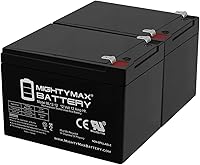
The Mighty Max Battery 12V 12AH Replacement Battery comes as a 2 pack of 12V 12Ah sealed lead acid batteries for Pride Mobility GoGo scooters. Each battery measures 5.94 x 3.86 x 3.98 inches with F2 terminals, and the pack covers the pair most scooters need.
The Casil 12V 12Ah SLA AGM Battery also comes as a 2 pack, aimed at Go-Go Elite Traveller SC40E and SC44E models. Each battery measures 5.94 x 3.86 x 3.74 inches, and Casil describes it as a direct replacement for 12V 12Ah scooters.
When should you replace batteries instead of repairing them?
Replace the batteries when range has fallen below what your daily route needs, even after a full charge and a terminal cleaning. At that point, no repair can restore lost capacity in a sealed lead acid battery.
Check terminals and cables first, because corrosion or a loose connection can mimic a dead battery. Clean the terminals, tighten the connections, and charge both batteries fully before you decide.
If one battery tests weak and the other tests strong, still replace both as a pair. A new battery paired with an old one will be limited by the old battery, and the new one may be overcharged trying to keep up.
Can lithium batteries make scooter batteries last longer?
Lithium batteries do last longer in cycle count and weigh less, but they only help if your scooter and charger are built for them. A lithium battery can often deliver 1,000 or more cycles, compared with 300 to 500 for lead acid.
The trade off is cost and compatibility. You need a charger with a lithium setting, and some older scooters cannot use lithium safely because the controller and charging voltage do not match.
Check your manual or dealer before you switch types.
If your scooter already supports lithium, compare options in best mobility scooter lithium battery. If it does not, a fresh sealed lead acid pair is usually the safer and cheaper path.
How can you get the most years from your batteries?
The habits that add years are simple: charge after every ride, keep the battery full, store it cool and dry, and avoid deep discharge. Those four habits matter more than any additive or trick.
Ride within your range instead of pushing to empty, and charge as soon as you return home. Store the scooter indoors when you can, and top off the charge if it sits unused for more than a month.
When the pair finally fades, weigh the scooter itself before you buy. Our notes on how to get rid of mobility scooter can help if you are moving to a new model, and brand specific pages such as best pride go go scooter battery replacement, best vive mobility scooter battery replacement, and best drive scout scooter battery narrow the search to your exact scooter.
How long do mobility scooter batteries last: the bottom line
Plan on 2 to 3 years for sealed lead acid batteries used regularly, longer for light use, and shorter for daily deep discharge. Your real number will sit somewhere in that range based on trips, weight, hills, and storage.
Match the voltage, amp hours, size, and terminals of your old battery, replace the pair together, and charge fully after each ride. Those steps give you the longest honest life from the batteries you buy.
Frequently asked questions
How long do mobility scooter batteries last?
Most sealed lead acid mobility scooter batteries last 2 to 3 years with daily or near daily use. Light use, short trips, and consistent full charging can extend life toward 3 to 5 years, while deep discharge and long storage without charging shorten it.
How many miles can a mobility scooter go on one charge?
Range depends on battery capacity, scooter weight, rider weight, terrain, and temperature. A fresh 12V 12Ah pair in a travel scooter often covers roughly 10 to 15 miles under maker test conditions, while larger 20Ah batteries can go farther, but real world range is usually lower.
What kills mobility scooter batteries fastest?
Leaving a discharged battery sitting, storing it for months without a charge, and repeatedly running it to empty shorten life fastest. Heat, cold, heavy loads, and hills also reduce usable range on any given day.
Should I replace mobility scooter batteries in pairs?
Most scooters use two 12V batteries in series, so replace them as a matched pair. Mixing an old battery with a new one can limit range and leave the weaker battery to drag down the stronger one.