9 Best Cane Tips for Ice and Snow (November 2026)
The best cane tips for ice and snow include the Vive Cane Tips for Ice for true ice and snow, the supregear Cane Tip 3/4 inch Heavy Duty for self-standing stability, and the supregear Crutch Tips 7/8 Inch for wide 7/8 inch traction.
On this page (8 sections)
- Best cane tips for ice: the full ranking
- Best cane tips for ice and snow compared
- How do cane ice tips help on ice and snow?
- What size cane tip do I need for winter?
- Should I choose metal prongs or rubber for ice?
- Which rubber base is best for stability and standing?
- How do I install and care for cane tips in winter?
- Verdict: best cane tips for ice
The best cane tips for ice are the Vive Cane Tips for Ice, because the retractable five-prong design bites into ice and snow and flips up along the cane for indoor use. You get a 2 pack in carbon steel that fits cane diameters from 2 to 3.75 inches, plus included hardware for standard and folding canes, crutches and walkers.
Our score weighs specs, features and buyer feedback against what you are shopping for. That favors true ice bite first, then fit clarity, then stability on wet pavement and loose ground.
Ice is not one surface. Hard ice, packed snow, slush, wet concrete and loose gravel all ask for different traction.
A metal prong helps where rubber skates. A wide rubber base helps where you need balance and shock absorption.
If you are new to walking canes for adults, start with fit before traction. A tip that is too loose will wobble no matter how good the tread looks.
Measure the tube, not the old tip.
Our picks at a glance
-
1

-
2
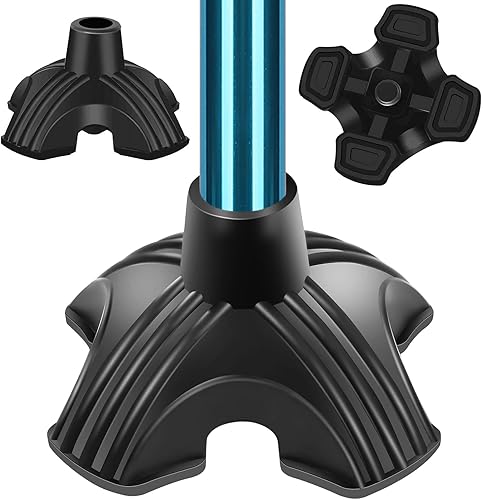 Best for self-standing stability
supregear Cane Tip 3/4 inch Heavy Duty
9.6/10 our score
See it on Amazon -
3

- 4
 Best for cushioning and gripCheck it
- 5
 Best for compact quad balanceCheck it
- 6
 Check it
Ergobaum Ergocap High Performance
Best for angled wet surfaces - 7
 Check it
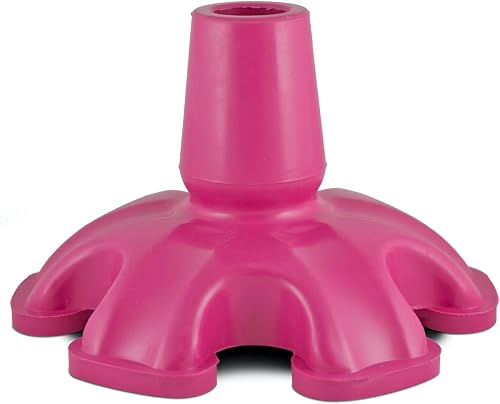
Essential Medical Supply Super Big Foot Self
Best for standing the cane upright - 8
 Check it
Asterom 7/8" Wide-Base Cane Tips
Best for light wide-base comfort - 9
 Check it
BOXOB 2pcs Ice Cane Tip Attachment
Best budget ice attachment pair
Best cane tips for ice: the full ranking
The Vive attachment is the only pick here built first for solid ice with a flip-up indoor mode. The rest are rubber bases that trade prong bite for standing stability, cushioning and fit choices.
Vive Cane Tips for Ice: Best for true ice and snow
- 5-prong carbon steel ice attachment
- Flip-up mechanism for indoor use
- Fits cane diameters 2 to 3.75 in
- 2 pack
A retractable metal attachment that adds prongs for ice and snow and flips up on hard indoor floors.
Pros
- Five prongs for ice and snow
- Flip-up design for indoor use
- Fits canes, crutches and walkers
Cons
- Needs hardware and correct diameter
- Metal prongs need care on hard floors
Vive suits anyone who must cross icy sidewalks, driveways or packed snow regularly. Its five carbon steel prongs bite into ice and snow, while the same attachment also helps on sand, loose gravel and soft grass.
That range matters in winter, when one walk can cross several surfaces.
The flip-up mechanism is the key daily-use feature. A simple push flips the attachment up along the outside of the cane for indoor use.
That keeps metal off tile and wood and slows wear on cement and pavement. A slip resistant pad helps stop the flipped attachment from sliding or scratching the cane.
Fit is wider than a standard rubber tip. Vive says the attachment fits cane diameters from 2 to 3.75 inches and works on standard and folding canes, forearm crutches, axillary crutches and walkers.
You still need to confirm your cane and use the included hardware correctly.
The trade-off is complexity. A rubber tip pushes on with no tools.
This attachment needs screws, a correct diameter and periodic checks of the prongs. Choose Vive for real ice.
Choose a rubber base if your winter walking is mostly wet pavement near a door.
supregear Cane Tip 3/4 inch Heavy Duty: Best for self-standing stability
- 3/4 inch fit
- 4-prong self-standing quad base
- Heavy-duty rubber
- Tool-free replacement
A heavy-duty rubber quad tip that lets a 3/4 inch cane stand on its own and adds traction on wet ground.
Pros
- Self-standing quad base
- Traction on varied surfaces
- No tools to install
Cons
- Rubber will not bite into hard ice like metal prongs
- Measure outer tube diameter first
supregear suits a reader whose main winter problem is a cane that falls over or slides on wet ground. Its 4-prong self-standing quad base lets the cane stand upright on its own.
That helps at a counter, in a shop or when you need both hands for a moment.
The tip fits canes and walking sticks with 3/4 inch leg diameter. Measure the outer diameter of the cane end, not the handle and not the old tip.
The safe path is to measure your own tube first.
Heavy-duty rubber absorbs impact and eases pressure on hands and wrists. The non-slip surface adds traction on different surfaces.
It will not bite into hard ice the way five metal prongs do. Think of it as a stability tip for wet pavement, slush and light snow, not a spike for glare ice.
Installation is tool-free, which helps when a tip wears out mid-season. Check and replace worn tips regularly.
The trade-off is bulk. A quad base takes more floor space than a single rubber foot.
If stairs are tight, a more compact tip may feel easier.
supregear Crutch Tips 7/8 Inch: Best for wide 7/8 inch traction
- 7/8 inch fit, 22 mm tube
- 2 pack
- Thick rubber with metal support
- 1.77 inch wide surface
A wide rubber tip with a metal support for 7/8 inch tubes, made for rough pavement, grass and loose ground.
Pros
- Wide 1.77 inch surface
- Metal support in the base
- Shock absorption for rough ground
Cons
- No metal prongs for solid ice
- Only fits 7/8 inch tubes
supregear Crutch Tips 7/8 Inch suit canes and crutches with a 22 mm tube. The wide surface of 1.77 inches and anti-slip bottom pattern spread load and add traction on rough pavement and loose terrain such as grass, gravel, mud and sand.
Thick rubber with a bottom metal support gives the base more structure than a plain rubber foot. That metal support helps the tip keep its shape under weight.
It also helps with shock absorption on hard ground. For winter, that means less skidding on wet concrete and less jarring on uneven paths.
Fit is specific. These tips fit 7/8 inch tubes, so measure the outer diameter after removing the old tip.
A 3/4 inch cane will not seat securely in a 7/8 inch tip. Installation is simple: remove the old rubber tip and slide the replacement into place.
The trade-off is ice bite. Rubber, even with a wide tread, cannot grip hard ice like metal prongs.
Choose this pair for wet pavement, gravel and grass. Pair it with a flip-up ice attachment if your route includes icy stretches.
KMINA Crutch Tips 7/8 Inch: Best for cushioning and grip
- 7/8 inch fit
- Pack of 2
- Natural black rubber
- 3.15 inch wide base
A cushioned rubber tip with a wide base for 7/8 inch tubes, aimed at grip on wet and varied surfaces.
Pros
- Wide base for stability
- Cushioning rubber
- Two tips in the pack
Cons
- No ice prongs
- Water or lubricant helps installation
KMINA suits a 7/8 inch cane or crutch where cushioning matters as much as grip. The tips are made of natural black rubber and come in a pack of 2.
The 3.15 inch wide base adapts to different surfaces and adds stability.
Cushioning is the practical benefit. The material and dimensions help absorb some impact with each step.
That can ease strain over a long walk on pavement. The rubber also offers a better grip and adaptation to many surface types.
KMINA says the tips suit crutches with a 7/8 inch tube, and the description also notes fit for tubes from 13/16 to 7/8 inch. Measure your tube to confirm.
The maker suggests water or a lubricant for easier installation, which tells you the fit is snug by design.
The trade-off is winter traction on hard ice. A wide rubber base helps on wet ground, but it has no prongs.
Choose KMINA for a cushioned, wide base on everyday winter walks. Choose a metal attachment when the sidewalk is solid ice underfoot.
Vive Cane Tip: Best for compact quad balance
- Self-standing quad base
- Fits .75 inch cane
- Non-slip rubber base
- Pack of 1
A compact self-standing quad tip for standard .75 inch canes, with a non-slip base for grass, gravel and sand.
Pros
- Four contact points
- Works on stairs better than large bases
- Shock absorption for hand and wrist
Cons
- Single tip, not a pair
- Rubber alone may slide on hard ice
Vive Cane Tip suits a standard .75 inch cane where you want a compact self-standing base. Its four contact points keep the cane from falling over.
That helps when you set the cane down to open a door or reach a shelf.
The compact size is a real advantage on stairs. A large quad base can feel awkward on a step.
This smaller quad footprint asks for less room. The non-slip rubber base adds traction on uneven or loose terrain such as grass, gravel and sand.
The tip flexes as you walk to absorb shock. That can reduce fatigue in the hand and wrist over a longer walk.
It fits standard and folding canes with a .75 inch shaft. Remove the old tip, push the cane into the new tip on a flat surface and twist until it is fully seated.
The trade-off is pack size and ice bite. This is a pack of 1, so buy with that in mind.
Rubber will help on wet pavement and light snow, but it will not bite into hard ice. Keep a metal ice attachment in mind for icy mornings.
Ergobaum Ergocap High Performance: Best for angled wet surfaces
- Universal 3/4 inch fit
- Patented heel-flat-toe articulation
- Non-slip rubber
- 1 tip
An articulating rubber tip that keeps more surface in contact as you step on wet, icy and uneven ground.
Pros
- Pivots to keep contact on angles
- Absorbs impact at heel strike
- Snap-on, no tools
Cons
- Single tip
- No metal claws in this version
Ergobaum Ergocap High Performance suits walkers who step on angled, wet or uneven ground. Its dual-axis articulation lets the tip pivot and flex to keep contact with the ground.
A rigid rubber tip can lift at one edge on a slope. This design tries to keep the full surface in contact.
The patented heel-flat-toe motion aims to mimic a natural step. That helps absorb shock at heel strike and support forward motion at toe-off.
For daily use, that can feel smoother than a stop-and-go rubber foot. Circular and lateral grooves add grip on indoor and outdoor surfaces.
Fit is universal for standard 3/4 inch cane and crutch tubes. Installation is snap-on with no tools.
It works with forearm crutches, walking canes and quad canes. Check that your tube is truly 3/4 inch before you order.
The trade-off is format. This is 1 tip, and the High Performance version has no retractable metal claws.
Choose it for wet, sloped pavement and uneven ground. Choose a prong attachment for solid ice and packed snow.
Essential Medical Supply Super Big Foot Self: Best for standing the cane upright
- 3/4 inch fit
- 6 feet for stability
- Flexible rubber tip
- Self-standing
A six-foot self-standing tip that keeps a 3/4 inch cane upright at a counter, store or table.
Pros
- Six feet for a large standing base
- Flexes while you walk
- No tools to install
Cons
- Large footprint may catch on narrow steps
- No prongs for hard ice
Essential Medical Supply Super Big Foot suits a reader who keeps losing a cane or leaning it against a wall. Its 6 feet give a larger surface area so the cane stands on its own.
That helps at a store, a restaurant or a family home.
The tip fits most canes with a 3/4 inch shaft. Remove the old 3/4 inch tip and replace it.
No tools or special skills are required. The shaft and feet flex while you walk, which helps smooth use and adds stability.
Durable rubber helps reduce noise when walking. That matters indoors, where a hard tip can click on tile or wood.
The larger base also helps on soft ground by spreading weight across more contact points.
The trade-off is footprint. Six feet take more space than a single foot or a compact quad.
That can be awkward on narrow steps or in crowded aisles. There are also no metal prongs for hard ice.
Choose this tip for standing convenience and stability on wet pavement.
Asterom 7/8" Wide-Base Cane Tips: Best for light wide-base comfort
- 7/8 inch fit
- 3 1/2 inch round base
- Treaded bottom
- About 3 oz
A light, wide round-base tip for 7/8 inch shafts, with a treaded bottom for smooth, slippery and wet surfaces.
Pros
- Light at about 3 oz
- Wide 3 1/2 inch base
- Treaded bottom for grip
Cons
- Designed around 7/8 inch shafts
- No metal prongs for ice
Asterom suits a 7/8 inch cane shaft where you want a light, wide base. The round base measures 3 1/2 inches in diameter.
That wide footprint helps balance on smooth, slippery and wet surfaces. The bottom is treaded for additional stability.
Weight is a practical plus. Asterom says these tips weigh only about 3 oz.
That is much lighter than many 3- and 4-prong tips. A lighter tip means less clunk at the end of the cane and less strain over a full day.
The rubber adapts to various angles to absorb shock from each step. That can reduce hand and wrist strain on uneven ground.
Installation is simple: remove the old tip, push the cane in on a flat surface and twist until it is fully inserted.
The trade-off is fit and ice bite. These tips are designed for 7/8 inch shafts, so measure first.
Rubber tread helps on wet ground but cannot bite into hard ice. Choose Asterom for light, wide-base comfort.
Choose metal prongs for icy sidewalks.
BOXOB 2pcs Ice Cane Tip Attachment: Best budget ice attachment pair
- 5-prong ice attachment
- 2 sets included
- Fits diameters 2 to 3.75 in
- Flip-up for indoor use
A two-set metal ice attachment with five prongs and a flip-up design for indoor floors and hard pavement.
Pros
- Two sets in the pack
- Five prongs for ice and snow
- Flip-up to protect hard floors
Cons
- Needs screws and correct diameter
- Steel prongs need checking for wear
BOXOB suits a budget-minded reader who wants a true ice attachment in a 2 pack. Its 5 carbon steel prongs grip ice and snow to improve balance on slippery surfaces.
The same design also suits sand, loose gravel and soft grass.
You get 2 sets of ice cane tips. That helps if you use two canes or crutches, or if you want a spare set ready to go.
The simple push mechanism flips the attachment along the outside of the cane for indoor use. Anti-slip pads help prevent slipping or scratching the cane.
Fit covers crutches of different diameters from 2 to 3.75 inches. The pack includes 1 pair of long screws and 1 pair of short screws.
It fits standard and folding canes, forearm crutches, armpit crutches, walkers and more. Confirm your diameter and screw choice before you install.
The trade-off is hardware and care. A push-on rubber tip is faster to fit.
This attachment needs screws, periodic prong checks and flip-up discipline indoors. Choose BOXOB for icy routes at a lower outlay.
Choose Vive if you prefer the Vive guarantee and brand support.
Best cane tips for ice and snow compared
The Vive attachment wins for solid ice because it is the only pick here with five prongs plus a flip-up indoor mode in a proven fit range. Rubber tips win for standing stability, cushioning and ease of replacement.
The table below puts fit, base and ice method side by side so you can match the tip to your cane.
| Product | Best for | Material | Count | Coverage | Our score |
|---|---|---|---|---|---|
| Vive Cane Tips for Ice | true ice and snow | Carbon Steel | 2 | Snow, Ice, Gravel, Sand | 9.7 |
| supregear Cane Tip 3/4 inch Heavy Duty | self-standing stability | Rubber | 9.6 | ||
| supregear Crutch Tips 7/8 Inch | wide 7/8 inch traction | 2 | 9.4 | ||
| KMINA Crutch Tips 7/8 Inch | cushioning and grip | 2 | 9.2 | ||
| Vive Cane Tip | compact quad balance | Rubber | 1 | 8.9 | |
| Ergobaum Ergocap High Performance | angled wet surfaces | Rubber | 1 | 8.7 | |
| Essential Medical Supply Super Big Foot Self | standing the cane upright | Rubber | 8.4 | ||
| Asterom 7/8" Wide-Base Cane Tips | light wide-base comfort | 8.2 | |||
| BOXOB 2pcs Ice Cane Tip Attachment | budget ice attachment pair | Stainless Steel | 2 | 8.0 |
We compared specs, fit sizes, base shapes, materials and pack counts across all nine picks. We looked at whether each option bites ice, stands on its own, absorbs shock or simply adds tread.
We also checked what each maker says about fit range and installation, then matched those facts to winter use.
Price was not a factor in scoring, and we did not use star ratings or review counts. Scores reflect how directly each tip solves the ice and snow problem for its stated cane size.
A perfect rubber tip for wet pavement still scores below a prong attachment for hard ice, because the search is about ice first.
How do cane ice tips help on ice and snow?
Cane ice tips help by adding prongs that bite into ice and packed snow, while rubber tips help by spreading weight and adding tread. Metal prongs create points of contact that dig in.
Rubber bases create a wider, flatter contact patch that resists sliding on wet ground.
A retractable attachment gives you both modes. You use the prongs outdoors, then flip them up indoors.
That keeps metal off hard floors and slows wear on pavement. Look for a push or flip mechanism that you can actuate without bending far down.
Rubber tips work differently. A quad base has four contact points, so the cane stands upright.
A wide round base spreads load across a larger area. An articulating tip pivots to keep contact on slopes.
Each style suits a different winter route.
What size cane tip do I need for winter?
You need the size that matches the outer diameter of your cane tube at the bottom, most often 3/4 inch, 7/8 inch or 1 inch. Measure after you remove the old tip.
Do not measure the old rubber tip, because rubber stretches and misleads you.
Our picks cover the common sizes. The supregear quad, Vive quad, Ergocap and Super Big Foot fit 3/4 inch tubes.
The supregear 7/8 inch pair, KMINA and Asterom fit 7/8 inch tubes. If you want a wider choice, our best walking cane tips 1 inch guide covers larger shafts.
Metal ice attachments use a different fit method. Vive and BOXOB fit diameters from 2 to 3.75 inches with included hardware.
That range covers many canes, crutches and walkers. It does not mean every cane fits.
Check your diameter and your cane type first.
If you are unsure which size group you are in, start with our best walking cane tips guide. It explains how to measure and how to seat a tip fully.
A tip that is not fully seated will feel unstable on ice even if the tread is good.
How do I measure the cane tube?
Remove the old tip. Use a ruler or calipers on the metal or wood tube at the bottom.
Write down the outer diameter in inches. Compare that number with the fit size on the tip you want.
What if my cane is wood or folding?
Some tips are made for metal tubes, and some fit wood shafts. Asterom describes its wide-base tips for 7/8 inch shafts and for Asterom wooden canes.
For wood, also check our best wood for walking cane guide before you drill or screw anything into the shaft.
Should I choose metal prongs or rubber for ice?
Choose metal prongs for hard ice and packed snow, and choose rubber for wet pavement, slush and loose ground. Prongs bite.
Rubber spreads weight and absorbs shock.
Many winter walkers end up using both across the same week.
Metal prongs shine on glare ice, frozen sidewalks and packed snow. Vive and BOXOB use five prongs that bite into those surfaces.
They also help on sand, gravel and soft grass. The cost is complexity, hardware and floor care indoors.
Rubber shines where the ground is wet but not solid ice. A quad base stands upright.
A wide base spreads load. An articulating tip keeps contact on slopes.
Rubber is also quieter and gentler on indoor floors.
If you want metal first, our best walking cane tips metal guide digs into materials and fit. It helps you tell carbon steel from softer metals and check whether screws or a clamp suit your cane.
When should I flip ice tips up?
Flip them up as soon as you step onto tile, wood, laminate or polished concrete. Flip them down before you step onto snow, ice or gravel.
That habit protects floors and keeps prongs sharp.
Do prongs work on loose gravel and sand?
Yes, prongs can dig into loose surfaces where smooth rubber can slide. Vive and BOXOB both describe use on sand, gravel and soft grass.
Test on a short, familiar stretch first so you can feel how the prongs engage.
Which rubber base is best for stability and standing?
A self-standing quad or six-foot base is best when you need the cane to stay upright, while a wide round base is best for light weight and balance. The supregear quad and Vive quad both stand on their own with four points.
The Super Big Foot uses six feet for an even larger standing area.
Asterom takes a different path with a light 3 1/2 inch round base at about 3 oz. That suits everyday use where a large quad feels heavy or bulky.
The treaded bottom adds grip on smooth and wet surfaces.
Ergocap suits slopes. Its articulating design pivots so more of the tip stays in contact when the ground angles away.
That helps on ramps, parking lots and uneven sidewalks.
If standing stability is your top need, our best quad tips for canes guide compares quad designs in more detail. It is a good next read if you lean toward a four-point base.
What is an offset cane and does tip size change?
An offset handle changes how weight sits over the shaft, but the tip still fits by tube diameter. If you are considering a new cane, our what is an offset walking cane guide explains the handle shape.
Then measure the tube at the bottom to pick a tip.
How do I install and care for cane tips in winter?
Install tips by seating them fully on a flat surface, then check fit, prongs and tread every few weeks in winter. A tip that is only partly seated can twist off at the worst moment.
Push down and twist until the tube is fully in.
Rubber tips usually need no tools. Remove the old tip, push the new one on and twist to seat it.
KMINA suggests water or a lubricant for easier installation. That is a sign of a snug fit, not a defect.
Metal attachments need hardware. Vive and BOXOB include screws in different lengths.
Use the length that matches your cane diameter. Tighten firmly, then check that the flip mechanism moves freely and the pad sits without sliding.
Care is simple. Wipe off snow and grit so moisture does not sit in the fit.
Check rubber for smooth spots, cracks or thinning. Check prongs for bending or heavy wear.
Replace a worn tip before it fails on ice.
If you want a cane that folds for travel, our best cane with folding seat guide covers folding designs. Just confirm tip fit before you buy, because folding shafts can differ from standard shafts.
How often should I replace a cane tip?
Replace a rubber tip when the tread is smooth, the edges are cracked or the fit feels loose. Prongs should be replaced when they are bent, very short or loose in the housing.
Winter use wears both faster.
Verdict: best cane tips for ice
Pick the Vive Cane Tips for Ice if your route includes hard ice or packed snow, pick the supregear quad if you need a self-standing 3/4 inch base, and pick the supregear 7/8 inch pair if you need wide rubber traction for a 7/8 inch tube. That rule matches the tip to the surface and the cane size, which matters more than any single feature.
For most readers, the best cane tips for ice are a two-part plan. Use a flip-up metal attachment for icy stretches outdoors.
Use a wide or quad rubber tip for wet pavement, stores and indoor floors. Keep the spare tip in a bag so you can swap it when the weather changes.
Measure your tube first. Seat the tip fully.
Flip prongs up indoors. Check wear every few weeks.
Those four habits will do more for safety than any one product claim.
If you want to compare more rubber bases before you choose, start with our best walking cane tips guide. Then come back to this ranking with your tube size in hand.
You will know in a minute which group fits your cane and your winter route.
Our top 3 picks at a glance
-
1
-
2
Best for self-standing stability
supregear Cane Tip 3/4 inch Heavy Duty
9.6/10 our score
See it on Amazon -
3
Frequently asked questions
What are the best cane tips for ice?
Retractable metal prong attachments are best for solid ice and packed snow, because prongs bite where rubber slides. Vive and BOXOB use five carbon steel prongs and flip up indoors.
Rubber quad and wide-base tips are better for wet pavement and mixed ground.
Can a regular rubber cane tip handle ice?
A regular rubber tip can help on wet pavement, slush and light snow, but it has no prongs to bite into hard ice. Choose a metal ice attachment for icy sidewalks.
Flip it up before you step onto tile, wood or concrete indoors.
How do I measure my cane before I buy a tip?
Measure the outer diameter of the cane tube at the bottom after you remove the old tip. Do not measure the old rubber tip itself.
Match that number to 3/4 inch, 7/8 inch or 1 inch, or to the attachment range stated for metal ice tips.
Do ice cane tips damage indoor floors?
Metal prongs can scratch hard floors and wear down on pavement, so use the flip-up position indoors. Vive and BOXOB add a slip resistant pad to help the flipped attachment stay put.
Check prongs often and replace worn attachments.


