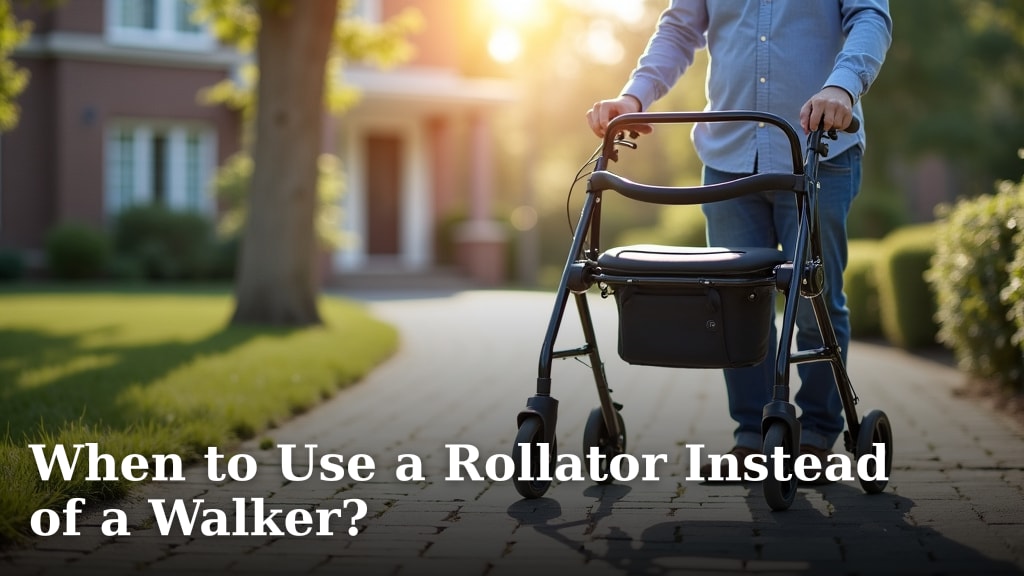
When to Use a Rollator Instead of a Walker?
You’ll want to use a rollator instead of a standard walker when you need You’ll want to use a rollator instead of a walker when you need more stability.more stability and support, especially if you also need to carry items. Rollators offer a convenient seat for resting and often have larger wheels for easier maneuverability indoors and out. They are a great choice for those who can stand unsupported but need help with balance or endurance.
While walkers provide basic support, rollators offer enhanced features like a built-in seat and a basket or pouch for transporting personal items. This makes them ideal for longer walks or when you need to bring essentials like a drink, phone, or medication with you. We found that many users appreciate the added independence a rollator can provide.
- Rollators offer more support than walkers.
- They come with a seat for resting breaks.
- Rollators have storage for carrying items.
- Larger wheels make them easier to use on various surfaces.
- Consider a rollator if you need balance and endurance help.
Let’s break down the key differences and help you decide if a rollator is the right mobility aid for your needs.
Choosing Between a Rollator and a Walker: Your Guide
Deciding whether a rollator or a standard walker is right for you can feel like a big choice. We’ve looked at what makes each mobility aid unique. This will help you find the best fit for your daily life. Think about what you need most: basic support or something more.
What’s the Main Difference?
The biggest difference is how they’re built and what they can do. A standard walker offers stable, four-point support. You have to lift it to move forward. A rollator, on the other hand, has wheels. It usually has three or four wheels. This means you can easily roll it along. It doesn’t require lifting.
Understanding the Walker’s Role
A traditional walker is a simple frame. It has four legs that rest on the ground. You lean on the handgrips and push forward. This provides a lot of stability. It’s great if you need consistent support with every step. Many people use walkers after surgery or for short-term balance issues. They are often lighter than rollators. This makes them easy to navigate in tight spaces.
The Rollator: More Than Just Wheels
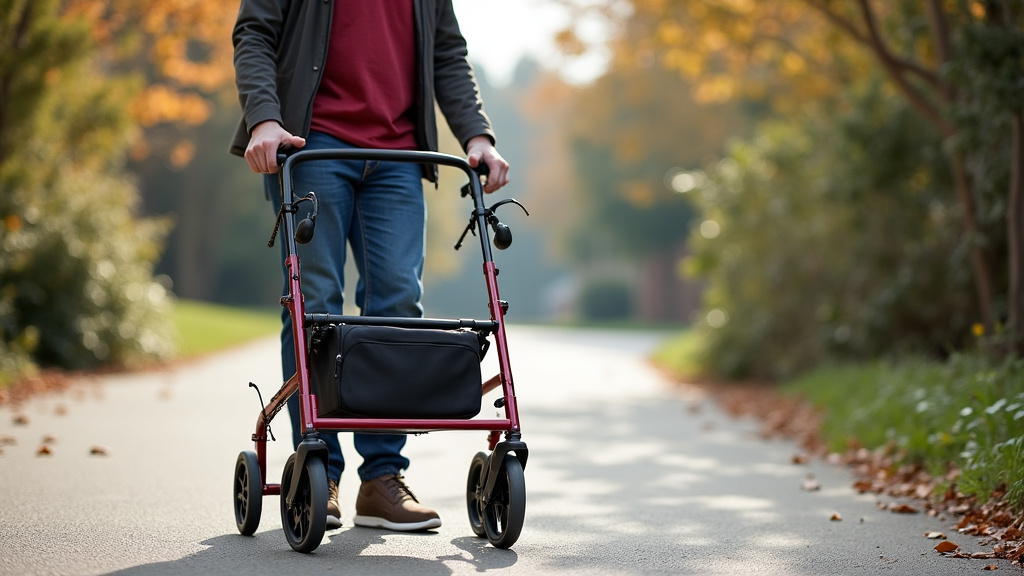
Rollators add several features beyond just wheels. Most have a built-in seat. This allows you to rest whenever you feel tired. It’s a big help for longer outings. Many rollators also include a basket or pouch. You can use this to carry personal items. Think about carrying a water bottle, your phone, or medications. This ability to carry things frees up your hands.
When a Rollator Shines Brighter
You’ll likely find a rollator more useful if you struggle with endurance. Walking long distances can be tiring. The ability to sit down whenever you need a break makes a big difference. This is especially true if you enjoy going to the park, shopping, or visiting friends. A rollator lets you keep going longer.
Mobility and Independence Boost
Research shows that mobility aids can greatly improve independence for many individuals. Rollators are particularly good at this. They allow you to move around more freely. You don’t have to rely on someone else to help you rest. The storage feature also means you can bring essentials with you. This reduces the need for multiple trips or asking for help.
Navigating Different Surfaces
The wheels on a rollator are designed to handle various surfaces. Most come with larger wheels than you might expect. This makes them easier to use on carpets, sidewalks, and even some uneven terrain. You won’t have to lift the device. You just push it along. This is a major advantage over standard walkers, which can get stuck more easily.
Stability and Balance Considerations
While walkers offer direct support, rollators offer stability through their structure and wheels. If you can stand unsupported but need help maintaining your balance while walking, a rollator is a good choice. The four wheels provide a wide base. This helps prevent tipping. Some rollators have hand brakes. These can be locked when you sit down or used to slow your pace downhill. This adds an extra layer of safety.
Comparing Features Side-by-Side
Let’s put the key features into a simple comparison. This can help clarify which device might suit you best.
| Feature | Standard Walker | Rollator |
|---|---|---|
| Support Type | Four-point stationary support; requires lifting | Wheeled support; rolls easily |
| Portability | Often lighter, can be easier to lift into a car | Heavier due to wheels and frame; may have folding options |
| Resting | No built-in seat | Built-in seat for convenient breaks |
| Item Carrying | Limited; may require a separate bag | Often includes a basket or pouch |
| Maneuverability | Best on smooth, flat surfaces; requires lifting | Easier on various surfaces; rolls smoothly |
| Best Use Case | Need consistent, stable support; short distances; limited mobility | Need balance support and endurance; want to carry items; enjoy longer outings |
Are You a Good Candidate for a Rollator?
Think about these questions when deciding. Do you find yourself needing to stop often because you get tired? Do you wish you could carry your phone or a small shopping bag without juggling? Can you stand up from a seated position without significant assistance? If you answered yes to these, a rollator might be a great next step for you.
When a Walker Might Still Be Better
However, if your primary need is very basic support. Perhaps you’ve had a recent injury. Or maybe you have difficulty lifting your legs. A walker might be simpler and more appropriate. Walkers require more physical effort to move. This can be good for strengthening legs. But it can be too much if you have significant fatigue.
Key Questions to Ask Yourself
To help you make the final choice, consider this quick checklist:
- Can you stand and walk unsupported for short periods?
- Do you need a place to rest during walks?
- Do you want to carry personal items easily?
- Do you frequently walk on varied surfaces like sidewalks or carpets?
- Is your main concern balance and endurance rather than absolute stability?
- Are you comfortable using hand brakes for control?
Conclusion
When deciding between a rollator and a standard walker, think about your personal needs. Rollators offer more support, a place to rest, and a way to carry items. We found they are excellent for improving independence and endurance on longer outings. If you can stand unsupported but need help with balance, a rollator might be your best choice. If you need more basic, stationary support and find a walker easier to manage, that’s perfectly fine too. Your next step is to visit a store or online retailer to try out different models. Feel how they handle and see which one feels right for your daily activities.
Frequently Asked Questions
Can I use a rollator if I can’t stand up on my own?
Generally, a rollator is designed for individuals who can stand up from a seated position with some effort or assistance. If you require significant help standing, a standard walker might be more appropriate, or you should consult with a healthcare professional about other mobility solutions.
Are rollators difficult to assemble after purchasing?
Most rollators are designed for easy assembly. Many come with minimal parts that simply need to be unfolded and clicked into place. You can usually find assembly instructions or video tutorials online to help you set it up quickly.
What if I have very narrow doorways or tight spaces in my home?
Some rollator models are designed to be more compact. You can find models with a narrower frame or those that can fold up easily for storage or to get them out of the way in tight areas. Always check the dimensions before purchasing.
How do I know if I need hand brakes on my rollator?
Hand brakes are a great safety feature, especially if you plan to use your rollator on inclines or need to stop quickly. They allow you to control your speed and lock the wheels when you want to sit down, offering added security and peace of mind.
Can I use a rollator on different types of flooring?
Yes, rollators are typically designed to handle various surfaces. Their larger wheels make them easier to maneuver over carpets, sidewalks, and even some slightly uneven outdoor terrain compared to standard walkers which can get stuck more easily.