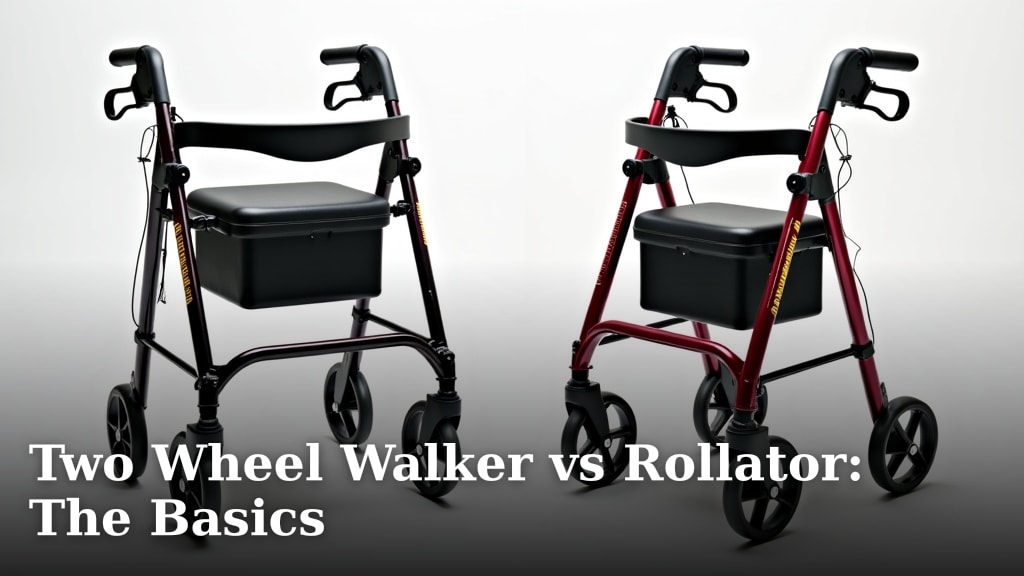
Two Wheel Walker vs Rollator: The Basics
Choosing between a two-wheel walker and a rollator depends on your specific needs for stability and mobility. A two-wheel walker offers basic support for walking, while a rollator provides more advanced features like a seat and larger wheels for easier maneuverability on various surfaces. You’ll find the right fit by understanding these key differences.
We know picking the right walking aid can feel overwhelming. Many people wonder which device will best support their daily activities. Understanding the purpose and design of each walker type helps you make a confident choice for independence and safety.
- Two-wheel walkers are simpler and lighter.
- Rollators offer more features like a seat and better wheels.
- Consider your mobility and how you’ll use the walker.
- Your comfort and safety are the top priorities.
Let’s break down exactly what each walker is and how they can help you get around more easily.
Understanding Your Walking Aid Options: Two-Wheel Walkers and Rollators
Choosing the right walking aid can make a big difference in your daily life. You want something that feels safe and helps you move with more confidence. We’ve found that many people wonder about the difference between a two-wheel walker and a rollator. They look similar but are designed for different needs.
Let’s break down what each device offers. This will help you decide which one is the better fit for your lifestyle and mobility goals. Your comfort and independence are what matter most.
The Two-Wheel Walker: Simple Support for Steadier Steps
A two-wheel walker is a great option if you need a bit of help with balance. It’s often called a “standard walker” or “front-wheeled walker.” Think of it as a sturdy framework that moves with you.
How a Two-Wheel Walker Works
These walkers have two wheels on the front legs. The back legs are just stationary rubber tips. You lift the walker slightly with each step. This allows you to glide it forward. It’s designed to give you a stable support as you walk. You don’t have to worry about it rolling away from you.
Who Benefits Most from a Two-Wheel Walker?
A two-wheel walker is ideal for someone who needs moderate stability. It’s good for people who can still stand up and walk for short periods. They might feel a little unsteady without support. It’s also a good choice if you don’t need to sit down often while you’re out and about. Many find it feels very secure.
Key Features of Two-Wheel Walkers
- Lightweight design: They are generally lighter than rollators. This makes them easier to lift.
- Basic stability: The two wheels offer smooth gliding. The stationary legs prevent unexpected movement.
- Simple to use: There are no complex parts. You just push and walk.
- Affordability: They are often less expensive than rollators.
When a Two-Wheel Walker Might Not Be Enough
If you need to rest frequently, a two-wheel walker isn’t ideal. You can’t sit on it. Also, navigating uneven surfaces like grass or gravel can be tricky. You have to lift it more. This can be tiring if you have limited strength.
The Rollator: Enhanced Mobility and Convenience
A rollator, sometimes called a wheeled walker, is a more advanced mobility aid. It has four wheels, a seat, and often a basket. Rollators are built for greater ease of movement and more features for your comfort.
Understanding Rollator Design and Function
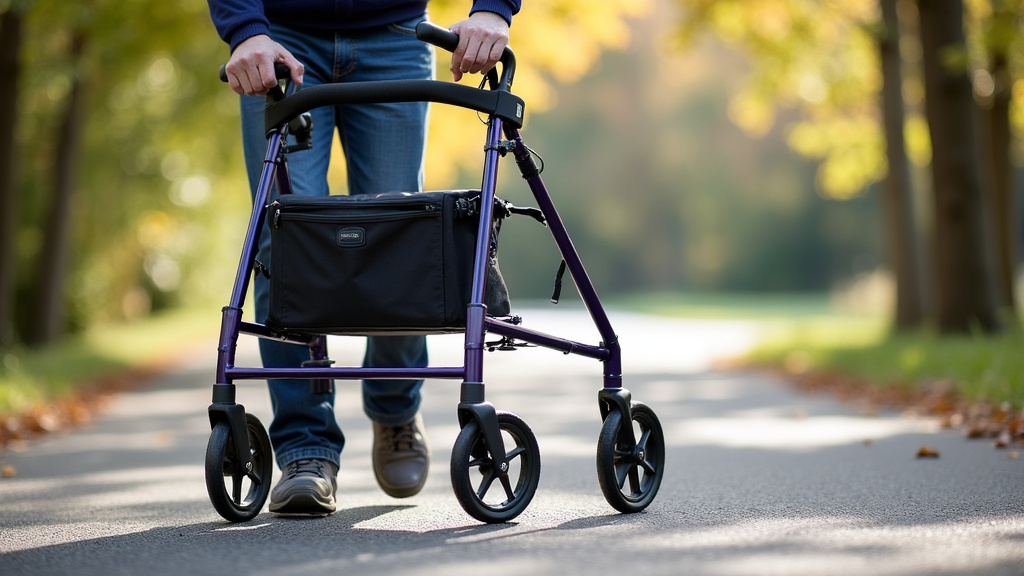
With four wheels, a rollator moves smoothly across different surfaces. You don’t need to lift it; you just push it. This takes less effort. The wheels are usually larger than those on a two-wheel walker. This helps them roll over bumps and cracks more easily.
The standout feature is the built-in seat. When you need a break, you can simply unfold the seat and rest. This is a major advantage for longer outings. Most rollators also come with a handbag or basket. This is perfect for carrying personal items like your phone, wallet, or a water bottle.
Who Benefits Most from a Rollator?
Rollators are excellent for people who need more support and can walk longer distances. If you get tired easily and need to sit down often, a rollator is a fantastic choice. The four wheels make it easier to move around, even on slightly uneven ground. It’s also good if you want the convenience of carrying your belongings.
Key Features of Rollators
- Four wheels: Offers smooth rolling and easy maneuverability.
- Built-in seat: Allows you to rest whenever needed.
- Hand brakes: Most models have hand brakes to control speed and lock the wheels. This adds safety.
- Storage: Includes a basket or pouch for carrying items.
- Foldable design: Many rollators fold for easier transport and storage.
When a Rollator Might Not Be the Best Fit
Rollators can be heavier and bulkier than two-wheel walkers. If you have difficulty lifting it into a car, this could be a challenge. They are also typically more expensive. While the brakes are helpful, they do require some hand strength to operate effectively. If your grip is very weak, you’ll want to test this feature. A bariatric rollator is designed for heavier individuals.
Comparing Key Differences: Your Checklist for the Right Choice
Deciding between these two walkers comes down to your personal needs. We’ve put together a quick comparison to help you think it through. Consider where and how you’ll use your walking aid most often.
| Feature | Two-Wheel Walker | Rollator |
|---|---|---|
| Wheels | Two front wheels, two stationary legs | Four wheels |
| Sitting Option | No | Yes, built-in seat |
| Maneuverability | Requires lifting for movement | Rolls smoothly, less effort |
| Storage | None | Basket or pouch usually included |
| Weight/Portability | Lighter, easier to lift | Heavier, may be bulkier |
| Brakes | None (user controls speed by lifting) | Hand brakes for speed control and parking |
| Terrain | Best on smooth, flat surfaces | Handles various surfaces better |
Making Your Decision: A Simple Checklist
Let’s quickly recap the key points to consider. This checklist will help you focus on what’s most important for you. Think about your daily routines and any physical limitations you may have.
- Do you need to sit and rest frequently? (If yes, a rollator is likely better.)
- How much support do you need for balance? (Both offer support, but a rollator rolls with you.)
- Will you be using it on varied terrain? (Rollators are generally better for uneven surfaces.)
- Is ease of lifting into a car a major concern? (Two-wheel walkers are lighter.)
- Do you want to carry items easily? (Rollators usually come with storage.)
- What is your budget? (Two-wheel walkers are often more affordable.)
By answering these questions, you’ll start to see which walker type aligns best with your needs. We found that focusing on these practical aspects leads to the most satisfying choice. Your goal is to find a tool that increases your confidence and freedom to move.
Conclusion
You’ve learned the key differences between a two-wheel walker and a rollator. A two-wheel walker offers essential stability for those needing basic balance help. A rollator provides more freedom with its four wheels, seat, and storage. Your decision depends on your daily needs, like how often you rest or the surfaces you navigate. We found that considering these practical points helps you choose the best aid for your comfort and independence. Your next step is to think about where you’ll use your walker most and try to test both types if possible.
Frequently Asked Questions
Can I sit on a two-wheel walker?
No, you cannot sit on a standard two-wheel walker. They are designed solely for providing support while you stand and walk. If you need a place to rest during your outings, a rollator with a built-in seat would be a better option.
Are rollators hard to steer?
Rollators are generally very easy to steer. Their four wheels allow them to roll smoothly with minimal effort. Most also feature hand brakes that help you control your speed and lock the wheels for stability when you stop.
Which type of walker is better for going outside on uneven ground?
A rollator is usually better for outdoor use on varied terrain. Its larger wheels are designed to handle bumps, cracks, and slightly uneven surfaces more easily than the smaller wheels and stationary legs of a two-wheel walker.
Is a two-wheel walker easier to carry in a car?
Yes, two-wheel walkers are typically lighter and more compact than rollators. This can make them easier to fold, lift, and transport in and out of a vehicle if portability is a major concern for you.
Do I need hand strength to use a rollator’s brakes?
Yes, you will need some hand strength to operate the hand brakes on a rollator effectively. Most models have brakes that are designed to be squeezed to slow down or lock the wheels. If hand grip is a challenge, be sure to test this feature.