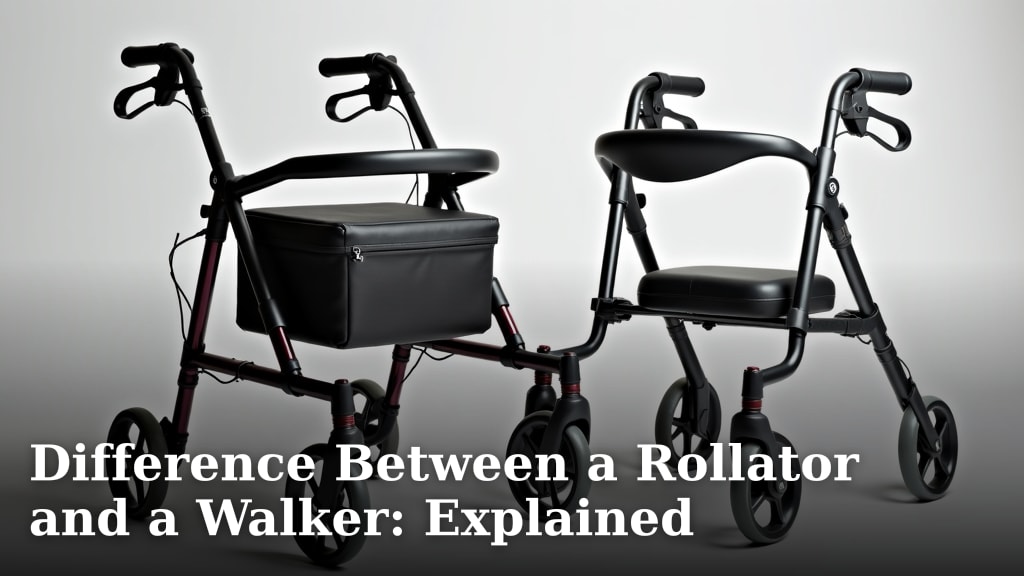
Difference Between a Rollator and a Walker: Explained
When you need a little help walking, choosing between a rollator and a walker can be confusing. A rollator is essentially a walker with wheels, a seat, and handles that adjust. It offers more mobility and convenience than a standard walker.
Walkers and rollators are both mobility aids designed to help you maintain balance and support. However, they differ in features and how they are used. Understanding these differences helps you pick the best support for your needs. We found that many people confuse them.
- Rollators have wheels, a seat, and brakes.
- Standard walkers have no wheels and require lifting.
- Rollators offer more independence for walking longer distances.
- Walkers provide more stability for those needing extra support.
- Your specific mobility needs will determine the best choice.
Let’s walk through exactly what makes them different so you can make the right choice for your comfort and safety.
“`htmlUnderstanding the Core Differences: Rollator vs. Walker
Choosing the right mobility aid can feel like a big decision. We’re here to break down the key differences between rollators and walkers. This will help you find the best fit for your daily life. Think of it as picking the right tool for your personal journey.
What Exactly is a Standard Walker?
A standard walker, sometimes called a pick-up walker, is a basic frame. It typically has four legs made of metal tubing. You’ll usually find them with rubber tips on the feet. This design offers a stable, three-sided area for support. It helps you stand up and walk with more confidence. You simply lift it slightly and move it forward with each step.
How Does a Rollator Differ from a Walker?
The main difference is that a rollator has wheels. Usually, it has four wheels, though some models have three. It also includes a built-in seat and handles with brakes. Because it has wheels, you don’t need to lift it. You just push it along as you walk. This makes it much easier to cover longer distances.
The Anatomy of a Walker: Simplicity and Support
Let’s get a bit more specific about what makes a walker a walker. Its design is all about providing steady support. This is perfect for those who need a reliable base to stand and walk.
Key Features of a Standard Walker
A standard walker is quite straightforward. It features a rectangular frame. This frame is usually made from lightweight aluminum. You’ll find four legs, each ending in a non-slip rubber tip. The handgrips are often padded for comfort. There are no wheels or seats on a basic model. This is the defining characteristic that separates it from a rollator.
How You Use a Standard Walker
Using a standard walker requires a bit more effort. You place the walker in front of you. Then, you lift it slightly off the ground. You move it forward, and then you step into the space it creates. This lifting motion provides a constant point of stability. It’s ideal for short walks around the house. Many experts suggest this type of walker for people who need maximum stability on uneven surfaces (CDC).
The Rollator: Wheels, Brakes, and Built-in Comfort
Rollators offer a more advanced approach to mobility assistance. They incorporate features that make them easier to use for longer periods. Think of it as a walker that’s ready for a stroll in the park.
Rollator Components: What to Expect
A rollator comes equipped with several key features. Most have three or four wheels for smooth rolling. The handles are adjustable in height to fit your posture. Crucially, they have hand brakes. These brakes allow you to slow down or stop the rollator completely. Many also include a built-in seat. This seat is a lifesaver when you need a break. There’s often a pouch or basket for carrying items too.
How to Use a Rollator Effectively
Using a rollator is a different experience. You simply hold the handles and push. The wheels glide across the floor. When you need to stop or slow down, you engage the hand brakes. It’s important to lock the brakes before sitting on the seat. This prevents the rollator from rolling away. The ability to rest without needing another person is a big advantage for many users.
Brakes: A Critical Safety Feature
The brakes on a rollator are essential. They offer control and safety. You can use them to slow your pace on inclines. They also allow you to stop securely. Always ensure you understand how your rollator’s brakes work. Many studies highlight the importance of proper brake usage for fall prevention (NIH). Locking the brakes before sitting is non-negotiable for your safety.
Who Benefits Most from Each Aid?
Deciding between a walker and a rollator often comes down to your specific needs and abilities. Let’s consider who might find each one most helpful.
When a Standard Walker is the Better Choice
A standard walker is excellent for individuals who require maximum stability. If you need significant support to maintain balance, this is your best bet. It’s also ideal for those who have trouble with coordination. You might prefer it if you are recovering from an injury. People who only need assistance for short distances around their home often find it sufficient. It’s less demanding on your arms than a rollator might be if you have weakness.
When a Rollator is the Right Fit
A rollator is perfect for people who want to maintain more independence. If you can walk with a steady gait but need some support, it’s a great option. It allows you to walk longer distances with less fatigue. The seat is a major benefit for those who tire easily. The ability to pause and rest anywhere is liberating. Many users with arthritis find the rolling motion easier than lifting a walker. It’s also great for navigating slightly uneven terrain, like grass or carpet.

Comparing Features Side-by-Side
To make things crystal clear, let’s look at a direct comparison. This table summarizes the key differences you should consider.
| Feature | Standard Walker | Rollator |
|---|---|---|
| Wheels | No wheels (rubber tips only) | 3 or 4 wheels |
| Seat | No | Yes, usually built-in |
| Brakes | No | Yes, hand-operated |
| Weight Support | High stability, requires lifting | Good stability, rolls easily |
| Portability | Can be folded, but still bulky | Often foldable, but can be heavier |
| Best Use Case | Maximum stability, short distances | Independence, longer distances, rest breaks |
Making Your Final Decision: A Checklist
Choosing the right mobility aid is personal. Ask yourself these questions to guide your decision:
- Do you need the highest level of stability?
- Can you comfortably lift a walker with each step?
- Do you plan to walk longer distances?
- Would having a built-in seat be helpful for resting?
- Do you need the ability to stop easily and securely?
- What kind of terrain will you be navigating most often?
Your answers will point you toward the aid that best suits your lifestyle. We found that considering these points makes the choice much clearer.
“`Conclusion
You’ve learned the key differences between a standard walker and a rollator. A walker offers maximum stability but requires lifting with each step. A rollator, with its wheels, seat, and brakes, provides more independence and convenience for longer distances. Your individual needs for stability, endurance, and the desire for rest breaks are your best guides. Consider your typical walking environment and your ability to manage each type of aid. We encourage you to discuss your options with a healthcare professional to make the safest and most suitable choice for your mobility goals.
Frequently Asked Questions
Can I use a rollator indoors for maximum stability?
Yes, you can use a rollator indoors. While they offer more mobility, it’s crucial to use the brakes properly on all surfaces. Ensure the brakes are locked when you plan to sit on the seat to prevent any unexpected movement.
Which one is better for someone with arthritis?
Many individuals with arthritis find a rollator to be a better choice. The rolling motion reduces the need to lift and push, which can be easier on joints. The built-in seat also allows for frequent rest breaks, reducing fatigue.
Do I need to be able to lift a walker?
Yes, a standard walker requires you to lift it slightly with each step. If you have limited upper body strength or find lifting difficult, a rollator is a more suitable option as it glides without lifting.
Are rollator brakes as effective as car brakes?
Rollator brakes are designed to slow down or stop the rollator’s movement. While effective for their purpose, they require careful application and understanding. Always ensure you can comfortably reach and operate the brakes before purchasing.
Can I fold a standard walker for storage or travel?
Yes, most standard walkers are designed to fold for easier storage and transport. They typically fold in half or can be collapsed by disengaging a locking mechanism. Check the specific model’s folding capabilities.