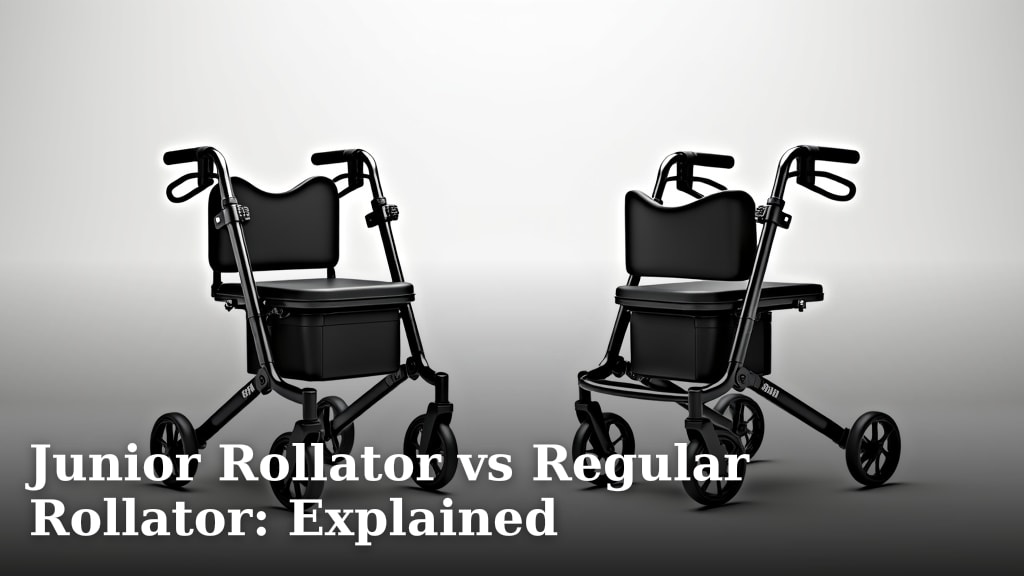
Junior Rollator vs Regular Rollator: Explained
Understanding the Key Differences Between Junior and Regular Rollators
A junior rollator is a smaller, lighter mobility aid designed specifically for shorter individuals, typically under 5 feet tall. A regular rollator is the standard size, built for average to taller adults. The choice between them isn’t about age—it’s about getting a proper, safe fit for your body.
Think of it like buying a bicycle. You wouldn’t give a child a full-sized adult bike; they couldn’t reach the pedals or handlebars safely. The same principle applies here. An ill-fitting rollator can be unstable and uncomfortable, leading to poor posture or even falls.
Why Sizing Is Your Most Important Consideration
When selecting any mobility aid, a correct fit is non-negotiable for safety and comfort. The wrong size can cause you to hunch over or reach too high, straining your back, shoulders, and wrists.
We found that guidelines from organizations like the National Institute on Aging stress that handles should sit at your wrist level when you’re standing upright. Your elbows should have a slight bend, about 15 to 20 degrees, when holding the grips. This position allows you to push the rollator with ease and maintain good posture.
Height and Handle Adjustability
The most obvious difference is overall height. A junior rollator’s handles typically adjust to a maximum of about 31 inches. A regular rollator’s handles often extend up to 36 inches or more. If you are under 5’4″, a junior model is worth serious consideration.
What Happens If You’re Between Sizes?
If you fall in a height range that could work for either, prioritize the one that allows you to achieve that ideal, slight elbow bend. It’s better to have a regular model with handles you can lower sufficiently than a junior model that’s still too tall for you.
Comparing Weight and Portability
Because they use less material, junior rollators are almost always lighter than their regular counterparts. This makes them easier to lift into a car trunk or carry up a flight of stairs.
A typical junior rollator might weigh between 10 to 14 pounds. A standard rollator generally falls between 15 to 20 pounds. While a few pounds might not seem like much, it adds up when you’re lifting it regularly.
| Feature | Junior Rollator | Regular Rollator |
|---|---|---|
| Ideal User Height | Typically under 5’4″ | Typically 5’4″ and taller |
| Handle Height Range | ~26 to 31 inches | ~31 to 36+ inches |
| Average Weight | 10 – 14 lbs | 15 – 20 lbs |
| Seat Height | Lower to the ground | Standard seated height |
| Weight Capacity | Often 250 – 300 lbs | Often 300 – 400 lbs |
| Seat Width | More narrow | Wider for average hips |
Weight Capacity and Structural Differences
Don’t let the smaller size fool you; junior rollators are built to be sturdy. However, their maximum weight capacity is often lower than that of a heavy-duty or bariatric regular rollator.
You must check the manufacturer’s stated weight limit. Exceeding it compromises the frame’s integrity and your safety. If you need a high weight capacity, you’ll likely be looking at a regular or heavy-duty rollator, even if you are shorter in stature.
Seat Design and Stability
The seat on a junior rollator is positioned lower to the ground. This is a critical difference. Getting on and off a lower seat is easier and safer for someone with limited knee or hip strength.
The seat width is also narrower. While this might feel more secure for a smaller person, it can be uncomfortable for someone with wider hips. Always check the seat dimensions before purchasing.
Who Should Choose a Junior Rollator?
A junior rollator is engineered for specific needs. It’s not just a “smaller version”; it’s a thoughtfully designed tool for a particular user.
- Individuals under 5’4″ tall who need a handle height that doesn’t force their shoulders upward.
- Smaller-framed adults or seniors who find a standard rollator too bulky and hard to maneuver.
- Anyone who travels frequently and values the lighter weight for easier transport.
- Younger users or adolescents with mobility challenges who have outgrown a pediatric walker but aren’t adult-sized.
When a Regular Rollator Is the Better Choice
The standard rollator remains the go-to option for the majority of users. Its dimensions accommodate the average human frame.
- Individuals of average or taller height (5’4″ and above).
- Those who need a higher weight capacity than most junior models offer.
- Users who require a wider, more comfortable seat for resting.
- People with longer legs who need more space between the seat and the handles when walking.

Features That Are Typically the Same
Once you’ve settled on the right size, you’ll find that both junior and regular rollators offer the same core functionality. The essential features remain consistent.
- Four wheels for stable, easy movement on various surfaces.
- Hand-operated brakes that you can lock for when you want to sit down securely.
- A padded seat and backrest for taking rest breaks when you need them.
- A storage pouch or basket underneath the seat for your personal items.
- Folding frames for compact storage and transportation.
How to Measure for the Right Fit
You don’t need special tools to find your perfect fit. Just grab a measuring tape and a pair of the shoes you’ll most often wear with the rollator.
- Stand up straight with your arms relaxed at your sides.
- Measure the distance from the floor to the crease of your wrist (where your hand meets your arm). This is your ideal handle height.
- Compare this number to the adjustability range of the rollator’s handles. The correct model will let you set the handles at or very close to your measured height.
According to physical therapy resources, this simple measurement is the most reliable way to ensure the mobility aid promotes a safe, upright gait.
Your Pre-Purchase Checklist
Before you click “buy” or head to the store, run through this quick list. It can save you from a costly mistake.
- I have measured my ideal handle height and confirmed it’s within the product’s range.
- I know my shoe size will be worn during use, affecting my height measurement.
- I have checked the weight capacity and it safely exceeds my own weight.
- I have considered where it will be stored and measured that space (car trunk, closet).
- I have thought about the primary terrain I’ll use it on (smooth indoors vs. uneven sidewalks).
- I have read reviews from other users of a similar height and build to mine.
Making Your Final Decision
Choosing between a junior and a regular rollator ultimately comes down to one principle: proper fit equals safe function. The right rollator should feel like a natural extension of your body, helping you move freely and confidently.
If you have the opportunity, try both types in person. Stand up with each one. Walk a few steps. Sit down and stand back up. Your body will give you the best feedback. Remember, this is a tool to support your independence—taking the time to choose the right one is a worthwhile investment in your daily well-being.
Conclusion
Choosing between a junior and a regular rollator is all about getting the right fit for your body and needs. Remember, the key differences are in **height range, weight, and seat design**, not age. A proper fit ensures safety, comfort, and the freedom to move confidently. Your next step is simple: **measure your ideal handle height** using the wrist-crease method and check the product specs. Then, if possible, try both types in person. Taking this careful approach will help you select the mobility aid that truly supports your independence.
Frequently Asked Questions
Can a shorter adult use a regular rollator if the handles are lowered enough?
Yes, if the regular rollator’s handle height can be lowered to your ideal measurement (around wrist height). This can be a good option if you also need a higher weight capacity or a wider seat. Always prioritize achieving that slight elbow bend for safe pushing.
Where can I buy a junior rollator?
You can find junior rollators at medical supply stores, through physical therapists, or online from major retailers. It’s often helpful to buy from a retailer with a good return policy so you can ensure the fit is correct. Checking customer reviews from users of similar height can also be very insightful.
Are junior rollators as sturdy as regular ones?
Yes, they are built to be sturdy for their intended user weight range. However, their maximum weight capacity is often lower, typically between 250-300 pounds. Always verify the manufacturer’s stated weight limit to ensure it safely exceeds your own weight.
Do junior and regular rollators fold the same way?
Most models use a similar folding mechanism, allowing the frame to collapse for storage or transport. The process is generally straightforward for both sizes. However, the specific latch or button may vary slightly between different brands and models.
What is the most common mistake people make when choosing a rollator?
The most common mistake is selecting a rollator based on appearance or age alone, without measuring for a proper fit. An ill-fitting rollator can lead to poor posture and discomfort. We found that focusing on your wrist height measurement is the most reliable way to avoid this error.