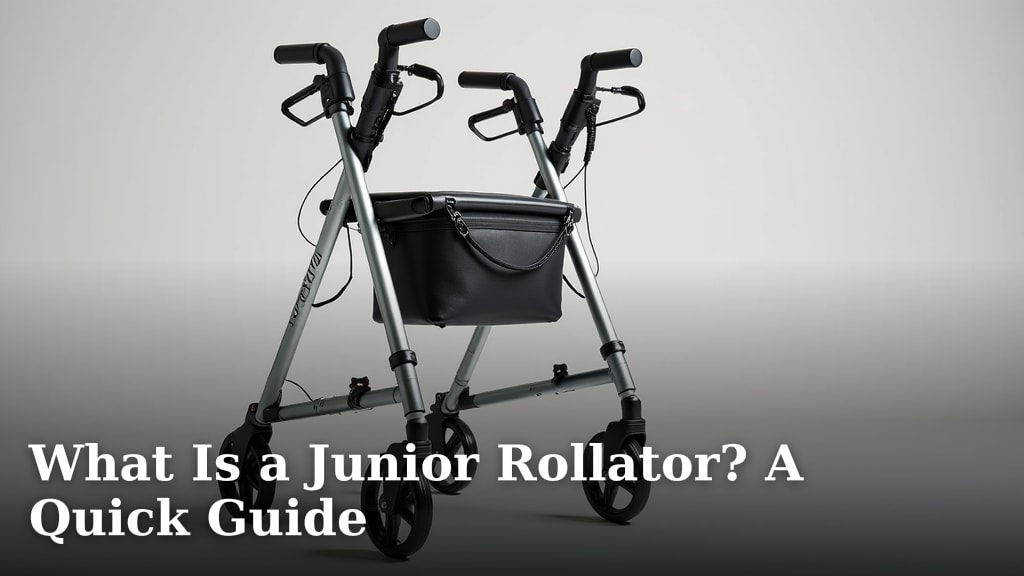
What Is a Junior Rollator? A Quick Guide
A junior rollator is a walking aid designed specifically for shorter adults, typically those under 5’2″ tall. It’s essentially a compact, 4-wheeled walker with a built-in seat, made to provide stable support and a convenient place to rest.
We found that these devices are perfect for maneuvering in tighter spaces where a standard rollator might be too bulky. They focus on improving your safety and mobility without the awkward reach or stooping that a regular-sized model can cause.
- A junior rollator is a shorter, more compact version of a standard 4-wheeled walker.
- It is designed for individuals under 5’2″ in height for a proper, comfortable fit.
- Key features include a built-in padded seat for resting, hand brakes, and a storage pouch.
- It helps improve stability, confidence, and independence during daily walks.
- Choosing the right size prevents strain on your back, shoulders, and wrists.
Below, we’ll walk you through the key features to look for and how to decide if a junior rollator is the right mobility aid for you or your loved one.
Understanding the Junior Rollator: A Compact Walking Aid
A junior rollator is a specialized mobility aid engineered for individuals under 5’2″ tall. It provides the stability of a four-wheeled walker but in a smaller, more appropriately sized frame. This design ensures your posture remains natural, preventing the back and shoulder strain that can happen with standard-sized equipment.
Think of it like a bicycle. You wouldn’t ride a bike built for a six-foot person if you’re five feet tall, right? The handlebars would be too high and the seat too far back. The same principle applies to walking aids. A proper fit is essential for safe and comfortable use.
Key Features Designed for You
These walkers aren’t just shorter; their entire geometry is optimized for a smaller body. The frame, handle height, and even the distance between the rear wheels are scaled down. This creates a stable and intuitive walking experience.
Built for a Shorter Stature
The most critical feature is the adjustable handle height. For a junior rollator, this range is typically between 29 and 33 inches. When standing upright, your arms should have a slight bend (about 20-30 degrees) at the wrist when holding the grips. This allows for optimal control and braking power without hunching.
Many guidelines from physical therapy experts emphasize that proper handle height prevents wrist strain and promotes a natural walking pattern (American Physical Therapy Association). If the handles are too high, you’ll shrug your shoulders, causing fatigue. Too low, and you’ll bend over, compromising balance.
Stability and Safety Features
Safety is paramount. All junior rollators include two key components. First, the loop-lock hand brakes. These allow you to slow the walker on slopes or lock the wheels completely when you want to sit. Always test them before your first walk. Second, the four large, 6-inch wheels. They roll easily over smooth pavement and most indoor floor types, providing a stable base.
We found that models with a wider wheelbase offer greater side-to-side stability. This is especially helpful if you tend to shuffle or need extra confidence while turning corners in your home.
Comfort and Convenience
The padded seat is a game-changer. It provides a built-in resting spot during a walk to the mailbox or around the grocery store. Always lock the brakes before sitting. Underneath the seat, you’ll find a storage pouch. It’s perfect for carrying a phone, water bottle, or a small purse, keeping your hands free to grip the handles.
Who Should Consider a Junior Rollator?
The primary user is any adult shorter than 5’2″ who needs extra balance support. This isn’t about age; it’s about body proportions and safety needs. Using the wrong size equipment can create new problems, like increasing your fall risk due to poor posture.
Ideal for Shorter Adults
If you find that when using a standard rollator, you have to reach up for the handles or stoop down, it’s too big. This forced posture can lead to back pain, neck tension, and wrist discomfort. A junior model corrects this by putting the handles at your natural, comfortable grip level.
Common Conditions That Benefit
Many people with arthritis, mild balance disorders, or general muscle weakness find these walkers helpful. They allow you to walk further and with more confidence. A study highlighted by the National Institute on Aging notes that appropriate assistive devices can help maintain independence and prevent falls in older adults.
Conditions like Parkinson’s disease or recovery from a stroke can also benefit. The walker provides a reliable base of support, helping you maintain an upright position and a steady gait pattern.
The Clear Benefits of the Right Fit
Choosing the correctly sized walker is one of the most important decisions you can make for your daily mobility. The benefits go far beyond just being able to walk.
Improved Mobility and Independence
With a secure and comfortable walker, you’re more likely to stay active. You can go for walks in the park, navigate the shopping mall, or move around your home safely. This activity is crucial for maintaining cardiovascular health, muscle strength, and overall well-being. It’s about having the right tool to keep you moving.
Reduced Risk of Falls
Falls are a leading cause of injury among adults. According to the CDC, millions of older adults fall each year, often resulting in serious injury. A properly fitted walker dramatically reduces this risk by providing a wider base of support, helping you maintain your center of gravity, and giving you a stable object to hold onto if you feel unsteady.
How to Choose Your Junior Rollator
Shopping for one can feel overwhelming. Focus on these three critical factors to make the right choice.
Measure for the Correct Height
Do not guess. Have someone measure the distance from the floor to the crease of your wrist (your arm hanging at your side). This number is your ideal handle height. Look for a rollator that adjusts to cover this exact measurement. If it doesn’t, it’s not the right model for you.
Consider the Weight Capacity
Every rollator has a maximum user weight it can safely support. This is usually listed in the product specifications. Never exceed this limit. It’s a critical safety feature that protects the frame and wheels from failure.
Look for These Must-Have Features
Ensure it has the essentials: sturdy hand brakes, a seat with a weight capacity equal to or greater than yours, and a storage pouch. Consider the weight of the rollator itself. If you need to lift it into a car trunk frequently, a lighter model with a folding mechanism is a wise choice.

Junior Rollator vs. Standard Rollator: Key Differences
It’s helpful to see a direct comparison. The table below breaks down the main distinctions between a junior and a standard rollator model.
| Feature | Junior Rollator | Standard Rollator |
|---|---|---|
| Height Range | Typically for users under 5’2″ | Designed for users 5’3″ to 6’2″ |
| Handle Height Adjustment | ~29″ to 33″ | ~33″ to 39″ |
| Overall Width | Narrower, often 20-22 inches | Wider, often 23-25 inches |
| Frame Weight | Generally lighter (12-15 lbs) | Heavier (15-20 lbs) |
| Purpose | Proper fit for a smaller frame | Standard fit for average to taller frames |
Choosing the wrong size is like wearing shoes that are three sizes too big. You’ll trip, stumble, and never feel secure. The junior rollator exists to solve this exact problem.
Tips for Safe and Effective Use
Once you have your new walker, take a moment to set it up correctly. A few simple steps ensure you get the most benefit.
Adjusting the Height Perfectly
Stand inside the walker frame. The handles should be at the level of your wrist crease when your arms are relaxed at your sides. Your elbows should be slightly bent when you hold the grips. Tighten the adjustment knobs securely and give them a tug to ensure they’re locked.
Proper Posture and Movement
Stand tall and look forward, not down at your feet. Let the walker lead the way. Push it forward about one arm’s length, then step into the frame. Move your weaker leg first, if applicable, toward the center of the walker. This pattern, often taught by occupational therapists, provides the most stability.
A Quick Checklist Before You Buy
Run through this short list when comparing different models. It helps focus on what really matters.
- Height Fits: The handle height adjusts to my specific wrist measurement.
- Weight Capacity: It supports my weight with a safe margin.
- Brakes Work: The loop locks engage firmly and release smoothly.
- Seat is Secure: The seat is sturdy and locks in place when unfolded.
- Easy to Store: It folds compactly and isn’t too heavy for me to handle.
- Wheels are Smooth: The wheels roll easily and aren’t wobbly.
Remember, the goal of any mobility aid is to extend your independence safely. Taking the time to choose a junior rollator that fits your body is a wise investment in your daily comfort and security.
Conclusion
Choosing the right mobility aid is a personal decision centered on your safety and comfort. A junior rollator offers a properly scaled frame for adults under 5’2″, preventing the strain and instability of using ill-fitting equipment. Remember, the key benefits are a natural posture, secure braking, and the confidence to move independently. Our research confirms that this specialized fit directly supports your ability to stay active and avoid injury. Your next step should be simple: measure your wrist height and use the checklist to find a model that matches your body perfectly.
Frequently Asked Questions
Does insurance or Medicare cover a junior rollator?
Coverage often depends on your specific plan and a doctor’s prescription. Medicare Part B may cover a standard rollator as Durable Medical Equipment (DME) if deemed medically necessary. You should contact your insurance provider directly and ask about coverage for a “pediatric” or “short” rollator to confirm what is included.
Can I use a junior rollator outdoors on uneven ground?
Most junior rollators have 6-inch wheels suitable for sidewalks, smooth paths, and packed gravel. They are not designed for very rough terrain like deep grass or rocky trails. For best results, stick to firm, even surfaces to maintain stability and prevent the wheels from getting stuck.
How do I know if the handle height is adjusted correctly for me?
Stand upright inside the walker with your arms relaxed at your sides. The handles should align with the crease of your wrist. When you grip the handles, your elbows should have a slight, comfortable bend. This prevents you from hunching over or reaching up, which can cause back and shoulder pain.
Is a junior rollator just a smaller standard walker?
It’s more than just a scaled-down version. The entire frame geometry, including the width between the rear wheels and the handle spacing, is engineered for a smaller body. This thoughtful design provides better stability and a more natural gait than a standard rollator that has simply been shortened.
Can I travel with my junior rollator on an airplane?
Yes, rollators are generally accepted as assistive devices by airlines. They typically do not count toward your baggage allowance. We recommend folding it and using a travel bag. Contact your airline beforehand to confirm their specific policy, and consider removing the brakes for easier handling during the boarding process.