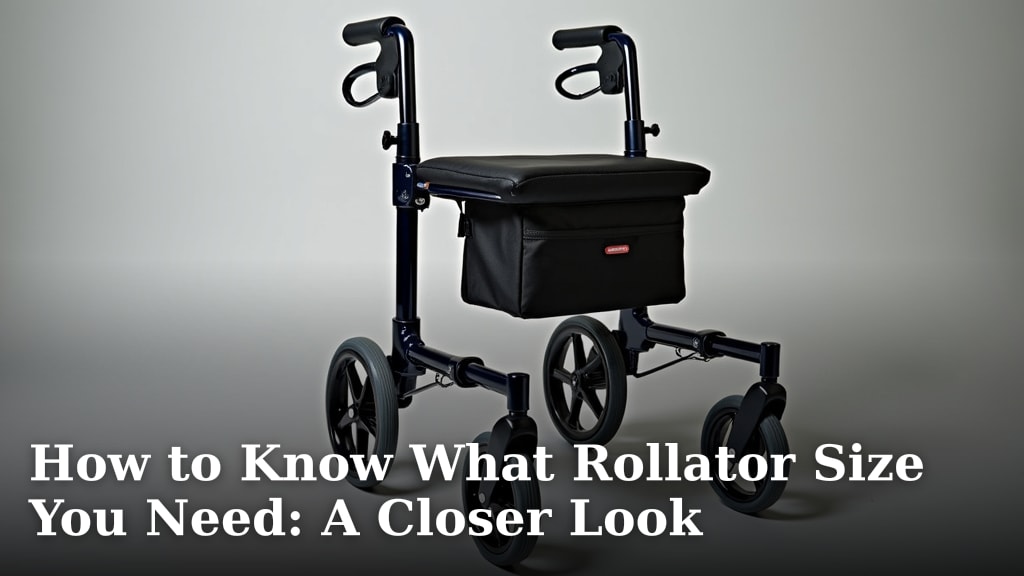
How to Know What Rollator Size You Need: A Closer Look
Knowing the right rollator size for you depends on a few key factors. The most important is your height and the seat height that allows your legs to be at a comfortable 90-degree angle when seated. This ensures you can use it safely and effectively for support.
Choosing the correct size rollator is vital for your mobility and comfort. A rollator that’s too tall or too short can lead to poor posture, strain, and even falls. We found that many users overlook this detail, leading to less-than-ideal experiences.
- Your height determines the ideal seat height.
- Aim for a 90-degree bend in your knees when seated.
- Rollator width matters for navigating doorways.
- Consider your typical walking speed and gait. Our guide explains if you need a walker or a rollator.
- Handgrip height should allow for relaxed shoulders.
Let’s walk through exactly how to measure yourself and choose the perfect rollator size for your needs.
Choosing the Right Rollator Size for You
Finding the perfect fit for your rollator is like finding the right shoes. It needs to feel just right for support and comfort. We found that picking the wrong size can actually make things harder, not easier. Let’s get you measured up properly!
Measuring for Your Ideal Rollator Height
The most important measurement for a rollator is the height. This mainly affects the handgrip height and the seat height. Both are key for safe and comfortable use.
The Importance of Handgrip Height
When you’re standing up straight and holding the handgrips, your arms should be at a comfortable, relaxed angle. Think about a slight bend in your elbows, not a straight, stiff line. Your shoulders should also feel relaxed, not hunched up. Many experts recommend that your elbow bend should be around 15-20 degrees when holding the grips (Cleveland Clinic).
If the rollator is too tall, you’ll have to hunch your shoulders. This can lead to neck and shoulder pain. If it’s too short, you might lean forward too much, which can affect your balance and make it harder to walk. We found that users often report less strain and better posture when the handgrips are at the correct height.
Calculating Your Ideal Seat Height
When you sit down on the rollator’s seat, your knees should form a 90-degree angle. Your feet should be flat on the floor. This is a very stable and comfortable position. It allows you to rest without putting too much pressure on your knees or hips.
Imagine sitting in a sturdy chair. Your thighs should be roughly parallel to the floor. If the seat is too high, your feet might not reach the ground, making you feel wobbly. If it’s too low, you might feel like you’re sinking down, and it can be harder to stand back up.
How to Measure for Seat Height
It’s pretty simple to measure yourself. You’ll need a friend or family member to help, or you can try to do it carefully on your own. Stand up straight in your regular shoes. Have someone measure the distance from the floor to your knee (the bend in your leg).
Once you have that measurement, subtract about 2 inches from it. This is usually the ideal seat height for your rollator. So, if your knee height is 19 inches, you’d look for a rollator with a seat height around 17 inches.
How to Measure for Handgrip Height
To find the right handgrip height, stand up tall in your walking shoes. Let your arms hang naturally at your sides. Have someone measure the distance from the floor to the middle of your palm. This measurement should be close to the ideal handgrip height for your rollator.
Most rollators have adjustable handgrips. This is great because it allows for fine-tuning. You can adjust them up or down a few inches to get that perfect 15-20 degree elbow bend we talked about. We found that adjustable handles make a big difference for many users.
Understanding Rollator Width: Fitting Through Doors
Beyond height, the width of a rollator is another important factor. You need to make sure it can navigate your home and common spaces.
Overall Width vs. Seat Width
Rollators have an overall width, which is the widest point from side to side. This includes the wheels and frame. They also have a seat width, which is the actual space you sit on.
When considering doorways, the overall width is what matters most. You’ll want to measure the width of your most frequently used doorways. Measure the narrowest part of the doorway, usually between the door frame.
Standard Rollator Sizes
Many standard rollators have an overall width of about 24 to 27 inches. However, some models are narrower, designed for tighter spaces. We found that checking the product specifications for the exact width is always best.
If you live in an older home or have narrow hallways, a compact rollator might be a better choice. These are often less than 24 inches wide. They make maneuvering much easier.
Rollator Seat Depth: Comfort When Resting
The seat depth refers to how far the seat extends from front to back. This affects your comfort when you need to take a break.
Ideally, the seat should be deep enough to support your thighs comfortably. It shouldn’t be so deep that it presses into the back of your knees. This is important for maintaining good blood circulation. We found that seats around 12 to 16 inches deep are common and work well for most people.
Rollator Weight Capacity: Ensuring Durability
It’s not just about size; it’s also about strength. Every rollator has a weight capacity. This is the maximum amount of weight the rollator is designed to safely support.
It’s important to know your own weight and check the rollator’s capacity. Always choose a rollator that can safely support more than your current weight. Many sources, like the Arthritis Foundation, recommend choosing a capacity that is at least 50 pounds more than your weight for added safety.
Most adult rollators have a weight capacity ranging from 250 to 350 pounds. There are also heavy-duty models available for individuals who need more support. Don’t forget to factor in any weight from items you might carry in a basket or bag on the rollator.
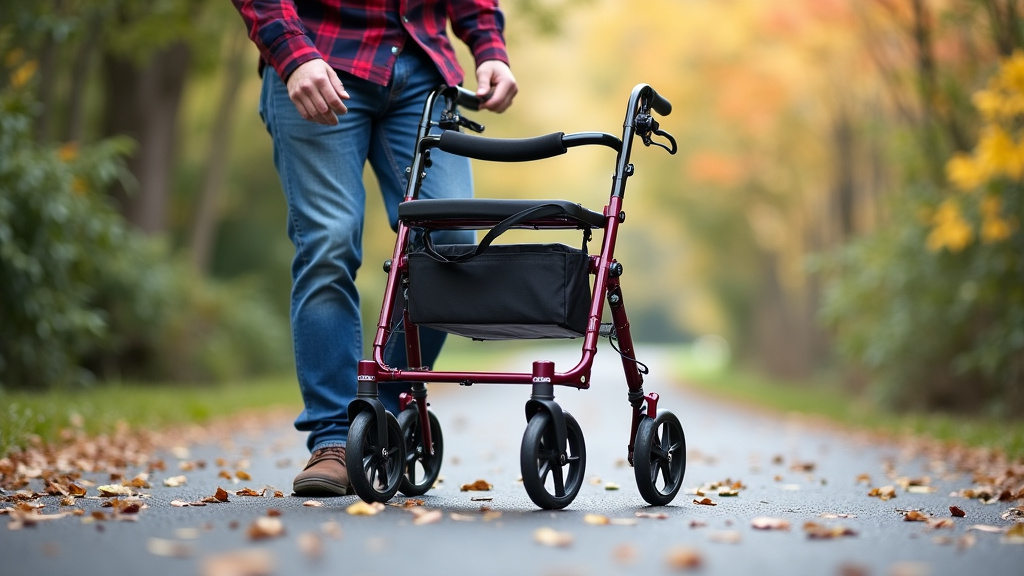
What About Special Rollator Types?
While the basic measurements apply to most rollators, there are specific types to consider.
Bariatric Rollators
These are designed for individuals who weigh more than the standard capacity. They are built with stronger frames and often have wider seats and higher weight limits, sometimes up to 500 pounds or more. The dimensions might be larger overall.
Compact or Lightweight Rollators
For those who need something easy to transport or store, or live in smaller homes, these are ideal. They are often narrower and lighter. While they might be easier to maneuver, always double-check that they still meet your height and weight needs.
Checklist: Your Rollator Sizing Guide
Here’s a quick checklist to help you confirm your perfect rollator size:
- Measure Your Knee Height: Stand tall, measure floor to knee bend. Subtract ~2 inches for ideal seat height.
- Measure Your Palm Height: Stand tall, let arms hang. Measure floor to middle of palm for handgrip height.
- Check Doorway Widths: Measure all doorways you’ll use. Ensure rollator’s overall width fits.
- Consider Seat Comfort: Look for a seat depth that supports thighs without pressing knees.
- Know Your Weight: Choose a rollator with a weight capacity well above your own weight.
- Test Handlebar Comfort: When adjusted, your elbows should have a slight bend (around 15-20 degrees).
Rollator Size Comparison Table
Here’s a simple table to give you an idea of typical rollator sizes. Remember to always check the specific product details for the exact measurements.
| Feature | Typical Range | Consider If… |
|---|---|---|
| Overall Width | 24 – 27 inches (standard) | You need to fit through standard doorways. |
| Seat Height | 18 – 24 inches (adjustable) | Your knee height suggests this range for a 90-degree bend. |
| Seat Depth | 12 – 16 inches | You want comfortable thigh support without pressing knees. |
| Handgrip Height | 30 – 39 inches (adjustable) | Your arm hang measurement falls within this range. |
| Weight Capacity | 250 – 350 lbs (standard) | You weigh within this range, or need a bit of extra buffer. |
Conclusion
You’ve learned how to pick the right rollator size, which is key for your safety and comfort. Remember to measure your height for the correct seat and handgrip adjustments. Don’t forget to check that your chosen rollator will fit through your home’s doorways. Taking these steps ensures your rollator will support your mobility effectively. Now you’re ready to find a rollator that truly fits you and helps you move with confidence. Your next step is to use your measurements to look for models that match your needs.
Frequently Asked Questions
What happens if my rollator’s handgrips are too high or too low?
If your handgrips are too high, you might hunch your shoulders, leading to neck and shoulder pain. If they’re too low, you could lean forward too much, which might affect your balance. Finding the right height allows for a relaxed posture and better control.
Can I use a standard rollator if I have narrow doorways at home?
You might need to consider a compact or lightweight rollator. These models are often narrower than standard ones, usually under 24 inches wide. Always measure your doorways and check the rollator’s overall width before buying.
How do I know if the seat depth is right for me?
The seat depth should comfortably support your thighs without pressing into the back of your knees. This ensures good blood circulation and prevents discomfort when you sit. A typical seat depth of 12 to 16 inches works well for most people.
Does the weight capacity of a rollator include the weight of items I might carry?
Yes, the weight capacity of a rollator is the total weight it can safely support, including you and any items you carry in a basket or bag. It’s wise to choose a rollator with a capacity at least 50 pounds more than your own weight for safety.
Why is a 90-degree knee bend important when sitting on a rollator?
A 90-degree knee bend while seated means your feet are flat on the floor, and your thighs are parallel to the ground. This creates a stable and comfortable resting position. It also makes it easier and safer for you to stand back up from the seat.