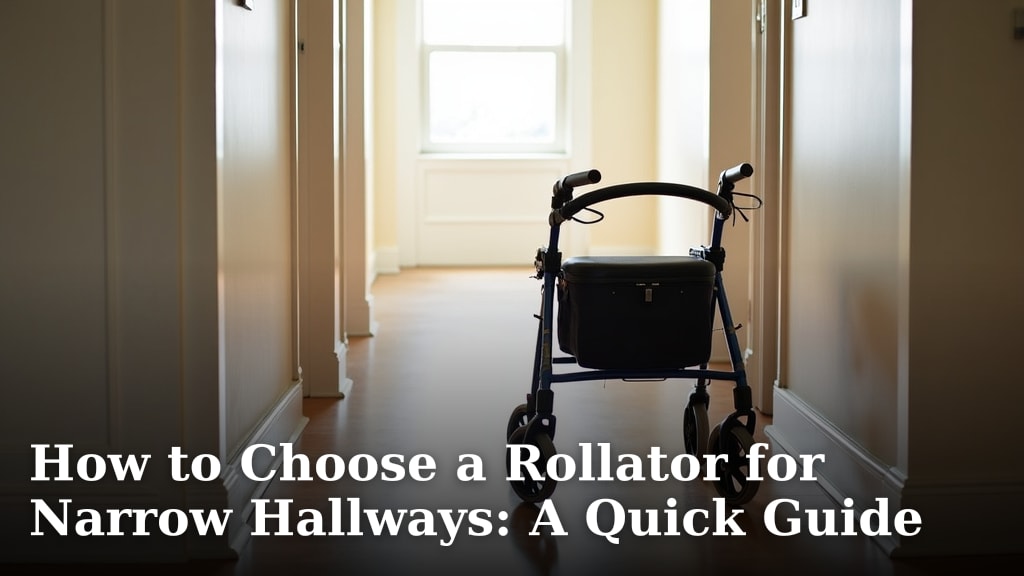
How to Choose a Rollator for Narrow Hallways: A Quick Guide
Choosing a rollator for narrow hallways means looking for a Choosing a rollator for narrow hallways means understanding the difference between a “rollator vs walker” to ensure you get the right mobility aid.slim design and lightweight frame. You need a walker that can easily maneuver through tight spaces without bumping into walls or furniture. A rollator with a narrower wheel base is your best bet for navigating these tricky areas.
When your home has tight turns and limited space, the right rollator makes a big difference. We found that many people struggle with bulky walkers in hallways. It’s important to prioritize models specifically designed for mobility in confined areas. Look for features that enhance maneuverability, not just stability.
- Prioritize slim and compact designs.
- Look for a lightweight frame for easier steering.
- Consider the wheel base width carefully.
- Check that it folds easily for storage.
Let’s walk through exactly how to pick the perfect rollator that won’t make your hallways feel even smaller.
Navigating Tight Spaces: Choosing a Rollator for Narrow Hallways
When your home feels a bit like a maze, finding a rollator that glides through hallways is a top priority. You need a walker that’s not just sturdy but also incredibly nimble. We’ve researched the best options to help you move around your home with confidence, even in the tightest spots.
Understanding Rollator Width: The Key to Maneuverability
The most important measurement for navigating narrow spaces is the overall width of the rollator. A standard rollator might be too wide for many home hallways. You want a model that’s specifically designed to be more compact.
Standard vs. Narrow Rollator Widths
Most standard rollators measure between 23 to 26 inches wide. This can be a tight squeeze in hallways that are only 30 to 36 inches wide. You might find yourself scraping walls or needing to make awkward turns. Many experts suggest aiming for a rollator that is 20 inches or less in width for comfortable maneuvering in typical home environments (CDC).
Narrower rollators, often called “junior” or “compact” models, are designed with this in mind. They typically come in widths of 18 to 22 inches. This extra few inches can make all the difference when turning corners or passing through doorways.
Wheel Base Width: A Critical Dimension
When looking at specifications, pay close attention to the wheel base width. This is the distance from the outer edge of one front wheel to the outer edge of the opposite rear wheel. It directly impacts how much space the rollator takes up sideways.
A narrow wheel base allows for easier turns. It helps prevent the back wheels from snagging on door frames or furniture. We found that models with a wheel base under 22 inches are generally best suited for homes with narrower passages.
Weight Matters: For Easy Steering and Lifting
A lighter rollator is easier to steer, especially when you need to make quick adjustments. It’s also much simpler to lift into a car or move out of the way when not in use. Think about how often you’ll need to pick it up or maneuver it manually.
Material and Construction
Many rollators are made from aluminum, which is both strong and lightweight. Steel rollators are typically heavier but can be more durable. For narrow hallways, prioritize aluminum frames. They usually weigh between 15 to 20 pounds, making them much easier to handle.
Folding for Storage and Transport
Even the most compact rollator can be cumbersome if it doesn’t fold easily. Look for models that have a simple folding mechanism. A rollator that folds flat can be stored in tight spaces, like beside a sofa or in a narrow closet. This is a lifesaver when you’re not actively using it.
| Rollator Type | Typical Overall Width | Ideal For |
|---|---|---|
| Standard Rollator | 23-26 inches | Wider hallways, outdoor use |
| Narrow/Compact Rollator | 18-22 inches | Narrow hallways, smaller homes |
| Extra Narrow Rollator | Under 18 inches | Very confined spaces, specific needs |

Features That Enhance Hallway Navigation
Beyond basic width, certain features can make a rollator much more practical for use in your home’s tight spots. You want to feel in control, not like you’re wrestling with your mobility aid.
Wheel Size and Type
The size and type of wheels affect how easily the rollator rolls over different surfaces. Smaller wheels might get stuck on rugs or uneven flooring. Larger wheels, typically 6 to 8 inches in diameter, generally handle thresholds and transitions more smoothly.
Solid, non-pneumatic tires are a good choice for indoor use. They don’t require inflation and are less likely to get punctured by small debris. We found that smooth-rolling wheels are essential
Conclusion
Choosing the right rollator for your home’s narrow hallways is all about smart selection. You’ve learned that overall width and a narrow wheel base are your most important measurements. Prioritizing a lightweight frame makes steering and handling much easier. Don’t forget to check how easily it folds for storage. By focusing on these key features, you can find a rollator that lets you move freely and safely through every part of your home. Your next step is to measure your hallways and compare those dimensions to the rollator specifications online or in-store.
Frequently Asked Questions
What is the ideal width for a rollator in a narrow hallway?
For most homes with narrow hallways, we recommend a rollator that is 22 inches or less in overall width. This size allows for easier maneuvering around corners and through tight passages without constant bumping. Always measure your narrowest hallway first to confirm.
How do I know if a rollator’s wheel base is narrow enough?
Look for the wheel base width in the product specifications. Ideally, you want a wheel base that is under 22 inches. This measurement helps ensure the back wheels clear obstacles and door frames when you make turns.
Are lightweight rollators also sturdy enough for support?
Yes, many lightweight rollators made from aluminum are both sturdy and strong. Manufacturers balance material strength with weight to ensure stability. We found that models designed for indoor use still offer reliable support for everyday mobility.
Can a rollator with larger wheels still work in narrow hallways?
Larger wheels, typically 6 to 8 inches, can help roll over thresholds more smoothly. However, they can sometimes increase the overall width or make the rollator less agile. If your hallways are very tight, prioritize a narrow design over the largest possible wheels.
What’s the best way to store a rollator when not in use in a small home?
Look for rollators with a simple and compact folding mechanism. Many models fold flat, making them easy to store beside furniture, in a narrow closet, or behind a door. This feature is very helpful for keeping your living space clear.