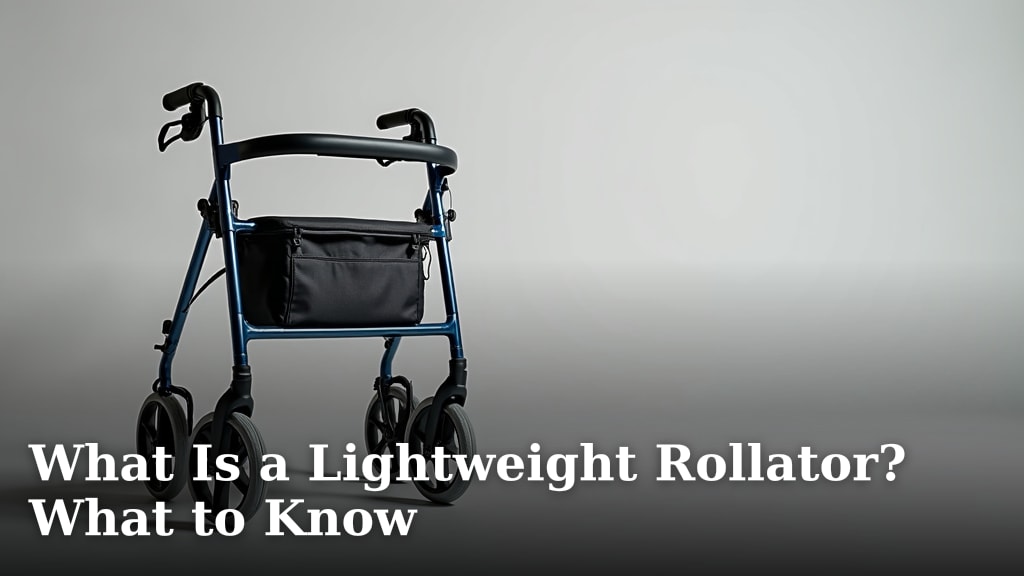
What Is a Lightweight Rollator? What to Know
A lightweight rollator is a mobility aid designed to offer support and stability for walking, but with a focus on being A lightweight rollator is a mobility aid, but it differs from a standard walker.easy to lift and maneuver. Unlike heavier models, these rollators are often made from materials like aluminum, making them a great choice for those who need to transport their walker regularly, such as placing it in a car trunk.
You might be wondering if a lightweight rollator is the right choice for your needs. These walkers are ideal for individuals who want more independence but find standard walkers too cumbersome. They provide a stable base, helping to reduce the risk of falls while still being manageable for everyday use and storage.
- A lightweight rollator provides walking support.
- It is designed for easy lifting and transport.
- Ideal if you need to store it in a car or carry it upstairs.
- Made from lighter materials like aluminum.
- Helps you maintain independence and stability.
Let’s dive into what makes a rollator “lightweight” and what you should consider when choosing one for yourself or a loved one.
Understanding Lightweight Rollators for Your Mobility Needs
A lightweight rollator is a mobility aid that offers support for walking. What sets it apart is its reduced weight. This makes it easier to lift, carry, and maneuver. Many are constructed from aluminum, which is both strong and light. This design helps you maintain independence without the struggle of a heavy device. We found that choosing the right rollator can make a big difference in your daily life.
What Makes a Rollator “Lightweight”?
The term “lightweight” in rollators usually refers to a total weight of 15 to 20 pounds. Some models can even weigh less than 12 pounds. This is a significant difference compared to traditional rollators, which can tip the scales at 25 pounds or more. The lighter weight is often achieved through the materials used and clever design choices.
Materials Matter: The Secret to Lighter Rollators
We found that the primary way manufacturers make rollators lighter is by using advanced materials. Aluminum is a very common choice. It’s known for its strength-to-weight ratio. Some higher-end models might even use carbon fiber. Carbon fiber is incredibly strong and significantly lighter than aluminum. While these materials can increase the cost, they greatly improve portability.
Design Innovations for Ease of Use
Beyond materials, the design plays a role. Some lightweight rollators feature quick-release folding mechanisms. This means you can fold them up with a simple pull or push. The wheels might also be designed for smoother rolling on various surfaces. These thoughtful touches add up to a rollator that feels much easier to handle.
Key Features to Look For in a Lightweight Rollator
When you’re looking for a lightweight rollator, several features can enhance its usefulness. Think about how you plan to use it most often. Do you need to store it in your car? Will you be taking it up and down stairs? Considering these questions will help you prioritize features.
Portability and Folding Mechanisms
The ability to fold the rollator easily is paramount for a lightweight model. Look for models that fold compactly. Some fold flat, making them easy to slide into a car trunk or store in a closet. Others might fold sideways, which can be useful if you have limited storage space. Many brands offer one-hand folding options, which is a great convenience.
Weight Capacity and Stability
Even though it’s lightweight, your rollator must be stable and supportive. Always check the weight capacity. Most lightweight rollators can support between 250 to 300 pounds. It’s important that this capacity meets your needs. Despite being light, good engineering ensures they won’t tip over easily when used correctly. Many experts recommend ensuring the rollator’s base is wide enough for added stability (CDC).
Brakes: Your Safety Net
Brakes are non-negotiable. Most rollators have hand brakes that you squeeze to slow down or lock the wheels. This is essential for safety, especially on slopes or when you want to rest. We found that rollators with easy-to-operate brake levers are often preferred. Some models have adjustable brake tension, allowing you to customize their responsiveness.
Wheels: Size and Type
The type and size of the wheels can greatly affect how easily the rollator moves. Larger wheels (6 inches or more) generally roll better over uneven surfaces like carpets, thresholds, or outdoor paths. Smaller wheels are fine for smooth indoor floors but can get stuck more easily outside. Some rollators have all-terrain wheels designed for a variety of surfaces.
Comfort and Ergonomics
A comfortable rollator can make a difference in how often you use it. Look for adjustable handle heights. This ensures you can set the handles at a level that allows you to stand up straight. Padded handles can also provide a more comfortable grip. A built-in seat is a common feature that allows you to rest whenever needed.
When is a Lightweight Rollator the Right Choice for You?
Deciding if a lightweight rollator is suitable depends on your lifestyle and specific needs. They are designed to offer independence and support without being burdensome.
For Those Who Travel or Commute
If you frequently travel by car or use public transportation, a lightweight rollator is ideal. Its portability means you can easily fold it and place it in your trunk or take it with you on a bus or train. We found that many seniors appreciate this feature for maintaining their ability to visit family or go on outings.
For Navigating Different Environments
Lightweight models are often easier to maneuver indoors, especially in tighter spaces like hallways or small bathrooms. They can also be helpful if you need to navigate different types of flooring or occasional ramps. Their reduced weight makes it less of a chore to move them from room to room.
For Individuals with Limited Lifting Strength
If you struggle with lifting heavier objects, a lightweight rollator is a practical solution. You won’t have to worry about the effort required to lift it into your car or carry it over small obstacles. This can significantly reduce frustration and increase your confidence in using a mobility aid.

Comparing Lightweight Rollators: What to Expect
The market offers a variety of lightweight rollators. Understanding the typical features and price points can help you make an informed decision. We found that the price often reflects the materials used and the additional features.
| Feature | Typical Range for Lightweight Rollators | What to Consider |
|---|---|---|
| Weight | 12-20 pounds | Aim for the lower end if portability is key. |
| Weight Capacity | 250-300 pounds | Ensure it comfortably exceeds your needs. |
| Wheel Size | 6-8 inches | Larger wheels handle varied terrain better. |
| Brakes | Locking hand brakes | Look for easy-to-squeeze levers. |
| Seat | Often included, padded | Check dimensions for comfort. |
| Basket/Pouch | Common accessory | Consider storage needs for essentials. |
| Price | $100 – $300+ | Higher prices often mean lighter materials (e.g., carbon fiber) or more features. |
Making Your Choice: A Quick Checklist
Before you decide, consider these points. This can help ensure you pick the right rollator for your life.
- Can you easily lift the rollator?
- Does it fold compactly for your storage needs?
- Are the handle heights adjustable for your comfort?
- Do the brakes work smoothly and feel secure?
- Are the wheels suitable for the surfaces you’ll use it on?
- Does it meet your required weight capacity?
Conclusion
Choosing a lightweight rollator can greatly enhance your independence and mobility. We’ve seen how these aids are designed for easy lifting and transport, making daily life more manageable. Remember to prioritize features like portability, secure brakes, and comfortable handling that suit your personal needs. By considering the weight, stability, and the surfaces you’ll use it on, you can find a lightweight rollator that truly supports your active lifestyle. Take the time to review your options and make a choice that offers you confidence and ease.
Frequently Asked Questions
How much do lightweight rollators typically weigh?
Lightweight rollators usually weigh between 12 to 20 pounds. This is considerably less than older or heavier models. This reduced weight makes them much easier for most people to lift and maneuver.
Are lightweight rollators as sturdy as heavier models?
Yes, when chosen correctly, lightweight rollators are designed to be just as sturdy and safe. They are made from strong materials like aluminum and often have a wide base for stability. Always check the weight capacity to ensure it meets your needs.
Can I take a lightweight rollator on an airplane?
Many lightweight rollators are designed to be compact and foldable, which can make them suitable for air travel. It’s best to check with your specific airline about their policies for mobility devices before your trip.
How do I know if the handle height is right for me?
The ideal handle height allows you to stand up straight with a slight bend in your elbows. Most lightweight rollators offer adjustable handle heights. You can typically adjust them by loosening a knob or pressing a button on the side of the handle post.
Are lightweight rollators good for outdoor use?
Yes, many lightweight rollators are suitable for outdoor use, especially those with larger wheels (6 inches or more). Larger wheels roll more easily over grass, gravel, and uneven sidewalks. Always ensure the terrain is safe for walking.