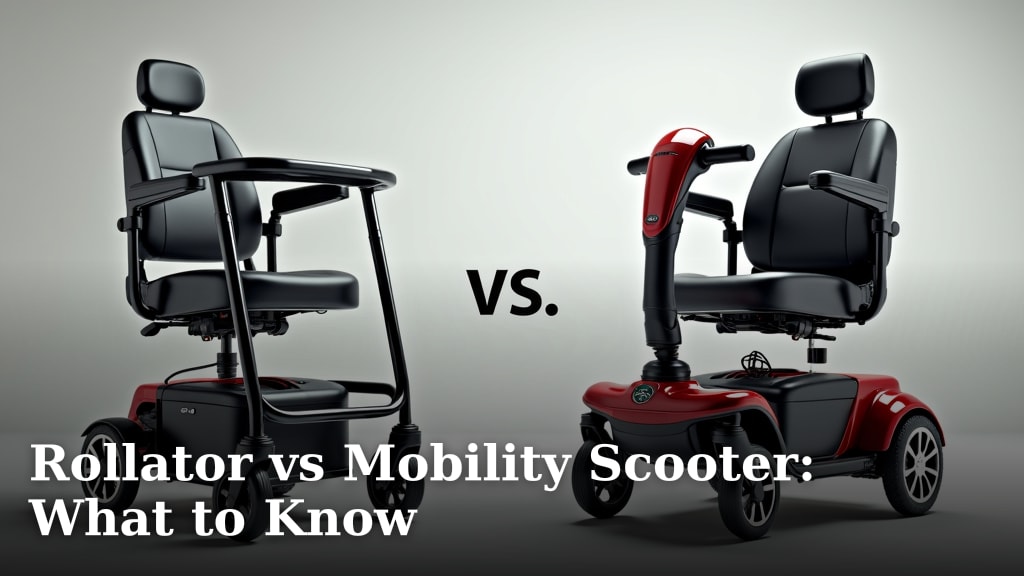
Rollator vs Mobility Scooter: What to Know
Choosing between a rollator and a mobility scooter depends on your specific needs and daily activities. A rollator offers stability for walking with support, while a scooter provides independent seating and longer travel distances. We’ve found that understanding these key differences helps shoppers make the best choice.
Both devices aim to improve your mobility and independence. A rollator is great for short walks around the house or quick trips to the mailbox. A mobility scooter, on the other hand, is better suited for navigating larger areas like shopping malls or parks. Both are designed to help you stay active.
- Rollators support walking.
- Scooters offer seated travel.
- Consider your daily distance.
- Think about where you’ll use it.
- Both boost independence.
Let’s walk through exactly what each one offers and how they might fit into your life. We’ll help you figure out which might be the right fit for you.
Understanding Your Mobility Support Options: Rollator vs. Scooter
When you’re looking for a little extra help getting around, you might be weighing your options between a rollator and a mobility scooter. It’s a common question, and the right choice really depends on how you plan to use it. We’ve found that understanding the core differences can make your decision much clearer.
Think of it like this: a rollator is like a sturdy walking companion. A scooter is more like your own personal, powered vehicle for longer distances. Both are designed to help you maintain your independence and stay active. Let’s dive into what each one brings to the table.
What is a Rollator and Who is it For?
A rollator, sometimes called a walker with wheels, is essentially a wheeled frame that you hold onto. It has a seat, so you can stop and rest whenever you need to. Rollators offer a lot of stability as you walk. They have hand brakes for controlling speed and stopping. Many also have a basket or pouch for carrying items.
Key Features of a Rollator
The main purpose of a rollator is to provide support while you’re walking. You stand up and walk alongside it. This means you’re still using your legs and balance, but with added stability from the frame. The wheels make it easier to move than a standard walker. The brakes give you control, which is a big plus.
Rollators are generally best for people who can still walk short distances but need a little extra balance. They are helpful for navigating around your home or for quick trips outside. For example, walking to the mailbox or a short stroll in the garden. We found that the ability to stop and sit is a highly appreciated feature for many users.
When a Rollator Might Be Your Best Bet
If you find yourself getting tired quickly when walking, or if you worry about losing your balance, a rollator can be a great help. It allows you to walk with more confidence. You can travel a bit further than you might without it. Plus, that built-in seat means you can take a break anytime. This is especially useful if you live in a multi-story home and need to rest between floors.
Many rollators are designed to be lightweight and foldable. This makes them easier to store in a car or closet. If your main concern is having a reliable support system for everyday walking and resting, a rollator is likely a strong contender. Research from organizations like the Centers for Disease Control and Prevention (CDC) often highlights the importance of maintaining mobility for overall health. For individuals needing enhanced support, our guide to a bariatric rollator explains its specific design and benefits.
What is a Mobility Scooter and Who is it For?
A mobility scooter is a motorized device that you sit on to travel. Think of it like a small, personal vehicle. You steer it with a tiller, which is like handlebars. It has a motor and battery, so it powers itself. This means you don’t need to use much physical effort to move it.
Key Features of a Mobility Scooter
The most obvious feature of a scooter is that it does the work for you. You sit comfortably and steer. This makes it ideal for people who have difficulty walking long distances or standing for extended periods. Scooters are great for covering more ground with less fatigue. Many models can travel several miles on a single charge.
Scooters come in various sizes, from compact models for indoor use to larger ones for outdoor adventures. They typically have a weight capacity and speed rating. We’ve seen that battery life and charging time are important considerations for users. You’ll want to ensure it can handle your typical daily travel needs.
When a Mobility Scooter Might Be Your Best Bet
If you enjoy visiting places that require a lot of walking, like shopping malls, large stores, or parks, a scooter can be a lifesaver. It allows you to participate in activities you might otherwise avoid due to mobility challenges. Imagine being able to spend more time at the zoo or a farmer’s market without feeling exhausted. That’s the kind of freedom a scooter can offer.
It’s also a good choice if you have significant pain or fatigue when walking, or if standing for long periods is difficult. For example, if you have a condition like arthritis or a heart condition that affects your stamina, a scooter can be incredibly beneficial. Many healthcare professionals suggest that maintaining an active social life is key to well-being (NIH). A scooter can help you do just that.
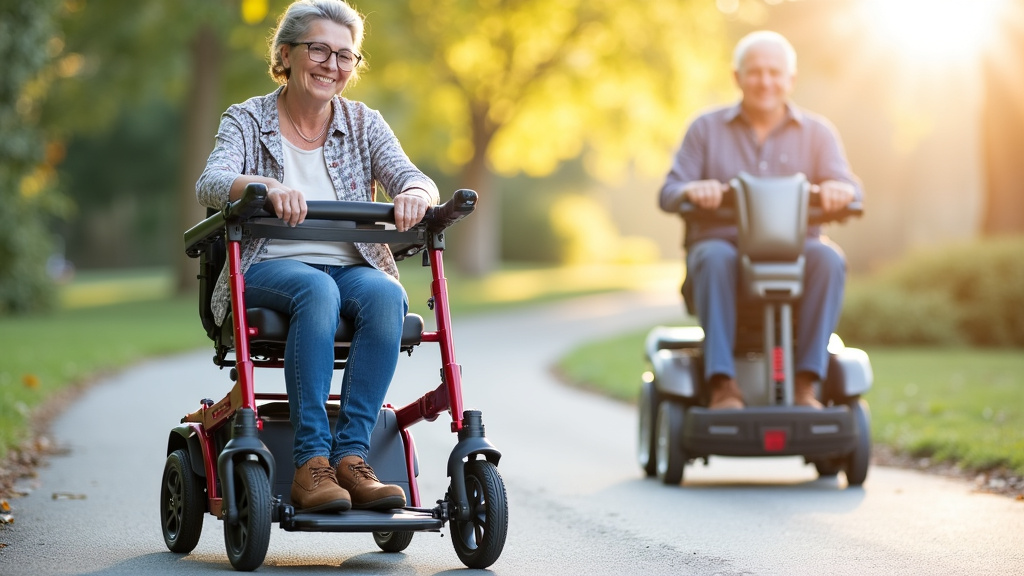
Direct Comparison: Rollator vs. Mobility Scooter
Let’s put them side-by-side to help you see the differences more clearly. It’s not about which one is better, but which one is better for you. We’ve found a simple comparison chart can be very helpful.
| Feature | Rollator | Mobility Scooter |
|---|---|---|
| Primary Use | Walking support and stability | Seated, powered travel |
| Physical Effort | Requires walking and standing | Minimal physical effort to operate |
| Range/Distance | Short to moderate distances | Moderate to long distances |
| Portability | Generally lightweight, foldable | Can be heavier, some disassemble |
| Best For | Improving balance, resting breaks | Covering ground, conserving energy |
| Terrain | Smooth, level surfaces | Various surfaces, some models handle inclines |
Your Daily Activities and Needs
To figure out which device fits your life, ask yourself a few questions. How far do you typically walk in a day? Do you need help with stability, or do you need help conserving energy for longer outings? Are you mostly staying around the house and garden, or do you plan on going to the supermarket, doctor’s appointments, or visiting friends?
If your daily routine involves mostly moving around your home, short walks outside, and you can still manage standing and walking with some support, a rollator is likely a great option. It gives you that extra bit of confidence without taking away too much of your physical activity. It’s a tool for assistance, not a replacement for walking.
Where Will You Use It Most?
Consider the environments where you’ll be using your mobility aid. If you live in an apartment and mostly navigate hallways and rooms, a lightweight, easy-to-maneuver rollator might be perfect. If you love visiting large outdoor spaces or shopping centers, a mobility scooter’s ability to cover more ground with ease would be a huge advantage.
Think about doorways, aisles, and parking. Some scooters can be quite wide, so ensure they’ll fit comfortably in the spaces you frequent. Rollators are generally much narrower and can navigate tighter spots. We found that checking the dimensions of both the device and the typical pathways you use is a really practical step.
Making the Final Choice: A Checklist
To help you narrow down your options, here’s a quick checklist. Tick off the points that best describe your needs:
- I need help with balance while walking.
- I can stand and walk, but get tired easily.
- I need a way to rest often when I’m out.
- I need to travel longer distances without getting exhausted.
- I plan to use it mostly indoors or for short outdoor trips.
- I need a solution for navigating large stores or parks.
If you checked more boxes under the first three points, a rollator might be your best match. If you found yourself leaning towards the last three, a mobility scooter could be the right fit for you. Of course, some people even find they benefit from having both!
Conclusion
You’ve explored the key differences between rollators and mobility scooters. A rollator offers crucial walking support and balance, perfect for shorter trips and resting. A scooter provides powered, seated travel for covering more ground with less effort. Your choice depends on how much assistance you need for stability versus energy conservation. We found that understanding your daily routines and the places you visit is key to making the right decision for your independence. Your next step is to consider your personal comfort and the specific distances you plan to travel regularly.
Frequently Asked Questions
Can a rollator help me walk further than I do now?
Yes, a rollator can help you walk further by providing stability and a place to rest. You can take breaks whenever needed, conserving energy. This support allows many users to extend their walking distance with confidence.
Are mobility scooters difficult to steer?
Mobility scooters are designed for easy operation. They are typically steered with a tiller, much like handlebars on a bike. Most users find them intuitive to control after a short adjustment period.
How portable are rollators compared to scooters?
Rollators are generally more portable. They are often lightweight and fold easily for storage in a car or closet. Some mobility scooters can disassemble or be heavier, requiring more effort to transport.
What kind of surfaces can a mobility scooter handle?
Many mobility scooters can handle a variety of surfaces, including sidewalks, paved paths, and even some indoor flooring. Some larger models are designed for light off-road use. Always check the manufacturer’s specifications for terrain capabilities.
Can I use a rollator if I have trouble standing for long periods?
A rollator is excellent for those who can walk but need frequent rest. Its built-in seat allows you to stop and sit down whenever you feel tired. This makes it a good option if standing is difficult but walking short distances is manageable.